



الصفحة 1
الصفحة 1

Handbook of Intellectual and Developmental Disabilities
Changes within the interdisciplinary field of intellectual and developmental disabilities are evolving at a rapid pace. Clinicians, academics, administrators, and a variety of mental health providers alike need easy-to-access, reliable information that enables them to stay abreast of the numerous advances in research, assessment, treatment, and service delivery within a real-world sociopolitical framework. To that end, the Handbook of Intellectual and Developmental Disabilities is an essential resource for any professional who works with this vulnerable population. This volume examines in detail the numerous advances in the field, summarizing major domains and emerging subspecialties into one eminently useful reference.

Ethics and Intersex
The book begins with introductory chapters on the etiology of intersex conditions, conceptual clarification, legal issues, and reflections about the inherent characteristics of medical care that have led up to the issues we face today and explain the resistance to change in traditional practices. Researchers provide recent data on gender identity, surgical outcomes, and appropriate clinical care. Issues never having been addressed are introduced. The significance of intersexuality for Christianity and for philosophical concerns with authenticity add further depth to the collection. The final chapters deal with future possibilities in the treatment of intersex and for intersex advocacy.

Constitutionalism and Legal Reasoning
This book of legal philosophy contends that positive law is better understood if it is not too easily equated with power, force, or command.

Competition Authorities in South Eastern Europe : Building Institutions in Emerging Markets
Provides answers to key open questions concerning competition policy in emerging economies, with a focus on South Eastern Europe. The contributions address two major issues. One is the design of competition policy and the national competition authorities that enforce it, including the topics of competition advocacy and state aid control; the other is the use of economic methods in competition law enforcement, especially in the cases of relevant market definition and merger control. Many lessons learned in the countries of South Eastern Europe can be applied to the emerging markets of other regions. As such, the findings presented here will be highly relevant for officials and staff at national competition authorities, advisers to legislators shaping national competition policy, competition law professionals, and university students alike.

Cancer and War
Armed conflict, especially the most intense types, indirectly impacts civilian mortality. The estimates suggest that almost 30 million civilian deaths were indirectly attributable to armed conflict globally between 1990 and 2017, two thirds of which were due to communicable, maternal, neonatal, and nutritional diseases. Broader and more robust measures of civilian impacts at subnational and national levels are needed to inform policy and advocacy to prevent war and protect civilians. This could include greater use of linkage studies that incorporate data from routine health and demographic sources, exposure to conflict-specific environmental risks, and quantitative epidemiological methods such as national and subnational victimisation surveys.
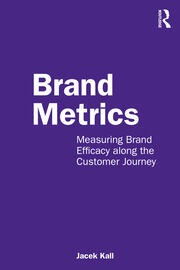
Brand metrics : Measuring brand efficacy along the customer journey
The metrics covered in the book correspond with the customer journey, moving through measuring brand awareness, consideration and purchase, to customer loyalty and brand advocacy, and finally an overall analysis of the brand's strength. The book not only shows the formula for a metric and explains how it should be interpreted, but also considers what each metric really measures, how it impacts the brand's equity and how is it related to other metrics.
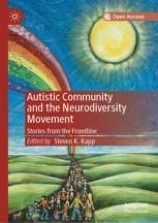
Autistic community and the neurodiversity movement : Stories from the frontline
This book marks the first historical overview of the autism rights branch of the neurodiversity movement, describing the activities and rationales of key leaders in their own words since it organized into a unique community in 1992. Sandwiched by editorial chapters that include critical analysis, the book contains 19 chapters by 21 authors about the forming of the autistic community and neurodiversity movement, progress in their influence on the broader autism community and field, and their possible threshold of the advocacy establishment

Applied Rasch Measurement : A Book of Exemplars : Papers in Honour of John P. Keeves
While the primary purpose of the book is a celebration of John’s contributions to the field of measurement, a second and related purpose is to provide a useful resource. We believe that the combination of the developmental history and theory of the method, the examples of its use in practice, some possible future directions, and software and data files will make this book a valuable resource for teachers and scholars of the Rasch method. This book is a tribute to Professor John P Keeves for the advocacy of the Rasch model in Australia.
