



الصفحة 1
الصفحة 1

Innate and Adaptive Immunity in the Tumor Microenvironment
Recent studies, indicate that the tumor microenvironment is unique in providing both supportive and inhibitory factors that determine the fate of the tumor and its host. Accordingly, microenvironmental immunity that operates inside and around a tumor plays a crucial role in cancer development and progression. The aim of the present volume is to compile reviews on innate and adaptive immune responses at the tumor microenvironment with emphasis on positive and negative outcomes that affect the progression of the disease. These reviews have been solicited from experts in the field who published original research studies focusing on these issues.

Immunogenetics: Methods and Protocols
Explores techniques for working in the field of immunogenetics, i.e. fundamental and translational research into the adaptive immune receptor repertoire. Many chapters are dedicated to lab protocols, bioinformatics, and immunoinformatics analysis of high-resolution immunome analysis, exemplified by numerous applications. Additionally, the newest technological variations on these protocols are discussed, including non-amplicon, single-cell, and cell-free strategies. Written for the highly successful Methods in Molecular Biology series, chapters include introductions to their respective topics, lists of the necessary materials and reagents, step-by-step, readily reproducible laboratory protocols, and tips on troubleshooting and avoiding known pitfalls.

Crossroads between Innate and Adaptive Immunity
This compilation presents minireviews derived from work presented at the Aegean Conference, which occurred October 9-14, 2005 at the Hilton Conference. Center on the island of Rhodes, Greece. The conference included sessions dedicated to host recognition of and response to pathogens, innate immune networks, antigen presentation, and adaptive immune responses, each headlined by a leading scientist at the forefront of that field. The intimate networking and interaction of dendritic cells, T cells, B cells, NK cells, NK-T cells, and complement during the host response to pathogens and tumors are only now starting to be elucidated.
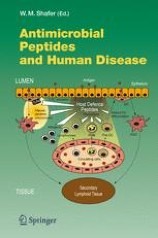
Antimicrobial peptides and human disease
Microbes are in our midst soon after birth. Thankfully, the number of harmless (and often beneficial) microbes far outnumber those that would do us harm. Our ability to ward-off pathogens in our environment, including those that can colonize our exterior and/or interior surfaces, depends on the integrative action of the innate and adaptive immunity systems. This volume of CTMI, entitled Antimicrobial Peptides and Human Disease, is dedicated to the role of antimicrobial peptides (AMPs) in the innate host defense system of homo sapiens.
