



الصفحة 1
الصفحة 1

Integration in Asia and Europe : Historical Dynamics, Political Issues, and Economic Perspectives
This book critically analyses the economic and institutional changes in both Europe and Asia. There is considerable potential for instability, but one also finds regional growth opportunities. Comparative policy analysis and evaluation of various cooperation strategies are presented. Emphasis is on banking, financial market dynamics, ICT, and macroeconomic policies as well as trade, energy, and environmental issues.

Emerging States and Economies : Their Origins, Drivers, and Challenges Ahead
This book asks why and how some of the developing countries have “emerged” under a set of similar global conditions, what led individual countries to choose the particular paths that led to their “emergence,” and what challenges confront them. If we are to understand the nature of major risks and uncertainties in the world, we must look squarely at the political and economic dynamics of emerging states. Their rapid economic development has changed the distribution of wealth and power in the world. Yet many of them have middle income status. To global governance issues, they tend to adopt approaches that differ from those of advanced industrialized democracies. At home, rapid economic growth and social changes put pressure on their institutions to change. This volume traces the historical trajectories of two major emerging states. It also analyzes cross-country data to find the general patterns of economic development and sociopolitical change in relation to globalization and to the middle income trap.

East Asian Economic Regionalism: Feasibilities and Challenges
Economic regionalism has become a worldwide phenomenon. Since the Asian financial crisis, East Asian countries are accelerating the ongoing market-driven economic integration as well as institutional economic integration. The question is whether East Asia can reach an East Asian FTA (EAFTA), which is the first step towards institutional economic integration. East Asian Economic Regionalism attempts to analyze the feasibilities of economic integration in East Asia and to discuss emerging economic integration efforts in East Asia with special reference to an East Asian FTA. Although economic integration is desirable economically, positions and approaches of each regional economy toward East Asian economic integration may differ depending on the circumstances of the countries concerned. East Asian Economic Regionalism provides diverse positions on East Asian economic integration by ASEAN countries, as well as the Northeastern countries of China, Japan and Korea. The volume also provides economic assessment of EAFTA and evaluates East Asian economic integration.
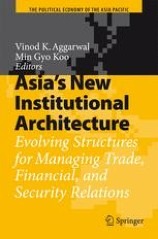
Asias New Institutional Architecture : Evolving Structures for Managing Trade, Financial, and Security Relations
This book investigates the origins and evolution of Asia’s new institutional architecture in trade, finance, and security from both a theoretical and empirical perspective. The traditional institutional equilibrium in Asia has come under heavy strain in the "post triple shocks period" - the post-Cold War, the post-financial crisis of 1997-98, and the post-9-11 attacks. The new dynamics of rivalry and cooperation among states at both the intraregional and transregional levels is now shaping a new institutional architecture. Political and business leaders from Northeast and Southeast Asia interact with each other more frequently. South Asia’s participation in the rest of Asia in recent years is truly impressive. As we show, the future institutional trajectory of Asia is still open, but we believe that the book provides a timely examination of key shifts in the region. In doing so, our hope is to provide policymakers and analysts with an institutional road map for the future.
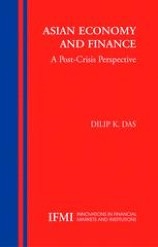
Asian economy and finance : A post-crisis perspective
Topicality of Asian economy has refused to fade for almost four decades; if anything it has been levitating. The Asian economy has changed markedly since the economic and financial crisis of 1997-1998 and is continuing to evolve. As a scholarly subject matter, Asian economy has not stopped attracting academicians, policy mandarins, decision makers in the arena of business and students of Asian economy. The Asian crisis was a cataclysmic event for the region and brought to the surface several systemic limitations, like those in the financial sector, corporate governance, regulatory oversight, legal framework, and exchange rate management. Managers of Asian economy need to get to the bottom of these acutely problematical systemic issues. Additionally, Asian economies need to change with the demands of time and devise their post-crisis development strategy. Asia’s growth model, that served it so well for four decades, is overdue for renewal so that it can re-strengthen its bonds with the ever-evolving regional and global economic reality. The old growth model is likely to be less relevant and effective in the post-crisis future of the Asian economies. It is sure to run into the wall of diminishing returns.
