



الصفحة 1
الصفحة 1

Solid State NMR Spectroscopy for Biopolymers : Principles and Applications
When considering the biological significance and industrial and medical applications of biopolymers, it is crucial to know details of their secondary structure, dynamics and assembly. The biopolymers include globular, membrane and fibrous proteins, polypeptides, nucleic acids, polysaccharides and lipids. Solid state NMR spectroscopy has proved to be the most suitable and unrivaled means for investigations of biopolymers. The major advantage of solid state NMR spectroscopy is that the resulting line widths can be manipulated experimentally and are not influenced by motional fluctuation of proteins under consideration as a whole.

Ryanodine Receptors : Structure, function and dysfunction in clinical disease
In recent years, the ryanodine receptor has emerged as a new and very promising target for the treatment of several cardiovascular disorders, including cardiac arrhythmias and heart failure. This volume is the most current publication devoted to the major intracellular calcium-release channel, the ryanodine receptor. "In this series of brief but informative chapters, the contributions progress from the basic gene family and primary structure, through its 3D structure so far, to its regulation and physiology."

Protein 3D-structure prediction
Protein plays a major role in every cell it is responsible for every function in our body and every living being in their body. consisting of one or more long chains of amino acid residues. The 3D structure is responsible for the function of a protein, predicting the 3D structure it is a challenge for scientists and researchers by using AI systems and neural networks technics it's becoming a trend for reducing the time and cost, also helping scientists to understand how proteins act in real life a lot of universities around the world and institution they are competes to build a model and solution to help with predicting the proteins they invented CASP competition for this purpose it happens every two years, tomake the ability to predict protein’s 3D structure by sequences of amino acids this all happens by learning and calculating the distance between atoms and understanding the correlation between amino acids by using neural networks consists of bi directional LSTM to understand the sequence.
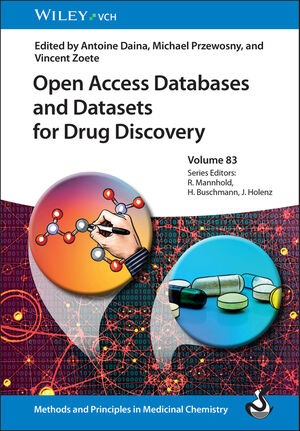
Open access databases and datasets for drug discovery
With an overview of 90 freely accessible databases and datasets on all aspects of drug design, development, and discovery, Open Access Databases and Datasets for Drug Discovery is a comprehensive guide to the vast amount of “free data” available to today’s pharmaceutical researchers. The applicability of open-source data for drug discovery and development is analyzed, and their usefulness in comparison with commercially available tools is evaluated. The most relevant databases for small molecules, drugs and druglike substances, ligand design, protein 3D structures (both experimental and calculated), and human drug targets are described in depth, including practical examples of how to access and work with the data. The first part is focused on databases for small molecules, followed by databases for macromolecular targets and diseases. The final part shows how to integrate various open-source tools into the academic and industrial drug discovery and development process.

Deep learning architecture and application
As one of the fastest-growing topics in machine learning, deep learning algorithms have achieved unprecedented success in recent years. Novel paradigms (such as contrastive learning and few-shot learning) in deep learning and rising neural network architectures (e.g., transformer and masked autoencoder) are dramatically changing the field of data-driven algorithms. More importantly, deep learning models are redefining the next generation of industrial applications spanning image recognition, speech processing, language translation, healthcare, and other sciences. For example, recent advances in deep representation learning are allowing us to learn about protein 3D structures, which sheds new light on fundamental medicine and biology along with potentially bringing in billions of dollars (e.g., in the pharmaceutical market).
