



الصفحة 1
الصفحة 1

Modelling the dispersion of radionuclides in the marine environment : An introduction
This book is a practical guide to the subject of numerical modelling of radioactivity dispersion in the marine environment. Thus, the techniques and numerical procedures required are explained in detail, with the aim of enabling the reader to build a real mathematical model. The book covers basic concepts and techniques, such as solving the advection-diffusion equation in a simple 1D form, as well as the most recent developments (full 3D models for non-conservative radionuclides including chemical reactions and speciation). A chapter is dedicated to the basic hydrodynamic modelling that is always required to simulate the dispersion of tracers in the sea; Eulerian and Lagrangian modelling techniques are also described. A chapter describes sensitivity and uncertainty analysis, the final stage in modelling works. A review on some published radionuclide dispersion models is also included.

Introduction to blender 3.0 : Learn organic and architectural modeling, lighting, materials, painting, rendering, and compositing with blender
Explains modeling, materials, lighting, painting, and more with Blender and other external tools. You will configure a 3D architectural environment and set up the workflow of an art and design project within Blender. You will use Blender's main tools—mesh modeling and sculpting—to create virtual objects and environments. And, you will explore building materials and light scenes, followed by drawing and virtual painting. Chapters cover rendering scenes and transforming them into 2D images or videos. You will learn to use Blender 3.0 for video editing as a compositor and video sequence editor (VSE or sequencer) with a wide range of effects available through the nodal system. You Will Learn : Create objects and architectural buildings with different techniques of 3D modeling / Master creating an environment for your objects and how to light them / Determine how to create node materials and assign them to your Blender objects / Pick up UV unwrapping and texture painting / Get closer to painting and drawing in Blender / Render your scenes and create stunning videos
Image-Based Rendering
Image-based rendering (IBR) refers to a collection of techniques and representations that allows 3D scenes and objects to be visualized in a realistic way without full 3D model reconstruction. The potential for photorealistic visualization has tremendous appeal, especially for applications such as video games, virtual travel, and E-commerce, which stand to greatly benefit from this technology.

Human-computer interaction - HCI : Applications and services ; 12th International Conference, HCI International 2007, Beijing, China, July 22-27, 2007, Proceedings, Part IV
The 12th International Conference on Human-Computer Interaction, HCI Inter- tional 2007, was held in Beijing, P.R. This volume, edited by Julie A. Jacko, contains papers in the thematic area of - man-Computer Interaction, addressing the following major topics: • Business Applications • Learning and Entertainment • Health Applications • Work and Collaboration Support • Web-Based and Mobile Applications and Services • Advanced Design and Development Support.

Homology modeling : Methods and protocols
It Provides state-of-the-art methodologies and reviews of important topics in the field of homology modeling. From homology modeling in the twilight zone and improving accuracy through sequence space analysis to approaches to construct multi-protein complex models, the book explores a wide variety of uses and applications of this valuable technique.

Formal Methods in Systems Biology ; 1st International Workshop, FMSB 2008, Cambridge, UK, June 4-5, 2008. Proceedings
This book constitutes the refereed proceedings of the First International Workshop on Formal Methods in Systems Biology, FMSB 2008, held in Cambridge, UK, in June, 2008.The 9 revised full papers presented were carefully reviewed and selected from the workshop lectures that all were invited contributions. The purpose of this meeting was to identify techniques for the specification, development and verification of biological models. It also focused on the design of tools to execute and analyze biological models that can significantly advance our understanding of biological systems.
Drawing from the model : Fundamentals of digital drawing, 3D modeling, and visual programming in architectural design
Bridges traditional and contemporary methods of creating architectural design drawings and 3D models through digital tools and computational processes.
Digitally Archiving Cultural Objects
Digitally Archiving Cultural Objects describes thorough research and methods for preserving cultural heritage objects through the use of 3D digital data. These methods were developed through using computer vision and computer graphics technologies.

Developing metaverse for AIU
Metaverse is the virtual world in which humans can see each other in the form of 3D and communicate with each other in a virtual place that looks exactly like the real world, but the developers of metaverse so far used these virtual worlds for profit purposes only, this is what prompted us to build a virtual world that basicly contain the university, which can help students communicate with each other, see teachers and obtain the information they need from university employees without having to travel long distances, this project provides a distance education service without dispensing the idea of interacting with teachers directly and seeing others. Our virtual world has the ability to connect with any virtual world because of it’s base structure, It’s scalable as much as we need because it’s connected to the blockchain.
Computer-aided drug design
Computer-Aided Drug Design (CADD) is a comprehensive guide designed for both beginners and experienced users in CADD. Covers the fundamental principles and gradually delves into more advanced concepts and techniques, making it an invaluable resource to anyone interested in CADD. It begins by establishing a solid foundation, explaining the core concepts of CADD, the user interface and essential tools. It covers QSAR, molecular docking, homology modeling, virtual screening, pharmacophore modeling, ensuring that the reader can quickly become proficient in CADD. Provides in-depth insights into 3D modeling, rendering, and parametric design. The style of the book is simple, every topic begins from the very basics and explores advanced levels with clarity. Practical examples, step-by-step tutorials and hands-on exercises, are included for better understanding.

Computational methods in systems biology ; Vol. 4210 ; International Conference, CMSB 2006, Trento, Italy, October 18-19, 2006, Proceedings
This book constitutes the refereed proceedings of the International Conference on Computational Methods in Systems Biology, CMSB 2006, held in Trento, Italy, in October 2006. The papers present a variety of techniques from computer sciences, such as language design, concurrency theory, software engineering, and formal methods.

Computational methods in systems biology ; International Conference CMSB 2007, Edinburgh, Scotland, September 20-21, 2007, Proceedings
This book presented present a variety of techniques from computer science, such as language design, concurrency theory, software engineering, and formal methods, for biologists, physicists, and mathematicians interested in the systems-level understanding of cellular processes.

Computational methods in systems biology ; 6th International Conference CMSB 2008, Rostock, Germany, October 12-15, 2008. Proceedings
This book constitutes the refereed proceedings of the 6th International Conference on Computational Methods in Systems Biology, CMSB 2008, held in Rostock, Germany, in September 2008.
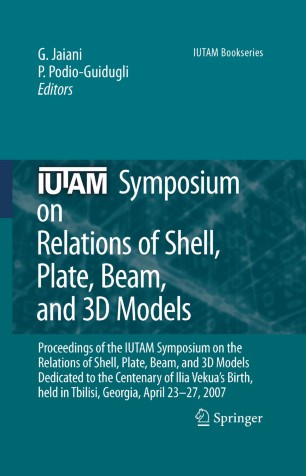
IUTAM symposium on relations of shell plate beam and 3D models ; Proceedings of the IUTAM Symposium on the relations of shell, plate, beam, and 3D models, Dedicated to the Centenary of Ilia Vekua’s Birth, held in Tbilisi, Georgia, April 23-27, 2007
Contains papers on the main topics reflecting the scientific programme of the symposium: hierarchical, refined mathematical and technical models of shells, plates, and beams; relation of 2D and 1D models to 3D linear, non-linear and physical models; junction problems. In particular, peculiarities of cusped shells, plates, and beams are emphasized and special attention is paid to junction, multibody and fluid-elastic shell (plate, beam) interaction problems and their applications.
Biomedical Simulation; 4th International Symposium, ISBMS 2008, London, UK, July 7-8, 2008 Proceedings
This book constitutes the refereed proceedings of the 4th International Symposium on Biomedical Simulation, ISBMS 2008, held in London, UK, in July 2008.
Biomedical Simulation ; 3rd International Symposium, ISBMS 2006, Zurich, Switzerland, July 10-11, 2006, Proceedings
This book contains the written contributions to the Third International Sym- sium on Biomedical Simulation (ISBMS), which was held in Zurich, Switzerland, on July 10-11, 2006. The manuscripts are organized around three thematic sections which cover several of the major aspects of our rapidly growing ?eld: anatomical modeling and tissue properties, simulation of biophysical processes, as well as systems and applications. The symposium provided an international forum for researchers interested in using biomedical simulation technology for the improvement of patient care. It was held in the spirit and continuation of the symposia on Surgical Simulation and Soft Tissue Modeling (IS4TM) organized in 2003 by INRIA, and on Medical Simulation (ISMS) in 2004 by CIMIT.

Architecture : Form, Space, and Order ; 4th ed.
The revered architectural reference, updated with contemporary examples and interactive 3D modelsAn access card with redemption code for the online Interactive Resource Center is included with all new, print copies or can be purchased separately.
Architectural graphics ; Vol.1 : Graphics for analysis
Reports on several advances in architectural graphics, with a special emphasis on education, training, and research. It gathers a selection of contributions to the 19th International Conference on Graphic Design in Architecture, EGA 2022, held on June 2–4, 2022, in Cartagena, Spain, with the motto: "Beyond drawings. The use of architectural graphics".
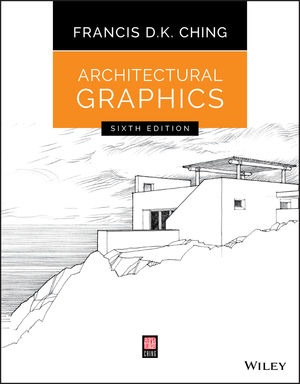
Architectural graphics ; 6th ed.
Offers a comprehensive introduction to using graphic tools and drafting conventions to translate architectural ideas into effective visual presentations, using hundreds of the author's distinctive drawings to illustrate the topic effectively. Includes new information on orthographic projection in relation to 3D models, and revised explanations of line weights, scale and dimensioning, and perspective drawing to clarify some of the most difficult concepts. New examples of modern furniture, APA facilities, and presentation layout provide more up-to-date visuals, and the Reference Center features all new animations, videos, and practice exercises. Architectural graphics are key tools for conveying design through representation on paper or on screen, and this book is the ultimate guide to mastering the skill, then applying your talent to create more effective design communication.

Analysis and Modelling of Faces and Gestures ; 2nd International workshop, AMFG 2005, Beijing, China, October 16, 2005, Proceedings
During the last 30 years, face recognition and related problems such as face detection/tracking and facial expression recognition have attracted researchers from both the engineering and psychology communities. In addition, extensive research has been carried out to study hand and body gestures. The understanding of how humans perceive these important cues has significant scientific value and extensive applications. this one-day workshop (AMFG 2005) provided a focused international forum to bring together well-known researchers and research groups to review the status of recognition, analysis and modeling of faces and gestures, to discuss the challenges that we are facing, and to explore future directions. Overall, 30 papers were selected from 90 submitted manuscripts. The topics of these papers range from feature representation, robust recognition, learning, and 3D modeling to psychology.
