



الصفحة 1
الصفحة 1

Multiphase Flow Dynamics 2 : Thermal and Mechanical Interactions ; 3rd ed.
Multi-phase flows are part of our natural environment such as tornadoes, typhoons, air and water pollution and volcanic activities as well as part of industrial technology such as power plants, combustion engines, propulsion systems, or chemical and biological industry. The industrial use of multi-phase systems requires analytical and numerical strategies for predicting their behavior. In its third extended edition this book contains theory, methods and practical experience for describing complex transient multi-phase processes in arbitrary geometrical configurations. This book provides a systematic presentation of the theory and practice of numerical multi-phase fluid dynamics. In the present second volume the mechanical and thermal interactions in multiphase dynamics are provided. This third edition includes various updates, extensions, improvements and corrections.

Multiphase Flow Dynamics 1 : Fundamentals ; 3rd ed.
Multi-phase flows are part of our natural environment such as tornadoes, typhoons, air and water pollution and volcanic activities as well as part of industrial technology such as power plants, combustion engines, propulsion systems, or chemical and biological industry. The industrial use of multi-phase systems requires analytical and numerical strategies for predicting their behavior. In its third extended edition this monograph contains theory, methods and practical experience for describing complex transient multi-phase processes in arbitrary geometrical configurations, providing a systematic presentation of the theory and practice of numerical multi-phase fluid dynamics. This third edition includes various updates, extensions and improvements in all book chapters.

Monitoring and Modelling Lakes and Coastal Environments
Habitat environments of lakes and coastal wetlands are deteriorating due to their exploitative use and improper management. As rapid development and population growth continue in coastal areas, environmental degradation and over exploitation will further erode the biodiversity and undermine the productivity of these unique ecosystems. An earnest attempt has been made in the present book to find ways for restoration, conservation and management of lakes and coastal wetlands.
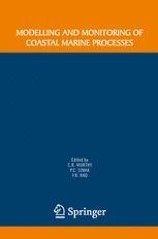
Modelling and Monitoring of Coastal Marine Processes
Although numerous books have been written on both monitoring and modelling of coastal oceans, there is a practical need for an introductory multi-disciplinary volume to non-specialists in this field. The articles commisioned for this book, organized into four major themes, are written by experts in their disciplines while the text is intended for scientists who do not have extensive training in marine sciences and coastal zone management. As such, the articles in this monograph can be a valuable reference for practicing professionals.

Integration of Information for Environmental Security : Environmental Security - Information Security - Disaster Forecast and Prevention - Water Resources Management
Currently the necessary information exists in a multitude of forms and formats geographically and physically scattered over different countries, institutes and organisations, and are subject to widely different data policies and management schemes. Moreover, there is no complete and updated overview of the existing information, e.g. in the form of a metadata catalogue. As a result, integration of this information in case of emergencies has proven to be extremely difficult, if not impossible. Although in some cases, interesting and impressive "demonstrations" have been shown of the possibilities of the integration of information, for a number of reasons these have reached the "operational" stage.

Integrated Water Management : Practical Experiences and Case Studies
This book introduced a whole range of specific definitions, objectives and constraints regarding the various aspects of water management, including water quality management, policies, economic aspects, ecology, price, and sustainable development. These issues all require the formulation of common, integrated, sustainable approaches for managing the water system from a multidisciplinary perspective, and the definition of new professional skills, requirements which become even more evident where transboundary areas are concerned.

Integrated River Basin Management through Decentralization
Drawing upon a worldwide survey of river basin organizations and in-depth studies of eight river basins in a variety of locations around the globe, this book examines how institutional arrangements for managing water resources at the river-basin level have been designed and implemented, what the impetus for these arrangements has been, and what institutional features appear to be associated with greater or lesser success in river basin management.

Integrated Assessment of Water Resources and Global Change : A North-South Analysis
The key papers in this volume from the Bonn conference focus on the challenges of integrated assessment of water resources in the context of global change. The growing gap between North and South is also addressed, in terms not only of access to water and its quality, but also of the capacity to do research and implement solutions. The coverage of the papers is up-to-date and comprehensive. Highlights include emerging concepts such as blue and green water, virtual water, the water footprints of nations, multi-agent modelling, linkages between water and biodiversity, and social learning and adaptive management.

Implementing Integrated Water Resources Management in Central Asia
This volume reproduces the proceedings of an Advanced Research Workshop held in Bishkek, which brought together all the most senior water resource managers in Central Asia, from Ministers to local experts and eminent academics.

Groundwater Dynamics in Hard Rock Aquifers : Sustainable Management and Optimal Monitoring Network Design
Groundwater is of utmost importance in the arid and semi-arid environment. The areas in such regions are forced to face a variety of problems regarding groundwater as it is the main source of water no matter for any use viz., drinking, domestic, irrigation or industrial particularly for the rural population. The main challenges in hard rock areas in the semi-arid region are the water conservation, management and planning of the water resources. This is further complicated with several complexities of the geological formation. With the semi-arid environment, complex geological settings and over shooting stresses, the aquifer system becomes extremely fragile and sensitive. In spite of a good amount of research in this field, it is still needed to understand the behaviour of such complex system precisely and also apply the result in reasonably larger scales.

Fuel Oxygenates
purpose of this series on Environmental Chemistrytherefore, is to present a reasonably uniform view of various aspects of the chemistry of the environment and chemical reactions occurring in the environment. The industrial activities of man have given a new dimension to Envir- mental Chemistry. We have now synthesized and described over ?ve million chemical compounds and chemical industry produces about hundred and ?fty million tons of synthetic chemicals annually. We ship billions of tons of oil per year and through mining operations and other geophysical modi?cations, large quantities of inorganic and organic materials are released from their natural deposits.

Freshwater Microplastics : Emerging Environmental Contaminants?
Focuses on microscopic plastic debris, also referred to as microplastics, which have been detected in aquatic environments around the globe and have accordingly raised serious concerns. The book explores whether microplastics represent emerging contaminants in freshwater systems, an area that remains underrepresented to date.Given the complexity of the issue, the book covers the current state-of-research on microplastics in rivers and lakes, including analytical aspects, environmental concentrations and sources, modelling approaches, interactions with biota, and ecological implications. To provide a broader perspective, the book also discusses lessons learned from nanomaterials and the implications of plastic debris for regulation, politics, economy, and society. In a research field that is rapidly evolving, it offers a solid overview for environmental chemists, engineers, and toxicologists, as well as water managers and policy-makers.

Flood Warning, Forecasting and Emergency Response
This book provides a comprehensive account of flood warning, forecasting and emergency response processes, including techniques for predicting the development of flood events and for issuing appropriate warnings. Topics such as telemetry and information systems, flood warning economics, and river and coastal monitoring are also discussed. This book brings together many aspects of this interesting multidisciplinary topic and will serve as a valuable reference for researchers, policy makers and engineers.

Estuaries
Aspects of the biogeochemistry of estuaries from a variety of environments, from the tropics to the Arctic, are discussed. In most cases the courses of these rivers have been altered by dams or diversions; the results of these changes on the nature of the estuary are also discussed, where such data is available. In the case of the Tasmanian rivers, the estuary of the Huon, a largely untouched river, is contrasted with that of the Derwent, a river heavily influenced by industry. The future state of all of these estuaries may be a sensitive indicator of shifts in global weather patterns.

Environmental Problems of Central Asia and their Economic, Social and Security Impacts
entral Asia is a developing region with great potential, but there are valid concerns that current resource management practices are not sustainable, particularly with regard to the management of water resources. Recent changes in social structures, accompanied by regional climate change, have caused substantial environmental changes leading to security concerns in the region. As a result, the local economy has been significantly impacted to the extent that the potential for social unrest is of great concern.

Environmental impact assessment of recycled wastes on surface and ground waters ; Vol.3 : Engineering modeling and sustainability
The state of the art of the impact assessment of recycled hazardous waste materials on surface and ground waters is presented. The topics include chemodynamics, toxicology, modeling and information systems. The book serves as a practical conceptual guide for those who have professional responsibility for the monitoring, design, management, or conduct of environmental impact assessment. It is believed that the book will prove useful to the reader who, regardless of disciplinary background, wants to examine in greater detail the kinds of interdisciplinary contributions to contemporary decision-making processes that characterize modern impact assessment project development.

Environmental Impact Assessment of Recycled Wastes on Surface and Ground Waters ; Vol.2 : Risk analysis
The state of the art of the impact assessment of recycled hazardous waste materials on surface and ground waters is presented. The topics include chemodynamics, toxicology, modeling and information systems. The book serves as a practical conceptual guide for those who have professional responsibility for the monitoring, design, management, or conduct of environmental impact assessment. It is believed that the book will prove useful to the reader who, regardless of disciplinary background, wants to examine in greater detail the kinds of interdisciplinary contributions to contemporary decision-making processes that characterize modern impact assessment project development.

Environmental Impact Assessment of Recycled Wastes on Surface and Ground Waters ; Vol.1 : Concepts, methodology and cemical analysis
The state of the art of the impact assessment of recycled hazardous waste materials on surface and ground waters is presented. The topics include chemodynamics, toxicology, modeling and information systems. Due to the wealth of information on this topic, the texts of T. Kassim (ed.): Environmental Impact Assessment are published in three separate volumes: vol. 1: Concepts, Methodology and Chemical Analysis; vol. 2: Risk Analysis and vol. 3: Engineering Modeling and Sustainability. The book serves as a practical conceptual guide for those who have professional responsibility for the monitoring, design, management, or conduct of environmental impact assessment. It is believed that the book will prove useful to the reader who, regardless of disciplinary background, wants to examine in greater detail the kinds of interdisciplinary contributions to contemporary decision-making processes that characterize modern impact assessment project development.

Environmental History of the Rhine-Meuse Delta : An ecological story on evolving human–environmental relations coping with climate change and sea-level rise
This book presents the environmental history of the Delta of the lowland rivers Rhine and Meuse, an ecological story on evolving human–environmental relations coping with climate change and sea-level rise. It offers a combination of in-depth ecology and environmental history, dealing with exploitation of land and water, the use of everything nature provided, the development of fisheries and agriculture, changes in biodiversity of higher plants, fish, birds, mammals and invasive exotics. It is the first comprehensive book written in English on the integrated environmental history of the Delta, from prehistoric times up to the present day. It covers the l- acy of human intervention, the inescapable fate of reclaimed, nevertheless subs- ing and sinking polders, ‘bathtubs’ attacked by numerous floods, reclaimed in the Middle Ages and unwittingly exposed to the rising sea level and the increasing amplitude between high and low water in the rivers. The river channels, constricted and regulated between embankments, lost their flood plains, silted up, degraded and incised. Cultivation of raised bog deposits led to oxidation and compacting of peat and clay, resulting in progressive subsidence and flooding; arable land had to be changed into grassland and wetland. For millennia muscular strength and wind and water powers moulded the country into its basic form. From 1800 onwards, acceleration and scaling up by steam power and electricity, and exponential popu- tion growth, resulted in the erection of human structures ‘fixed forever’, and severe pressure on the environment.

Environmental Effects of Marine Finfish Aquaculture
Environmental risks associated with large-scale marine finfish cage aquaculture have led to claims that the long-term sustainability of the industry is in doubt. Methods and models currently used to measure near and far-field environmental effects of finfish mariculture and to assess their implications for management are presented in 20 chapters arranged in four sections (Eutrophication, Sedimentation and Benthic Impacts, Changes in Trophic Structure and Function, and Managing Environmental Risks). Case studies show how models may be used to predict environmental changes and provide management tools to minimize potentially adverse environmental risks. The volume is of interest to those working towards sustainable development of mariculture, including environmental managers and decision-makers with regulatory responsibilities.
