



الصفحة 1
الصفحة 1

Open IT-Based Innovation : Moving Towards Cooperative IT Transfer and Knowledge Diffusion ; IFIP TC8 WG 8.6 International Working Conference October 22–24, 2008, Madrid, Spain
The IFIP series publishes state-of-the-art results in the sciences and technologies of information and communication. The scope of the series includes: foundations of computer science; software theory and practice; education; computer applications in technology; communication systems; systems modeling and optimization; information systems; computers and society; computer systems technology; security and protection in information processing systems; artificial intelligence; and human-computer interaction. Proceedings and post-proceedings of refereed international conferences in computer science and interdisciplinary fields are featured.

Ontology Matching
Euzenat and Shvaiko’s book is devoted to ontology matching as a solution to the semantic heterogeneity problem faced by computer systems. Ontology matching aims at finding correspondences between semantically related entities of different ontologies. These correspondences may stand for equivalence as well as other relations, such as consequence, subsumption, or disjointness, between ontology entities.

Ontology Management : Semantic Web, Semantic Web Services, and Business Applications
This volume describes relevant tasks, practical and theoretical challenges, limitations and methodologies, plus available software tools. The editors discuss integrating the conceptual and technical dimensions with a business view on using ontologies, by stressing the cost dimension of ontology engineering and by providing guidance on how up-to-date tooling helps to build, maintain, and use ontologies. Also included is a one-stop reference on all aspects of managing ontological data and best practices on ontology management for a number of application domains.

Ontology Learning and Population from Text: Algorithms, Evaluation and Applications
Ontology Learning and Population from Text: Algorithms, Evaluation and Applications presents approaches for ontology learning from text and will be relevant for researchers working on text mining, natural language processing, information retrieval, semantic web and ontologies. Containing introductory material and a quantity of related work on the one hand, but also detailed descriptions of algorithms, evaluation procedures etc. on the other, this book is suitable for novices, and experts in the field, as well as lecturers.
Ontology Alignment : Bridging the Semantic Gap
Ontology Alignment: Bridging the Semantic Gap introduces novel methods and approaches for semantic integration. In addition to developing new methods for ontology alignment, the author provides extensive explanations of up-to-date case studies. The topic of this book, coupled with the application-focused methodology, will appeal to professionals from a number of different domains.

Ontologies-Based Databases and Information Systems ; 1st and Second VLDB Workshops, ODBIS 2005/2006 Trondheim, Norway, September 2-3, 2005 Seoul, Korea, September 11, 2006 Revised Papers
This book constitutes the refereed post-proceedings of the First and Second VLDB Workshop Ontologies-based techniques for DataBases and Information Systems, held in Trondheim, Norway, September 2005 and Seoul, Korea, September 2006.

Ontologies-Based Business Integration
E-business integration is a vision we have developed over a long period of time. As we have worked in business practice for many years prior to and in parallel with our academic research, we have always thought of such - tegration not only as an intellectual challenge but also as a real business tool. Consequently, when we started our project on Ontologies-based R- onciliation for Business Integration (ORBI) in 2004, not only pure science but also business objectives were at the center of our research. We were very happy to be able to form a project consortium that consisted not only of renowned researchers but also of experienced business practitioners from a range of companies. Each played a specific role – as user, provider or co-developer of the application components that are based on the me- ods we have developed. So may this book find its way not only to the desks of researchers and students, but also into the offices and minds of business practitioners worldwide who are dealing with the challenge of integrating their business processes, applications and information.

Ontologies for Software Engineering and Software Technology
The editors structured the contributions into three parts: first, a detailed introduction into the use of ontologies in software engineering and software technology in general; second, the use of ontologies to conceptualize different process-related domains such as software maintenance, software measurement, or SWEBOK, initiated by IEEE; third, the use of ontologies as artifacts in several software processes, like, for example, in OMG’s MOF or MDA.

Ontologies for Agents : Theory and Experiences
On the other hand, ontologies have established themselves as a powerful tool to enable kno- edge sharing, and a growing number of applications have bene?ted from the use of ontologies as a means to achieve semantic interoperability among heterogeneous, distributed systems. In principle ontologies and agents are a match made in heaven, that has failed to happen. What makes a simple piece of software an agent is its ability to communicate in a ”social” environment, to make autonomous decisions, and to be proactive on behalf of its user. Communication ultimately depends on und- standing the goals, preferences, and constraints posed by the user. Autonomy is theabilitytoperformataskwithlittleornouserintervention,whileproactiveness involves acting autonomously with no need for user prompting. Communication, but also autonomy and proactiveness, depend on knowledge. The ability to c- municate depends on understanding the syntax (terms and structure) and the semantics of a language. Ontologies provide the terms used to describe a domain and the semantics associated with them. In addition, ontologies are often comp- mented by some logical rules that constrain the meaning assigned to the terms. These constraints are represented by inference rules that can be used by agents to perform the reasoning on which autonomy and proactiveness are based.

Online hate speech in the European Union : A discourse-analytic perspective
open access under a CC BY 4.0 license and reports on research carried out as part of the European Union co-funded C.O.N.T.A.C.T. project which targeted hate speech and hate crime across a number of EU member states. It showcases the bearing that discourse analytic research can have on our understanding of this phenomenon that is a growing global cause for concern.
Online Communities and Social Computing ; 2nd International Conference, OCSC 2007, Held as Part of HCI International 2007, Beijing, China, July 22-27, 2007, Proceedings
The 12th International Conference on Human-Computer Interaction, HCI Inter- tional 2007, was held in Beijing, P.R. China, 22-27 July 2007. This volume, edited by Douglas Schuler, contains papers in the thematic area of Online Communities and Social Computing, addressing the following major topics: • Designing and Developing On-line Communities • Knowledge, Collaboration, Learning and Local On-line Communities

Online Business Security Systems
On-Line Business Security Systems, a professional book, applies the concept of synchronization to security of global heterogeneous and hetero-standard systems by modeling the relationship of risk access spots (RAS) between advanced and developing economy's network platforms. The proposed model is more effective at securing the electronic security gap between these economies in real life applications.

One-Dimensional Nanostructures
One-dimensional (1D) nanostructures, including nanowires, nanotubes and quantum wires, have been regarded as the most promising building blocks for nanoscale electronic and optoelectronic devices. Worldwide efforts in both the theory and the experimental investigation of growth, characterization and applications of 1D nanostructures have resulted in a mature, multidisciplinary field. In this book, a wealth of state-of-the-art information offers the opportunity to uncover the underlying science from diverse perspectives. Leading researchers elucidate the synthesis and properties of 1D nanostructures for various morphologies and compositions (semiconductor, metal, carbon, etc.) as well as their considerable impact on spintronics, information storage, and the design of field-effect transistors.

One hundred years of social protection : The changing social question in Brazil, India, China, and South Africa
As the first in-depth study of the ideational foundations of social protection policies and programmes in these four countries, the contributions demonstrate that the social question was articulated in an increasingly inclusive way.

One Hundred Years of Intuitionism (1907-2007) : The Cerisy Conference
With logicism and formalism, intuitionism is one of the main foundations for mathematics proposed in the twentieth century; and since the seventies, notably its views on logic have become important also outside foundational studies, with the development of theoretical computer science. The aim of the book is threefold: to review and complete the historical account of intuitionism; to present recent philosophical work on intuitionism; and to give examples of new technical advances and applications of intuitionism.

One Hundred Years of Chemical Warfare : Research, Deployment, Consequences
On April 22, 1915, the German military released 150 tons of chlorine gas at Ypres, Belgium. Carried by a long-awaited wind, the chlorine cloud passed within a few minutes through the British and French trenches, leaving behind at least 1,000 dead and 4,000 injured. This chemical attack, which amounted to the first use of a weapon of mass destruction, marks a turning point in world history. The preparation as well as the execution of the gas attack was orchestrated by Fritz Haber, the director of the Kaiser Wilhelm Institute for Physical Chemistry and Electrochemistry in Berlin-Dahlem. During World War I, Haber transformed his research institute into a center for the development of chemical weapons (and of the means of protection against them).

Oncology : An Evidence-Based Approach
Reflect the principles and current practice of oncology with contributors from the fields of medical, surgical, and radiation oncology. The textbook will incorporate an evidence-based approach, enabling the reader to make decisions on the basis of concrete data. Sections on solid tumors, hematologic malignancies and the practice of oncology address the natural history and therapy for the full spectrum of neoplastic diseases in the adult. Further sections present fundamentals of supportive care of the cancer patient, the management of oncologic emergencies and acute toxicities of therapy, as well as care of metastatic disease and the terminally-ill patient. Breaking new ground, the textbook features thoughtful, in-depth sections on cancer prevention and control, cancer surviorship, the economics of cancer care, and cancer informatics. Cancer imaging is covered with an organ system-based approach, with an additional chapter on the especially intriguing potential of PET. Furthermore, a comprehensive section on translational basic science reviews the fundamentals of molecular biology, the cell cycle and signal transduction, carcinogenesis, cancer genetics, the biology of invations and metastasis, and tumor immunology.
On the Uniqueness of Humankind
Europäische Akademie organized the conference "The Uniqueness of Humankind – Über die Sonderstellung des Menschen". The proceedings of the conference documented in this volume approached the theoretical and practical concept of the "Sonderstellung" against the background of present day knowledge in biosciences.
On the path to AI : Law’s prophecies and the conceptual foundations of the machine learning age
This book explores machine learning and its impact on how we make sense of the world. It does so by bringing together two ‘revolutions’ in a surprising analogy: the revolution of machine learning, which has placed computing on the path to artificial intelligence, and the revolution in thinking about the law that was spurred by Oliver Wendell Holmes Jr in the last two decades of the 19th century.
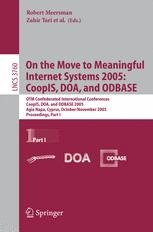
On the move to meaningful internet systemss 2005 : CoopIS, DOA, and ODBASE ; Vol. 3760 : OTM Confederated International Conferences, CoopIS, DOA, and ODBASE 2005, Agia Napa, Cyprus, October 31 - November 4, 2005, Proceedings Part I
such as the modeling of (legal) regulatory systems and the ubiquitous nature of their usage. Weweregladto seethatin 2005undertheinspiredleadershipofDr. Pilar Herrero, several of earlier successful workshops re-emerged with a second or even third edition (notably WOSE, MIOS-INTEROP and GADA), and that 5 new workshops could be hosted and successfully organized by their respective proposers: AWeSOMe, SWWS, CAMS, ORM and SeBGIS. .
