



الصفحة 1
الصفحة 1
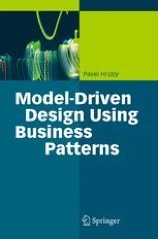
Model-Driven Design Using Business Patterns
This book takes exactly this step: it shows you how to apply the pattern ideas in business applications and presents more than 20 structural and behavioral business patterns that use the REA (resources, events, agents) pattern as a common backbone. If you are a developer working on business frameworks, you can use the patterns presented to derive the right abstractions (e.g., business objects) and to design and ensure that the meta-rules (e.g., process patterns) are followed by the developers of the actual applications. And if you are an application developer, you can use these patterns to design your business application, to ensure that it does not violate the domain rules, and to adapt the application to changing requirements without the need to change the overall architecture. As with patterns in general, this approach allows for both more flexible and more solid software architectures and hence better software quality.

Model-Driven Architecture - Foundations and Applications ; 2nd European Conference, ECMDA-FA 2006, Bilbao, Spain, July 10-13, 2006, Proceedings
The goal of the European Conference on Model-Driven Architecture — Foundations and Applications (ECMDA-FA) is to bring together industry and academia to tackle the problems in model-driven development. This volume includes 18 foundation papers and 12 application papers, which is a fine balance between both worlds. ECMDA-FA 2006 also hosted six workshops on both theoretical and practical aspects of MDA. Furthermore, the keynote speakers, David Frankel and Bran Selic, from some of the world’s largest IT companies proved that industry is very much involved in MDA. This second ECMDA-FA conference is the result of the work of the authors who submitted a total of 78 papers, the Program Committee members who took the effort to review the papers, the people organizing the workshops, and of course the Steering Committee. All in all, several hundreds of people have worked hard to make this conference a success.

Flex solutions : Essential techniques for Flex 2 and 3 developers
Flex Solutions: Essential Techniques for Flex 2 and Flex 3 Developers faces problems and provides solutions that can be applied to any project, from the most simple to the most complex. Solutions are also provided for enhancing the security of Flex applications, and techniques are offered for optimizing the actual work environment by increasing the performance of Flex Builder, adding video content, and creating an AIR project to bring your web application onto the desktop.

Exit-architecture design between war and peace : With a foreword by Heiner Mühlmann and a project by Exit Ltd.
A oeFirst we shape things, then they shape usa, was Churchilla (TM)s view. What kind of architecture can be said to shape? Who does it shape? And by what means does it shape? The authora (TM)s answers to these questions are a surprise. Through war and proximity to stress. After a tour da (TM)horizon through Roman temples, Washingtona (TM)s corridors of power and Meccaa (TM)s anti-panic architecture it becomes clear that architecture is anything but in the background. Instead it is situated in the hot spot of transmission dynamics and is capable of altering cultures, empires and even religions.
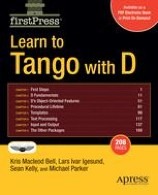
Learn to Tango with D
Learn to Tango with D introduces you to the powerful D language, with special attention given to the Tango software library. A concise yet thorough overview of the language's syntax and features is presented, followed by an introduction to Tango, the popular general–purpose library you'll find invaluable when building your D applications.
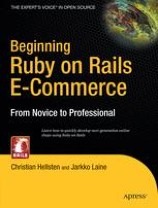
Beginning Ruby on Rails E-Commerce : From novice to professional
Beginning Ruby on Rails E-Commerce: From Novice to Professional is the first book of its kind to guide you through producing e-commerce applications with Rails, the stacked web framework taking the world by storm. The book dives right into the process of creating a production-level web application using agile methodologies and test-driven development combined with Rails best practices.
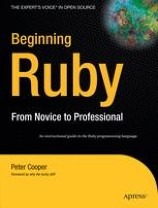
Beginning Ruby : From novice to professional
Beginning Ruby is a thoroughly contemporary guide for every type of reader who wants to learn Ruby, from novice programmers to web developers to Ruby newcomers. It starts by explaining the principles behind object-oriented programming and within a few chapters builds toward creating a genuine Ruby application.
Beginning Rails : From novice to professional
Beginning Rails is the practical starting point for anyone wanting to learn how to build dynamic web applications using the Rails framework for Ruby. You'll learn how all of the components of Rails fit together and how you can leverage them to create sophisticated web applications with less code and more joy.

Beginning JBoss Seam : From novice to professional
Reacting to the popularity of Java 2.0 Enterprise Edition™ alternatives such as Ruby on Rails and the enterprise Spring Framework, Red Hat JBoss®, Inc. developed JBoss® Seam, a new open-source lightweight Java™ EE 5-based contextual application development framework. Beginning JBoss® Seam: From Novice to Professional gets you started as the first book on this popular framework.

Beginning Java™ SE 6 Platform : From novice to professional
Beginning Java™ SE 6 Platform: From Novice to Professional steers you through the maze of Java Standard Edition (SE) 6 features. The first chapter sets the stage by introducing Java SE 6 in terms of its name change, themes, an overview, and a sampling of new features. It also briefly discusses the first two Java SE 6 updates.
Beginning Groovy and Grails : From novice to professional
Web frameworks are playing a major role in the creation of today's most compelling web applications, because they automate many of the tedious tasks, allowing developers to instead focus on providing users with creative and powerful features. Java developers have been particularly fortunate in this area, having been able to take advantage of Grails, an open source framework that supercharges productivity when building Java–driven web sites. Grails is based on Groovy, which is a very popular and growing dynamic scripting language for Java developers and was inspired by Python, Ruby, and Smalltalk.
Beginning Google Maps Applications with Rails and Ajax : From novice to professional
Beginning Google Maps Applications with Rails and Ajax: From Novice to Professional is the first book to comprehensively introduce the service from a developer perspective, showing you how you can integrate mapping features into your Rails-driven web applications. Proceeding far beyond simplistic map display, youll learn how to draw from a variety of data sources.
