



الصفحة 1
الصفحة 1

Nuclear Law : The Global Debate
This open access book traces the journey of nuclear law: its origins, how it has developed, where it is now, and where it is headed. As a discipline, this highly specialized body of law makes it possible for us to benefit from the life-saving applications of nuclear science and technology, including diagnosing cancer as well as avoiding and mitigating the effects of climate change. This book seeks to give readers a glimpse into the future of nuclear law, science and technology. It intends to provoke thought and discussion about how we can maximize the benefits and minimize the risks inherent in nuclear science and technology. This compilation of essays presents a global view in discipline as well as in geography.

NL ARMS Netherlands Annual Review of Military Studies 2020 : Deterrence in the 21st Century—Insights from Theory and Practice
This book surveys the state of the field to examine whether a fifth wave of deterrence theory is emerging. Bringing together insights from world-leading experts from three continents, the volume identifies the most pressing strategic challenges, frames theoretical concepts, and describes new strategies.
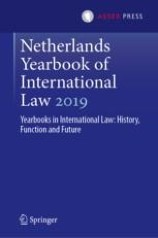
Netherlands yearbook of international law 2019 : Yearbooks in international law : History, function and future
This volume of the Netherlands Yearbook of International Law (NYIL) is the fiftieth in the Series, which means that the NYIL has now been with us for half a century. The editors decided not to let this moment go by unnoticed, but to devote this year's edition to an analysis of the phenomenon of yearbooks in international law.The Netherlands Yearbook of International Law was first published in 1970. It offers a forum for the publication of scholarly articles in a varying thematic area of public international law.

International legal argument in the Permanent Court of International Justice : the rise of the international judiciary
The International Court of Justice is the principal judicial organ of the UN, and successor of the PCIJ, which was the first real permanent court of justice at the international level. Drawing on archival material, this book describes the ground-breaking contributions of the PCIJ to international law.

International law ; 5th ed.
An authoritative and comprehensive introduction to the subject for students and practitioners alike. Latest developments in the field are incorporated, including a new chapter on Inter-state Courts and Tribunals as well as fully updated information on international laws and institutions.
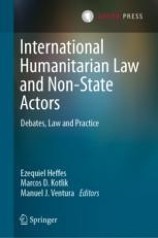
International humanitarian law and non-state actors : Debates, law and practice
challenges the traditional approach to international law by concentrating on international humanitarian law and placing the focus beyond States: it reflects on current legal, policy and practical issues that concern non-State actors in and around situations of armed conflict.The contributions that comprise this volume are oriented towards a broad readership audience in the academic and professional fields related to international humanitarian law, international criminal law, international human rights law and general public international law.

International Documents on Environmental Liability
This book in the field of international environmental liability into an easily accessible, practical handbook; details the work of the International Law Commission on this topic; and provides the latest versions of international liability conventions and their statuses

International Actors and the Formation of Laws
This book addresses the discourse that creates, modifies, and reshapes the law, as well as discourse participants. The book focuses on the actors operating in legal regimes and their subtly, bluntly, or even outright aggressive impact on the formation of laws. As the book examines the intersection of domestic, European, international, and even transnational, legal regimes where new law emerges as a product of this discourse, it contributes to the understanding of the mobility of law and contemporary law’s interactive nature. This book provides enlightening examples of diverse legal fields influenced by international, non-domestic actors. It covers a wide range of relevant topics, from financial sanctions to the rights of indigenous peoples, and addresses actors ranging from the European Union and the European Court of Human Rights to disability organizations. By exploring actors, the book stresses their objectives and driving forces behind their efforts to influence law. The book reveals an array of diverging methods used by international actors to influence law. Additionally, the book resonates with Nordic legal tradition and highlights Nordic commitment to rule of law and equality.

Handbook of international law
Provides exactly that: written by an expert who both teaches and practises in the field, it focuses on what the law is; how it is created; and how it is applied to solve day-to-day problems. It offers a practical approach to the subject, giving it relevance and immediacy. The new edition retains a concise, user-friendly format allowing central principles such as jurisdiction and the law of treaties to be understood. In addition, it explores more specialised topics such as human rights, terrorism and the environment. This handbook is the ideal introduction for students new to international law.

European Ombudsman-Institutions : A comparative legal analysis regarding the multifaceted realisatin of an idea
This book aims to comprehensively demonstrate the legal basis of parliamentary ombudsman institutions throughout Europe, analysing them in a comparative way and thereby revealing their organisational and functional diversity. It comprises the results of a research project carried out at the University of Vienna under the direction of the editor which was also intended to provide an incentive for the discussion of the legal political enhancement of such institutions.

European citizenship after Brexit : Freedom of movement and rights of residence
This book investigates European citizenship after Brexit, in light of the functionalist theory of citizenship. No matter its shape, Brexit will impact significantly on what has been labelled as one of the major achievements of EU integration: Citizenship of the Union. For the first time an automatic and collective lapse of status is observed. It is a form of involuntary loss of citizenship en masse, imposed by the automatic workings of the law on EU citizens of exclusively British nationality. It does not however create statelessness and it is likely to be tolerated under international law. This loss of citizenship is connected to a reduction of rights, affecting not solely the former Union citizens but also second country nationals in the United Kingdom and their family members.

EU External Action in International Economic Law : Recent Trends and Developments
The topic of the external action of the EU within international economic law, with a special focus on investment law. The aim of the volume is to provide the reader with an appraisal of the most recent trends and developments that have characterised a field that has been rapidly evolving and in which the EU has imposed itself as a leading actor.

Encounters between Foreign Relations Law and International Law: Bridges and Boundaries
This book offers fresh perspectives on the encounters between foreign relations law and public international law. These can occur in a hybrid zone of interaction which requires both bridges and boundaries. A timely book with crucial relevance for scholars, students and practitioners in both foreign relations law and international law.

Debating European Citizenship
This book raises crucial questions about the citizenship of the European Union. Is it a new citizenship beyond the nation-state although it is derived from Member State nationality? Who should get it? What rights and duties does it entail? Should EU citizens living in other Member States be able to vote there in national elections? If there are tensions between free movement and social rights, which should take priority? And should the European Court of Justice determine what European citizenship is about or the legislative institutions of the EU or national parliaments? This book collects a wide range of answers to these questions from legal scholars, political scientists, and political practitioners. It is structured as a series of three conversations in which authors respond to each other. This exchange of arguments provides unique depth to the debate

Brownlie's principles of public international law
A definitive guide to international law for over 40 years. This eighth edition, updated by James Crawford, builds on the reputation of its predecesors, providing outstanding, lucid and up-to-date treatment of all of the main issues in international law today
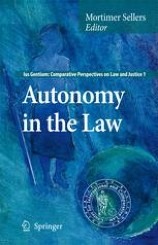
Autonomy : In the Law
Autonomy in the Law considers one of the most important benefits of the rule of law. Juxtaposing European and American conceptions of autonomy in the law of families, capital punishment and, criminal trials reveals the common values that justify all legal systems. Law protects the autonomy of individuals and associations by defending the boundaries of their own self-rule. This book illuminates the fundamental purpose of law by examining how European and American lawyers, judges and citizens do and should apply legal autonomy to the practical circumstances of litigation, legislation and the law.
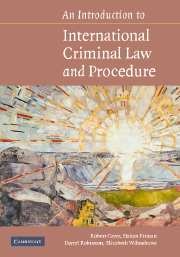
An Introduction to international criminal law and Procedure
Offers readers comprehensive coverage and a high level of academic rigour while maintaining its signature accessible and engaging style. Introducing the readers to the fundamental concepts of international criminal law, as well as the domestic and international institutions that enforce that law, this book engages with critical questions, political and moral challenges, and alternatives to international justice.
