



الصفحة 1
الصفحة 1

Nucleic Acids Hybridization : Modern Applications
Several approaches, such as microarray hybridization, have become extremely popular tools for specialists in biochemistry and biomedicine, while the potential of many other advantageous techniques seems to be underestimated. Written by an international team of authors, this book details the current state-of-art in hybridization techniques. Coverage includes experimental protocols along with comprehensive and detailed method descriptions.
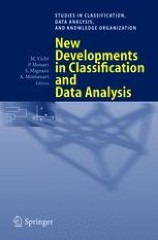
New Developments in Classification and Data Analysis ; Proceedings of the Meeting of the Classification and Data Analysis Group (CLADAG) of the Italian Statistical Society, University of Bologna, September 22-24, 2003
This volume contains revised versions of selected papers presented during the biannual meeting of the Classification and Data Analysis Group of SocietA Italiana di Statistica, which was held in Bologna, September 22-24, 2003. The scientific program of the conference included 80 contributed papers. the conference provided a large number of scientists and experts from home and abroad with an attractive forum for discussions and mutual exchange of knowledge. The talks in the different sessions focused on methodological developments in supervised and unsupervised classification and in data analysis, also p- viding relevant contributions in the context of applications. This suggested the presentation of the 43 selected papers in three parts as follows: CLASSIFICATION AND CLUSTERING Non parametric classification Clustering and dissimilarities MULTIVARIATE STATISTICS AND DATA ANALYSIS APPLIED MULTIVARIATE STATISTICS Environmental data Microarray data Behavioural and text data Financial data

Multiple Testing Procedures and Applications to Genomics
This book establishes the theoretical foundations of a general methodology for multiple hypothesis testing and discusses its software implementation in R and SAS. The methods are applied to a range of testing problems in biomedical and genomic research, including the identification of differentially expressed and co-expressed genes in high-throughput gene expression experiments.

Mouse Models of Human Blood Cancers : Basic Research and Pre-clinical Applications
Although it remains an open question among some people whether mice and humans are similar in disease development, the laboratory mouse has emerged as the preeminent animal model for human diseases. This is underscored by the recently completed mouse and human genome projects, which have revealed that mice and humans share the vast majority of their genes, and thus get many of the same diseases, and for the same reasons. Emphasizing why mouse models are valuable in vivo systems for understanding disease mechanisms and developing therapeutic strategies for human blood cancers, "Mouse Models of Human Blood Cancers: Basic Research and Pre-clinical Applications," edited by Shaoguang Li, aims on presenting thorough analyses of the pathological features and the molecular bases of several major types of blood cancer and to describe translational research using mouse cancer models.
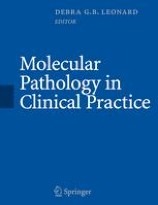
Molecular Pathology in Clinical Practice
This book addresses all areas of molecular pathology clinical practice in a single text, including: molecular biology basics, genetics, infectious diseases, hematopathology, solid tumors, HLA typing, identity testing and laboratory management. This text will provide a comprehensive reference for molecular pathologists as well as the practicing molecular pathologist and trainees.
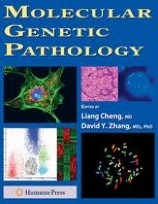
Molecular Genetic Pathology
Molecular Genetic Pathology presents up-to-date material containing fundamental information relevant to the clinical practice of molecular genetic pathology.

Molecular Biomethods Handbook
Recent advances in the biosciences have led to a range of powerful new technologies, particularly nucleic acid, protein and cell-based methodologies. The most recent insights have come to affect how scientists investigate and define cellular processes at the molecular level. Molecular Biomethods Handbook, 2nd Edition expands upon the techniques included in the first edition, providing theory, outlines of practical procedures, and applications for a range of techniques. Part A of the book describes nucleic acid methods, such as gene expression profiling, microarray analysis and quantitative PCR. In Part B, protein and cell-based methods are outlined, in subjects ranging from protein engineering to high throughput screening. Written by a well-established panel of research scientists, Molecular Biomethods Handbook, 2nd Edition provides an up-to-date collection of methods used regularly in the authors’ own research programs.

Microarrays in Inflammation
The book is of interest to academic and industrial researchers but also clinicians who are working on inflammation related topics and would like to extend their knowledge about microarrays and the application thereof. After reading the book a researcher or clinician should be in the position to plan, perform and analyse or to critically review microarray experiments related to inflammation research.

Microarray technology and Its applications
The genomics revolution would not have been possible without the 'parallelisation' offered by microarray technology. This technological - and commercial - success has been since emulated by other applications areas, with a tremendous amplification of innovation. This book describes the fundamentals and latest developments in microarray technology, as well as its future directions. It presents detailed overviews of the different techniques of fabricating microarrays, of the chemistries and preparative steps involved, of the different types of microarrays, and of the instrumentation and optical issues involved.
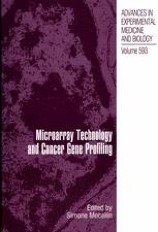
Microarray technology and cancer gene profiling
Cancer is a heterogeneous disease in most respects, including its cellularity, different genetic alterations and diverse clinical behaviors. In the present book, written by leading experts in each field, the technical features characterizing this powerful laboratory tool are discussed, and the applications so far described in the field of oncology are reviewed.
Methods of microarray data analysis V
In this volume, all investigators analyzed a single dataset on the lifecycle of the most deadly of malaria parasites, Plasmodium falciparum. The emphasis this year is on the application of novel and existing computational methodologies towards infectious disease. We highlight an introductory chapter by Raphael D. Isokpehi, a leading expert in the field of malaria. Ten of the papers presented at the conference are included, which range from the inference of genetic networks to the analysis of the spatial correlation of array data. This book is an excellent reference for academic and industrial researchers who want to keep abreast of the state-of-the-art in microarray data analysis.

Methods of microarray data analysis IV
As studies using microarray technology have evolved, so have the data analysis methods used to analyze these experiments. The CAMDA conference plays a role in this evolving field by providing a forum in which investors can analyze the same data sets using different methods. METHODS OF MICROARRAY DATA ANALYSIS IV is the fourth book in this series, and focuses on the important issue of associating array data with a survival endpoint. Previous books in this series focused on classification (Volume I), pattern recognition (Volume II), and quality control issues (Volume III). In this volume, four lung cancer data sets are the focus of analysis. We highlight three tutorial papers, including one to assist with a basic understanding of lung cancer, a review of survival analysis in the gene expression literature, and a paper on replication. In addition, 14 papers presented at the conference are included. This book is an excellent reference for academic and industrial researchers who want to keep abreast of the state-of-the-art of microarray data analysis.

Integrated Biochips for DNA Analysis
The objective of this book is to provide up-to-date coverage of some of the emerging developments in the field of integrated DNA biochips. It will prove a useful source of information for researchers in the field and for those who are just entering the field of biochip research.

ICCS 2007 ; Proceedings of the 15th International Workshops on Conceptual Structures
The 15th International Conference on Conceptual Structures (ICCS 2007) is the latest in a series of annual conferences that have been held in Europe, Australia, and North America since 1993. Some of the world's best minds in information technology, arts, humanities and social science converged to explore novel ways that information and communications technology (ICT) can augment human intelligence.
Human-centered visualization environments : GI-Dagstuhl Research Seminar, Dagstuhl Castle, Germany, March 5-8, 2006, Revised Papers
This tutorial book features an augmented selection of the material presented at the GI-Dagstuhl Research Seminar on Human-Centered Visualization Environments, HCVE 2006, held in Dagstuhl Castle, Germany in March 2006. It presents eight tutorial lectures that are the thoroughly cross-reviewed and revised versions of the summaries and findings presented and discussed at the seminar.

Genomics of Disease
Genomics of Disease is the 24th volume in the Stadler Genetics Symposium series published by Springer, which has, over many years, served as a comprehensive collection of current trends and hot topics in the field of genetics. The current volume summarizes recent progress in our attempts to characterize the genomics of plant and animal diseases. Authoritative analytical reviews are specialized to be attractive to professional researchers, teachers, and students, while also being appealing to a wider audience of scientists in related disciplines. Genomics of Disease offers essential reference material for any scientist or teacher working in the fields of plant and animal diseases. Coverage of key areas of both animal and plant disease is a unique feature of this volume and one that allows direct comparisons between the systems. All academics, scientists, and industry professionals that desire to take advantage of the most up-to-date information on the continuously emerging and expanding field of the genomics of plant and animal diseases will find it an invaluable resource.

Genomics in Endocrinology : DNA Microarray Analysis in Endocrine Health and Disease
Genomics in Endocrinology focuses on exciting new advances in endocrinology resulting from DNA microarray studies and includes a comprehensive introduction to the use of DNA microarrays in endocrinology. The volume provides the basis for further understanding of the usefulness of microarray analyses in endocrinology research.

Genomic Disorders : The Genomic Basis of Disease
In Genomic Disorders: The Genomic Basis of Disease, distinguished experts and pioneers in the field of genomics and genome rearrangements summarize and synthesize the tremendous amount of data now available in the postgenomic era on the structural features, architecture, and evolution of the human genome.
Génetique statistique = Statistical genetics
Presents the main statistical tools useful in genetics: significance tests, analysis methods based on the likelihood function, EM algorithm, modeling, analysis of variance, hierarchical classifications, multiple comparisons, etc. All of them shed light on a number of biological phenomena such as carcinogenesis, population genetics, Hardy-Weinberg equilibrium, natural selection, mutations, heredity, coalescence processes, and even evolution. This book is intended for mathematicians and biologists alike. Written with a great concern for clarity, it is also accessible to non-specialists who will be able, thanks to it, to strengthen their theoretical base and above all to develop their know-how through very concrete applications.

Genetics and Genomics of Soybean
The book covers recent progress on genome research in soybeans, including the genetic map with classical, RFLP, SSR and SNP markers; genomic and cDNA libraries, functional genomics platforms (e.g., cDNA, Affymetrix and oligonucleotide based DNA microarrays); physical maps, and the efforts to fully sequence the genome. Given the pending release of the soybean genome sequence, through the efforts of the Department of Energy’s Joint Genome Institute, this book will stand as a critical source of information on soybean.
