



الصفحة 1
الصفحة 1

One Hundred Years of Chemical Warfare : Research, Deployment, Consequences
On April 22, 1915, the German military released 150 tons of chlorine gas at Ypres, Belgium. Carried by a long-awaited wind, the chlorine cloud passed within a few minutes through the British and French trenches, leaving behind at least 1,000 dead and 4,000 injured. This chemical attack, which amounted to the first use of a weapon of mass destruction, marks a turning point in world history. The preparation as well as the execution of the gas attack was orchestrated by Fritz Haber, the director of the Kaiser Wilhelm Institute for Physical Chemistry and Electrochemistry in Berlin-Dahlem. During World War I, Haber transformed his research institute into a center for the development of chemical weapons (and of the means of protection against them).

Oncology : An Evidence-Based Approach
Reflect the principles and current practice of oncology with contributors from the fields of medical, surgical, and radiation oncology. The textbook will incorporate an evidence-based approach, enabling the reader to make decisions on the basis of concrete data. Sections on solid tumors, hematologic malignancies and the practice of oncology address the natural history and therapy for the full spectrum of neoplastic diseases in the adult. Further sections present fundamentals of supportive care of the cancer patient, the management of oncologic emergencies and acute toxicities of therapy, as well as care of metastatic disease and the terminally-ill patient. Breaking new ground, the textbook features thoughtful, in-depth sections on cancer prevention and control, cancer surviorship, the economics of cancer care, and cancer informatics. Cancer imaging is covered with an organ system-based approach, with an additional chapter on the especially intriguing potential of PET. Furthermore, a comprehensive section on translational basic science reviews the fundamentals of molecular biology, the cell cycle and signal transduction, carcinogenesis, cancer genetics, the biology of invations and metastasis, and tumor immunology.

Oncofertility : Fertility Preservation for Cancer Survivors
While cancer survival rates have increased steadily over the last several decades, particularly among younger patients, the more aggressive forms of treatment that have made this possible often compromise a cancer patient's ability to later have biological children. In the past, pregnancy after cancer was largely unheard of. Today it is increasingly a possibility due to high survivorship rates in general and emerging reproductive technologies that give patients and their families options at the time of diagnosis to ensure a patient's future fertility (cryopreservation of ovarian tissue).

Oceano fertilità : Psicologia della comunicazione nell'era della fecondazione assistita = Fertility Ocean : The psychology of communication in the age of assisted reproduction
Cosa si prova a non poter avere un figlio? Quanto è difficile comunicare alla coppia una diagnosi di sterilità? Come affrontare il 70% dei fallimenti delle tecniche di PMA? Come una legge puo' incidere sul futuro di un embrione? Il testo, nato dalla fusione multidisciplinare medica, psicologica e sociologica, vuole riflettere su queste domande e accompagnare il lettore in una nuova forma mentis sulle criticità nella fecondazione assistita.

Nexus Network Journal : Leonardo da Vinci : Architecture and Mathematics
The quintessential Renaissance Man, Leonardo da Vinci was well aware of the fundamental importance of mathematics for architecture. This issue of the Nexus Network Journal examines Leonardo’s knowledge of theoretical mathematics, explores how he used concepts of geometry in his designs for architectural projects, and reports on a real-life construction project using Leonardo’s principles. Authors include Sylvie Duvernoy, Kim Williams, Rinus Roelofs, Biagio Di Carlo, Mark Reynolds, João Pedro Xavier, Vesna Petresin, Christopher Glass, and Jane Burry. To complete the issue Rachel Fletcher writes her Geometer’s Angle column on "Dynamic Symmetry", Michael Ostwald reviews A Theory of General Ethics by Warwick Fox, Sarah Clough Edwards reviews Inigo Jones and the Classical Tradition by Christy Anderson, and Sylvie Duvernoy reviews Architecture and Mathematics in Ancient Egypt by Corinna Rossi.
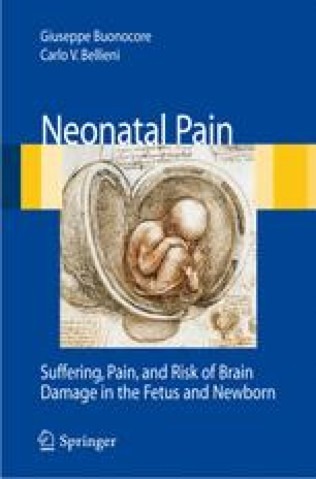
Neonatal Pain : Suffering, Pain and Risk of Brain Damage in the Fetus and Newborn
Until the 1980s it was denied that fetuses and neonates feel pain. With the advent of a deeper understanding of the pathophysiology and new diagnostic tools, the last 30 years have seen great developments in this field. This volume aims to give an overview of current knowledge in the field.

Nature, Value, Duty : Life on Earth with Holmes Rolston, III
"Nature Value and Duty: Life on Earth with Holmes Rolston, III" is a collection of contemporary writings on the work of Holmes Rolston, III. The authors contributing to this volume are a mixture of senior scholars in environmental ethics and new voices in philosophy and in literature. Together they provide an in depth evaluation of many of the topics discussed by Rolston. They probe the strengths and weaknesses of his work and suggest valuable correctives. Rolston himself, in a detailed reply to each of his critics at the end of the volume, reveals where some of these criticisms sting him the most and in the process provides one of the most detailed and articulate defenses of his position ever offered."

Nanotechnology : Societal Implications ; I : Maximising Benefits for Humanity ; II : Individual Perspectives
This book includes a collection of essays by leading scientists, engineers, and social scientists reviewing the possible uses of these impending technical developments in various industrial, medical, and national security applications, and the corresponding ethical, legal, social, economic, and educational issues that they raise. The report outlines potential areas for research into societal implications of nanotechnology, as well as some preliminary suggestions for how potential positive impacts of nanotechnology can be maximized, while minimizing any possible negative impacts, real or imagined. This book also provides the beginning of a blueprint for how one should address second-order consequences of the new technology, either positive implications or potential risks.

Moral reasoning at work : Rethinking ethics in organizations ; 2nd ed.
Moral Reasoning at Work offers a fresh perspective on how to live with them using ethics and moral psychology research. It argues that decision-makers must go beyond compliance and traditional approaches to ethics to prepare for moral dilemmas. The book has been updated with a range of examples from the author’s more recent research, to reflect current issues affecting organizations in the digital age. With two new chapters on artificial intelligence and social media, this new edition provides an up-to-date overview of ethical challenges in organizations.

Moral reasoning at work : Rethinking ethics in organizations ; 1st ed.
Moral dilemmas are a pervasive feature of working life. Moral Reasoning at Work offers a fresh perspective on how to live with them using ethics and moral psychology research. It argues that decision-makers must go beyond compliance and traditional approaches to ethics to prepare for moral dilemmas.

Moral Psychology Today : Essays on Values, Rational Choice, and the Will
This book brings together in one volume some of the very latest developments in moral psychology that were presented at a major American conference in 2004. Moral psychology is a broad area at the intersection of moral philosophy and philosophy of mind and action. Essays in this collection deal with most of the central issues in moral psychology that are of interest to a large number of philosophers today, including important questions in normative ethical theory, meta-ethics, and applied ethics.

Moral Philosophy on the Threshold of Modernity
This volume investigates the paradigm changes which occurred in ethics during the early modern era (1350-1600). While many general claims have been made regarding the nature of moral philosophy in the period of transition from medieval to modern thought, the rich variety of extant texts has seldom been studied and discussed in detail. The present collection attempts to do this. It provides new research on ethics in the context of Late Scholasticism, Neo-Scholasticism, Renaissance Humanism and the Reformation. It traces the fate of Aristotelianism and of Stoicism, explores specific topics such as probabilism and casuistry, and highlights the connections between Protestant theology and early modern ethics. The book also examines how the origins of human rights, as well as different views of moral agency, the will and the emotions, came into focus on the eve of modernity.

Moral Dilemmas in Real Life : Current Issues in Applied Ethics
The book begins with the general relation between the individual and society – instilling ethical tension, and even clashes, between the private and the public in our discourse. Going on, from general to specific, it gradually narrows the ethical playing field to touch on medical ethics, the family, and the practice of punishment. In all cases, the book addresses both consensual and conventional social institutions and distortions thereof.
Modernizing the academic teaching and research environment : Methodologies and cases in business research
Constitutes a valuable manual for young and seasoned business researchers alike, and provides a comprehensive summary for the whole research journey. It is a must-read for all researchers who need to understand the basics of business research, from identifying research topics, to planning and organizing the research process, and selecting the most appropriate methodology for the topic at hand. This book also provides insights on how to avoid common pitfalls in business research and outlines the research skills needed to write a fine piece of research. In order to capture the innovative element of research, the book also highlights methods for thinking outside the box. It also stresses the importance of respecting ethics while conducting business research. Lastly, it presents important cases and provides hands-on training for preparing survey tools. Readers looking to master business research won’t want to miss out on this unique and insightful book.

Minimal English for a Global World : Improved Communication Using Fewer Words
This book introduces a new tool for improving communication and promoting clearer thinking in a world where the use of Global English can create numerous comprehension and communication issues. Based on research findings from cross-linguistic semantics, it contains essays and studies by leading experts exploring the value and application of ‘Minimal English’ in various fields, including ethics, health, human rights discourse, education and international relations.

Mindful Universe : Quantum Mechanics and the Participating Observer
This book is a bold and original attack on the problem of consciousness and free will based on the openings provided by the laws of quantum mechanics. This is a serious and interesting attack on a truly fundamental problem.

Medical Technologies in Neurosurgery
The tremendous progress evolving in medical technologies in recent years increasingly influences our daily neurological practice. Ethical aspects in the application of technologies from differing viewpoints are discussed in detail. Additionally, typical examples for the application of medical technologies in the operating room include image processing, robotic devices, and intraoperative imaging are clearly presented.

Medical genetics and law : An international perspective
Essential resource to understanding the intersection of medical genetics and law. In a unique approach, it provides an overview on the biological principles of DNA basics and genetic inheritance linking the knowledge with the ethical and legal challenges presented by modern developments in genetics.

Means, Ends and Medical Care
In this remarkable book, Gary Wright brings his thirty years of experience as a physician in pediatric and family medicine together with his Ph.D. in philosophy to address the important problem of the nature of good medical reasoning. Wright gives a brilliant analysis of the complex internal structure of our concepts of health and disease, showing that our present models are wholly incapable of dealing with the realities of actual human disease. He then shows the error of assuming that we always know in advance what the medical and moral ends are for any medical situation. This leads to a radical questioning of so-called "rational actor" or "economic" models of rationality that are popular in medicine today.

Islamic Bioethics : Problems and Perspectives
This book presents a critical analysis of the debate at the religious, legal and political level sparked off by the introduction of new biomedical technologies (cloning, genetics, organ transplants, IVF, etc.) in Muslim countries. It compares the positions of "classic" Muslim law and contemporary religious authorities; laws in Muslim countries; the attitudes and concrete behaviour of populations, families and individuals, as well as the regulations of medical associations, bioethics committees etc..
