



الصفحة 1
الصفحة 1

Surface Plasmon Resonance Based Sensors
Over the last two decades, surface plasmon resonance (SPR) sensors have attracted a great deal of attention. This volume of Springer Series on Chemical Sensors and Biosensors provides a comprehensive treatment of the field of SPR sensors. The book is divided into three parts. Part I introduces readers to the fundamental principles of surface plasmon resonance (bio)sensors and covers the electromagnetic theory of surface plasmons, the theory of SPR sensors and molecular interactions at sensor surfaces. Part II presents a review of the state of the art in the development of SPR sensor instrumentation and functionalization methods. Part III discusses applications of SPR biosensors for study of molecules and their interactions and detection of chemical and biological analytes related to environmental monitoring, food safety and security and medical diagnostics.

Surface Plasmon Nanophotonics
At the moment the first issue of this book appears, hundreds of groups around the world are pushing the boundaries of the field of surface plasmon nanophotonics, and this book discusses a new class of photonic devices, known as surface plasmon nanophotonic structures.

Smart nanosensors
Serves as a comprehensive compilation of contemporary research conducted in the domain of nanosensors. The amalgamation of many elements within the emerging field contributes to the development of a useful collection specifically designed for inexperienced researchers in the domain of smart materials and nanosensor technologies. An adequate range of subjects has been incorporated into the present book. It includes enzyme-mimetic use of smart nanomaterials for enhanced biosensing applications, theranostic utilization of smart nanomaterials for targeted drug delivery, sensors for pollutant detection, and the utilization of smart nanomaterials in the development of biosensors for studying host-microbe interactions. Nanosensors have emerged as a promising avenue for various applications, including sensing in the fields of medicine, packaging, and heavy metal ion detection. Recent developments in the field of smart nanomaterials have led to significant advancements in the application of intelligent switches and sensors within the domains of agriculture, food production, and water treatment.

Radiative Decay Engineering
During recent years our enthusiasm for Radiative Decay Engineering (RDE) has continually increased. Many of the early predictions have been confirmed experimentally. We see numerous applications for RDE in biotechnology, clinical assays and analytical chemistry. While implementation of RDE is relatively simple, understanding the principles of RDE is difficult. The concepts are widely distributed in the optics and chemical physics literature, often described in terms difficult to understand by biophysical scientists..RDE includes chapters from the experts who have studied metal particle optics and fluorophore-metal interactions. This collection describes the fundamental principles for the widespread use of radiative decay engineering in the biological sciences and nanotechnology

Proceedings of the 4th International Workshop on Wearable an Implantable Body Sensor Networks (BSN 2007 ; March 26-28, 2007 RWTH Aachen University, Germany
The last decade has witnessed a rapid surge of interest in new sensing and monitoring devices for healthcare and the use of wearable, implantable and ambient devices for medical applications. The papers presented at BSN 2007 by leading scientists from computing, biotechnology, engineering and medicine address general issues related to on-body and in-body sensors. They discuss the latest technical developments and highlight novel applications of body-sensor networks in clinical settings, at home and on-the-move. Topics covered include new medical measurements, smart bio-sensing textiles, low-power wireless networking, system integration, medical signal processing, multi-sensor data fusion, and on-going standardization activities.

Principles of Bacterial Detection : Biosensors, Recognition Receptors and Microsystems
Principles of Bacterial Detection: Biosensors, Recognition Receptors and Microsystems will cover the up-to-date biosensor technologies used for the detection of bacteria. Written by the world's most renowned and learned scientists each in their own area of expertise, Principles of Bacterial Detection: Biosensors, Recognition Receptors and Microsystems is the first title to cover this expanding research field.

Piezoelectric Sensors
Chemically and biologically functionalized piezoelectric sensors are attractive alternatives to surface-sensitive transducers due to their surpassing versatility. The fourth volume of the Springer Series on Chemical Sensors and Biosensors includes a comprehensive theoretical treatment and current state-of-the art applications of the quartz crystal microbalance (QCM). Interface circuits and the study of viscoelasticity and micromechanics as well as surface roughness with the QCM are discussed. The broad field of analytical applications of piezoelectric sensors is covered, which ranges from nucleic acid detection, immunosensors, protein-membrane interactions and monitoring cells by imprinted polymers to the viscoelastic response of living mammalian cells on QCM-resonators.

Optical Imaging Sensors and Systems for Homeland Security Applications
Presents original and significant technical contributions from leaders of industry, government, and academia in the field of optical and photonic sensors, systems and devices for detection, identification, prevention, sensing, security, verification and anti-counterfeiting. The chapters have recent and technically significant results, ample illustrations, figures, and key references. This book is intended for engineers and scientists in the relevant fields, graduate students, industry managers, university professors, government managers, and policy makers. Advanced Sciences and Technologies for Security Applications focuses on research monographs in the areas of : Recognition and identification (including optical imaging, biometrics, authentication, verification, and smart surveillance systems) / Biological and chemical threat detection (including biosensors, aerosols, materials detection and forensics), and / Secure information systems (including encryption, and optical and photonic systems). The series is intended to give an overview at the highest research level of the frontier of research in the physical sciences.

Nanoscale Assembly : Chemical Techniques
Recent advances have pushed the limits of lithography firmly into the sub-100 nm domain, with smallest feature sizes around 10 nm. However, compared to living organisms, devices fabricated using nanolithography are not nearly as complex, as they are essentially 2D and contain only a limited number of chemical elements. For centuries, Nature has been a major inspiration for science. First of all to learn how Life functions at cellular level, but increasingly, as a blueprint for designing non-natural devices where the building blocks and their assembly are inspired by biological examples. The key tool in translating these examples into the domain of engineering, has been self-assembly or self-organization. This book gathers a spectrum researchers who have not only furthered our knowledge of self-assembly using small molecules, polymers and colloidal particles as building blocks, but who have also shown it to be a practical tool in the assembly of an astonishing variety of devices, ranging from molecular electronics to biosensors.

Nanobiosensors : From design to applications
Nanobiosensors - From Design to Applications covers several aspects of biosensors beginning from the basic concepts to advanced level research. It will help to bridge the gap between various aspects of biosensors development technology and applications. It covers biosensors related material in broad spectrum such as basic concepts, biosensors & their classification, biomarkers & their role in biosensors, nanostructures-based biosensors, applications of biosensors in human diseases, drug detection, toxins, and smart phone based biosensors.

Multifunctional systems for combined delivery, biosensing and diagnostics
Multifunctional Systems for Combined Delivery, Biosensing, and Diagnostics explores how multifunctional nanocarriers are being used in combined delivery and diagnostics in contemporary medicine. Particular attention is given to efforts to i) reduce the side effects of therapeutic agents, ii) increase the pharmacological effect, and iii) improve aqueous solubility and chemical stability of different therapeutic agents. The chapters focus on applications of nanostructured materials and nanocarriers, highlighting how these can be used effectively in both diagnosis and delivery.

Molecular microbiology of heavy metals
Molecular Microbiology of Heavy Metals includes chapters on allocation of metals in cells, metal transporter, storage and metalloregulatory proteins, cellular responses to metal ion stress, transcription of genes involved in metal ion homeostasis, uptake of essential metals, metal efflux and other detoxification mechanisms. Also discussed are metal bioreporters for the nanomolar range of concentration and tools to address the metallome. Chapters in the second part cover specific metals such as Fe, Mn, Cu, Ni, Co, Zn and Mo as key nutrient elements and Ag, As, Cd, Hg and Cr as toxic elements.

Molecular bio-sensors and the role of metal ions
Represents a milestone of contemporary progress and understanding of molecular bio-sensors for metal ions. It is bringing together the latest research in academia and industry, and it also emphasizes the spectrum of evolving regulations from regulatory bodies. This vibrant research area is covered by 31 internationally recognized experts. The impact of MILS-23 is manifested by more than 1300 references and close to 200 figures, more than 100 of them in color; further information is summarized in several tables. In conclusion, Volume 23 significantly advances our understanding of Molecular Bio-Sensors, it is therefore an essential resource for scientists working in the wide range from earth sciences, material sciences, physics, pharmacology, enzymology, analytical, organic, and inorganic biochemistry all the way through to medicine including the clinic.

Modern Food Microbiology
With 30 revised and updated chapters, the new edition of this classic text brings benefits to professors and students alike who will find new sections on proteobacteria, bottled water, food sanitizers (eletrolyzed oxidating water, ozone, chlorine, activin, chitosans, endolysins, etc.), bicontrol, biosensors quorum sensing, molecular genetic methods of analysis, food safety objectives, noroviruses, and prions. The book builds on the trusted and established sections on food preservation by modified atmosphere, high pressure and pulsed electric field processing, food-borne pathogens, food regulations, fresh-cut produce, new food products, and risk assessment and analysis. In-depth references, appendixes, illustrations, index and thorough updating of taxonomies make this an essential for every food scientist.
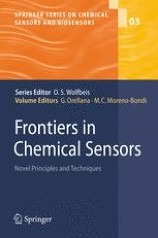
Frontiers in Chemical Sensors : Novel Principles and Techniques
With their similarity to the organs of the most advanced creatures that inhabit the Earth, sensors are regarded as being the “senses of electronics”: arti?cial eyes and ears that are capable of seeing and hearing beyond the range of - man perception; electronic noses and tongues that can recognise odours and ?avours without a lifetime training; touch that is able not only to feel the texture and temperature of the materials but even to discern their chemical compo- tion. Among the world of chemical sensors, optical devices (sometimes termed “optodes”, from the Greek “the optical way”) have reached a prominent place in those areas where the features of light and of the light-matter interaction show their advantage: contactless or long-distance interrogation, detection sensitivity, analyte selectivity, absence of electrical interference or risks, and lack of analyte consumption,

Detection and analysis of SARS Coronavirus : Advanced biosensors for pandemic viruses and related pathogens
The highly contagious SARS CoV-2 pathogen has challenged health systems around the world as they struggle to detect and monitor the spread of the pathogen. In Detection and Analysis of SARS Coronavirus: Advanced Biosensors for Pandemic Viruses and Related Pathogens expert chemists Chaudhery Mustansar Hussain and Sudheesh K. Shukla deliver a practical analysis of how contactless coronavirus detectors may be developed using existing biosensor technology.

Defense against Bioterror : Detection Technologies, Implementation Strategies and Commercial Opportunities ; Proceedings of the NATO Advanced Research Workshop on Defense against Bioterror: Detection Technologies, Implementation Strategies and Commercial Opportunities, held in Madrid, Spain from 8 to 11 April 2004
A critical assessment of state-of-the-art of emerging ("breakthrough") biosensor technologies that will allow for the rapid identification of biological threat agents in the environment and human population, Identification of directions for future research, and to promote close working relationships between scientists from different countries and with different professional experience. The volume is devoted to a comprehensive overview of the current state of biological weapons threat; challenges confronting biodetection technologies and systems; ongoing research and development; and, future requirements. Biosensor technologies including detection platforms, networked alarm-type biodetector systems, implementation strategies, electro-optical and electrochemical biosensors.

Computational Collective Intelligence ; 12th International Conference, ICCCI 2020, Da Nang, Vietnam, November 30 – December 3, 2020, Proceedings
This volume constitutes the refereed proceedings of the 12th International Conference on Computational Collective Intelligence, ICCCI 2020, held in Da Nang, Vietnam, in November 2020.* The 70 full papers presented were carefully reviewed and selected from 314 submissions. The papers are grouped in topical sections on: knowledge engineering and semantic web; social networks and recommender systems; collective decision-making; applications of collective intelligence; data mining methods and applications; machine learning methods; deep learning and applications for industry 4.0; computer vision techniques; biosensors and biometric techniques; innovations in intelligent systems; natural language processing; low resource languages processing; computational collective intelligence and natural language processing; computational intelligence for multimedia understanding; and intelligent processing of multimedia in web systems.
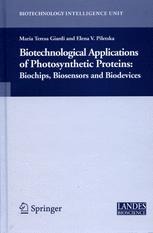
Biotechnological applications of photosynthetic proteins : Biochips, biosensors and biodevices
Biotechnological Applications of Photosynthetic Proteins: Biochips, Biosensors and Biodevices provides an overview of the recent photosystem II research and the systems available for the bioassay of pollutants using biosensors that are based on the photochemical activity. The data presented in this book serves as a basis for the development of a commercial biosensor for use in rapid pre-screening analyses of photosystem II pollutants, minimising costly and time-consuming laboratory analyses.

Biosensing : International Research and Development
The goal of this book is to disseminate information on the worldwide status and trends in biosensing R&D to government decisionmakers and the research community. The contributors critically analyze and compare biosensing research in the United States with that being pursued in Japan, Europe and other major industrialized countries.
