



الصفحة 1
الصفحة 1
On the Uniqueness of Humankind
Europäische Akademie organized the conference "The Uniqueness of Humankind – Über die Sonderstellung des Menschen". The proceedings of the conference documented in this volume approached the theoretical and practical concept of the "Sonderstellung" against the background of present day knowledge in biosciences.

Nanophytomedicine : An emerging platform for drug delivery
Covers recent advances in experimental and theoretical studies on various properties of nanoparticles derived from plant sources. This book assesses the recent advancements and applications of plant-based nanoparticles and also highlights emerging concepts of biomimetics. Contains 24 chapters encompassing various therapeutic applications of phytochemicals derived from plants, ferns, seaweeds, and so on, mediated through nanotechnology and its allied approaches. A fervent attempt has been made to compile every significant advancement in the field of phytonanomedicine so as to accelerate its momentum in the pharmaceutical sector.

Nanopharmaceuticals in regenerative medicine
A collective and comprehensive volume of the latest innovations in nanoscience technology for practical use in clinical, biomedicine and diagnostic arena. The term nanotechnology pops up in every segment of modern-day life. The primary aim of this book is to deliver the precise information to students, educators, technologists and researchers. A conglomerate of scientists from various research fields contributed to the chapters, giving detailed descriptions on the most recent developments of nanotechnology in the area of disease management. This book will also be useful for industrial research and development partners, start-up entrepreneurs, government policy makers and other professionals who are interested in nanomedicines.

Molecular Biomethods Handbook
Recent advances in the biosciences have led to a range of powerful new technologies, particularly nucleic acid, protein and cell-based methodologies. The most recent insights have come to affect how scientists investigate and define cellular processes at the molecular level. Molecular Biomethods Handbook, 2nd Edition expands upon the techniques included in the first edition, providing theory, outlines of practical procedures, and applications for a range of techniques. Part A of the book describes nucleic acid methods, such as gene expression profiling, microarray analysis and quantitative PCR. In Part B, protein and cell-based methods are outlined, in subjects ranging from protein engineering to high throughput screening. Written by a well-established panel of research scientists, Molecular Biomethods Handbook, 2nd Edition provides an up-to-date collection of methods used regularly in the authors’ own research programs.

Medicinal plants : Bioprospecting and pharmacognosy
Touches on a diverse selection of topics related to medicinal plants. Chapters look at the use of medicinal plants in healthcare and disease management, such as to treat inflammation, anti-hyperglycemia, and obesity and as immunity boosters. The authors also address the conservation, maintenance, and sustainable utilization of medicinal plants along with postharvest management issues. Topics include consumption, supply chain, marketing, trade, and future directions of research. Some specific plants discussed include fennel, basil, clove, ginger, lavender, turmeric, ginsing, and asparagus in connection with their various therapeutic properties, including anti-rheumatic, anti-asthmatic, anti-diabetic, carminative, diuretic, fever-reducing, and hypotensive. Medicinal Plants: Bioprospecting and Pharmacognosy will prove informative for scientists and researchers in medicinal plants as well as for faculty and students, pharmaceutical researchers, and others.

Introduction to organic and medicinal chemistry
Designed to be an undergraduate reference textbook for students of chemistry who aim to select degree modules geared towards medicinal chemistry. The first two chapters offer an overview of basic organic chemistry, followed by organic synthesis in Chapter 3, with an emphasis on the importance of synthetic procedures in relation to the chemistry of drug design. In Chapter 4, the book covers foundational aspects of biochemistry and biomedical science to provide a basis for students understanding where and how drugs work on selected targets. Later, the book explains how medicines have been created for selected topics in medicinal chemistry – namely against pathogens, cancer and neurological targets.
High performance computing for computational science - VECPAR 2008 ; 8th International Conference, Toulouse, France, June 24-27, 2008. Revised Selected Papers
This book constitutes the thoroughly refereed post-conference proceedings of the 8th International Conference on High Performance Computing for Computational Science, VECPAR 2008, held in Toulouse, France, in June 2008.The 51 revised full papers presented together with the abstract of a surveying and look-ahead talk were carefully reviewed and selected from 73 submissions. The papers are organized in topical sections on parallel and distributed computing, cluster and grid computing, problem solving environment and data centric, numerical methods, linear algebra, computing in geosciences and biosciences, imaging and graphics.
Handbook of Applied Solid State Spectroscopy
Solid-State spectroscopy is a burgeoning field with applications in many branches of science, including physics, chemistry, biosciences, surface science, and materials science. Handbook of Applied Solid-State Spectroscopy brings together in one volume information about various spectroscopic techniques that is currently scattered in the literature of these disciplines. This concise yet comprehensive volume covers theory and applications of a broad range of spectroscopies, including NMR, NQR, EPR/ESR, ENDOR, scanning tunneling, acoustic resonance, FTIR, auger electron emission, x-ray photoelectron emission, luminescence, and optical polarization, and more. Emphasis is placed on fundamentals and current methods and procedures, together with the latest applications and developments in the field.

Essential oils as antimicrobial agents in food preservation
As the food industry responds to the increasing consumer demand for green, safe and sustainable products, it is reformulating new products to replace chemical synthetic food additives. Essential Oils as Antimicrobial Agents in Food Preservation provides a comprehensive introduction to the antimicrobial activity of plant essential oils and their application strategies in food preservation. It is aimed at food microbiology experts, food preservation experts, food safety experts, food technicians and students.

Deep Learning, Machine Learning and IoT in Biomedical and Health Informatics : Techniques and Applications
Examines and demonstrates state-of-the-art approaches for IoT and Machine Learning based biomedical and health related applications. This book aims to provide computational methods for accumulating, updating and changing knowledge in intelligent systems and particularly learning mechanisms that help us to induce knowledge from the data. It is helpful in cases where direct algorithmic solutions are unavailable, there is lack of formal models, or the knowledge about the application domain is inadequately defined. In the future IoT has the impending capability to change the way we work and live. These computing methods also play a significant role in design and optimization in diverse engineering disciplines. With the influence and the development of the IoT concept, the need for AI (artificial intelligence) techniques has become more significant than ever.

Coding, shaping, making : experiments in form and form-making
Combines inspiration from architecture, mathematics, biology, chemistry, physics and computation to look towards the future of architecture, design and art. It presents ongoing experiments in the search for fundamental principles of form and form-making in nature so that we can better inform our own built environment.
Machine learning in healthcare : Fundamentals and recent applications
Discusses how to build various ML algorithms and how they can be applied to improve healthcare systems. Healthcare applications of AI are innumerable: medical data analysis, early detection and diagnosis of disease, providing objective-based evidence to reduce human errors, curtailing inter- and intra-observer errors, risk identification and interventions for healthcare management, real-time health monitoring, assisting clinicians and patients for selecting appropriate medications, and evaluating drug responses. Extensive demonstrations and discussion on the various principles of machine learning and its application in healthcare is provided, along with solved examples and exercises.
Machine learning and deep learning in medical data analytics and healthcare applications
Introduces and explores a variety of schemes designed to empower, enhance, and represent multi-institutional and multi-disciplinary machine learning (ML) and deep learning (DL) research in healthcare paradigms. Serving as a unique compendium of existing and emerging ML/DL paradigms for the healthcare sector, this book demonstrates the depth, breadth, complexity, and diversity of this multi-disciplinary area. It provides a comprehensive overview of ML/DL algorithms and explores the related use cases in enterprises such as computer-aided medical diagnostics, drug discovery and development, medical imaging, automation, robotic surgery, electronic smart records creation, outbreak prediction, medical image analysis, and radiation treatments.
Lung biology and pathophysiology
The lungs are the organ for gas exchange between the body and the external environment. Dysfunction of upper airway epithelium and smooth muscle cells leads to pathogenesis of asthma, chronic obstructive pulmonary disease (COPD), cystic fibrosis, and other conditions, resulting in airway inflammation and narrowing. Injury to alveolar epithelium and endothelium causes influx of neutrophil and protein-rich fluid from circulation, resulting in edema and disruption of gas exchange. In addition to lung structural cells, immune cells, including alveolar macrophages and lymphocytes play critical roles in the maintenance of lung function. This book contributes to the understanding homeostasis of lung cells in the physiological and pathological conditions critical to the development of novel therapeutics.
Cleaning validation : Practical compliance approaches for pharmaceutical manufacturing
Timely coverage of cleaning validation for the pharmaceutical industry, a dynamic area in terms of health-based limits. Encourages pharmaceutical manufacturers, and particularly upper management, to meet the challenges of the science-based and riskbased approaches to cleaning validation. Draws on the author’s vast experience in the field of cleaning validation and hazardous materials. Discusses EMA vs. ISPE on Cleaning Limits and revised Risk-MaPP for highly hazardous products in shared facilities. A diverse list of topics from protocol limits for yeasts and molds to cleaning validation for homeopathic drug products.
Chemical and clinical applications of tempol : A marvelous molecule
A comprehensive and authoritative exploration of Tempol (4-Hydroxy-TEMPO), an exceptional chemical compound with diverse applications in both scientific research and medical practice. This book delves into Tempol's unique properties, mechanisms of action, and its potential role in combating oxidative stress-related disorders. Includes a chapter devoted to the safe handling, storage, and disposal of Tempol in compliance with pharmaceutical regulations. The authors pay particular attention to pharmaceutical regulations in the industry.
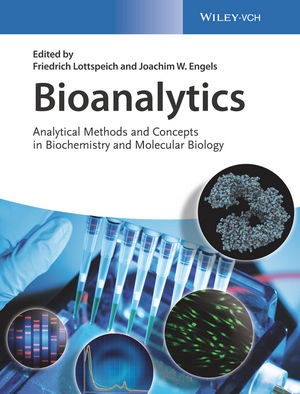
Bioanalytics : Analytical methods and concepts in biochemistry and molecular biology
Analytical methods are the essential enabling tools of the modern biosciences. This book presents a comprehensive introduction into these analytical methods, including their physical and chemical backgrounds, as well as a discussion of the strengths and weakness of each method. It covers all major techniques for the determination and experimental analysis of biological macromolecules, including proteins, carbohydrates, lipids and nucleic acids.
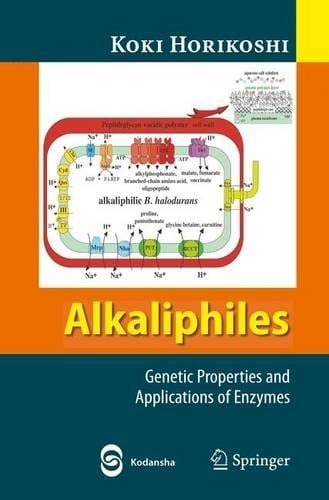
Alkaliphiles : Genetic properties and applications of enzymes
The pioneering work of Dr. Koki Horikoshi on the discovery, research and applications of alkaliphilic bacteria are described here in their entirety. The isolation, distribution and taxonomy of alkaliphilic microorganisms as well as their cell structure and physiology are discussed for a basic understanding of these entities. The molecular biology and genome sequencing of some alkaliphilic bacterial strains are also presented. Part II of the volume focuses on enzymes of alkaliphiles and their applications. These include alkaline proteases, starch-degrading enzymes and numerous others. Some of these enzymes are currently in wide commercial use as laundry detergent additives and in wastewater treatment. Alkaliphiles are a relatively recent field of research that will no doubt provide avenues to a wide range of further discoveries and applications for a new generation of workers in bioscience and technology.
A Legacy for Living Systems : Gregory Bateson as Precursor to Biosemiotics
This book represents a major attempt to revise this deficiency. Scholars from ecology, biochemistry, evolutionary biology, cognitive science, anthropology and philosophy discuss how Bateson's thinking might lead to a fruitful reframing of central problems in modern science. Most important perhaps, Bateson's bioanthropology is shown to play a key role in developing the set of ideas explored in the new field of biosemiotics. The idea that organismic life is indeed basically semiotic or communicative lies at the heart of the biosemiotic approach to the study of life.The only book of its kind, this volume provides a key resource for the quickly-growing substratum of scholars in the biosciences, philosophy and medicine who are seeking an elegant new approach to exploring highly complex systems.
A Dictionary of Biomedicine
A Dictionary of Biomedicine fills the need to define the specialist language used within an evolving field by offering clear, concise definitions of even the most complex biomedical terms. It includes more than 10,000 A-Z entries on all areas of biomedicine, such as genomics and biomedical science. Entries are authoritative and wide-ranging, covering terms from the related areas of anatomy, genetics, molecular bioscience, pathology, pharmacology, and clinical medicine.
