



الصفحة 99
الصفحة 99

Carbon Inventory Methods Handbook for Greenhouse Gas Inventory, Carbon Mitigation and Roundwood Production Projects
Carbon Inventory Methods Handbook provides detailed step-by-step information on sampling procedures, field and laboratory measurements, application of remote sensing and GIS techniques, modeling, and calculation procedures along with sources of data for carbon inventory. The unique feature of this handbook is that it provides practical guidance on carbon inventory methods for four kinds of projects, namely, 1) development, implementation and monitoring of carbon mitigation in forest, agriculture and grassland sectors, 2) national greenhouse gas inventory in agriculture, forest, and other land-use categories, 3) forest, grassland and agroforestry development and 4) commercial and community forestry roundwood production.
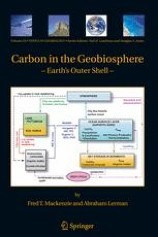
Carbon in the Geobiosphere : Earth's outer shell
Carbon and carbon dioxide always played an important role in the geobiosphere that is part of the Earth’s outer shell and surface environment. The book’s eleven chapters cover the fundamentals of the biogeochemical behavior of carbon near the Earth’s surface, in the atmosphere, minerals, waters, air-sea exchange, and inorganic and biological processes fractionating the carbon isotopes, and its role in the evolution of inorganic and biogenic sediments, ocean water, the coupling to nutrient nitrogen and phosphorus cycles, and the future of the carbon cycle in the Anthropocene. This book is mainly a reference text for Earth and environmental scientists; it presents an overview of the origins and behavior of the carbon cycle and atmospheric carbon dioxide, and the human effects on them. The book can also be used for a one-semester course at an intermediate to advanced level addressing the behavior of the carbon and related cycles.
Carbon and nitrogen in the terrestrial environment
Carbon and Nitrogen in the Terrestrial Environment is a comprehensive, interdisciplinary description of C and N fluxes between the atmosphere and the terrestrial biosphere; issues related to C and N management in different ecosystems and their implications for the environment and global climate change; and the approaches to mitigate emission of greenhouse gases.Drawing upon the most up-to-date books, journals, bulletins, reports, symposia proceedings and internet sources documenting interrelationships between different aspects of C and N cycling in the terrestrial environment, Carbon and Nitrogen in the Terrestrial Environment fills the gap left by most of the currently available books on C and N cycling. They either deal with a single element of an ecosystem, or are related to one or a few selected aspects like soil organic matter (SOM) and agricultural or forest management, emission of greenhouse gases, global climate change or modeling of SOM dynamics.
Carbon and Its Domestication
Carbon is chemically versatile and is thus the body and soul of biological, geological, ecological and economic systems. Its appropriation by humans through diversion of its biogeochemical cycle has been a mainstay of development. This domestication is characterized by a number of thresholds: control of fire, development of agriculture, expansion of Europe, fossil-fuel use and biotechnology. All have exacted an environmental toll, not least being climatic change and biodiversity loss. Carbon management now and in the future is a ‘hot’ political issue.
Carbon : The future material for advanced technology applications
Carbon-based materials and their applications constitute a burgeoning topic of scientific research among scientists and engineers attracted from diverse areas such as applied physics, materials science, biology, mechanics, electronics and engineering. Further development of current materials, advances in their applications, and discovery of new forms of carbon are the themes addressed by the frontier research in these fields. This book covers all the fundamental topics concerned with amorphous and crystalline C-based materials, such as diamond, diamond-like carbon, carbon alloys, carbon nanotubes. The goal is, by coherently progressing from growth - and characterisation techniques to technological applications for each class of material, to fashion the first comprehensive state-of-the-art review of this fast evolving field of research in carbon materials.

Carbohydrate-protein interactions : Methods and protocols
Provides new and updated tools for studying protein-carbohydrate interactions ranging from traditional biochemical methods to state-of-the-art techniques. This book focuses on four different research themes detailing methods for screening and quantifying CAZyme activity, investigating the interactions between proteins, carbohydrate ligands, methods for the visualization of carbohydrates, protein-carbohydrate complexes, structural and “omic” approaches for studying systems of CAZymes.
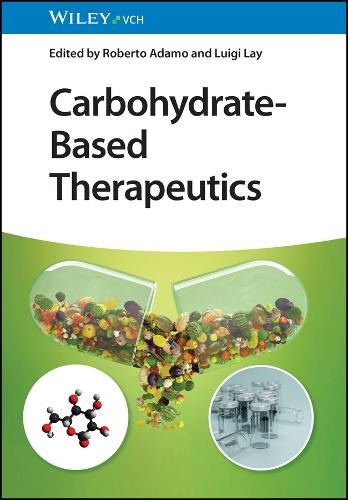
Carbohydrate-based therapeutics
Explores new frontiers in carbohydrate-based therapeutic applications, utilizing a unique approach by providing a detailed background of diseases coupled with subsequent carbohydrate-based therapies. The link between chemistry and design of novel carbohydrate-based medicines is highlighted and a broad overview of all the potential applications of carbohydrates is given. Emphasis is laid on concepts used for carbohydrate drug design, structure– activity relationship, and impact on health and diseases. The text also discusses newer topics like nanoparticles, material science, and tissue generation.

Car deal : The ultimate used-cars marketplace
This is an effort to represents the design and implementation of a mobile application that serves as a marketplace for buying and selling used cars. The application is developed using Flutter, a popular cross-platform framework, and integrates an Artificial Intelligence (AI) model to predict the price of used cars based on various parameters, such as the car's model, age, mileage, and condition. The report provides a comprehensive overview of the project's development process, including the use of agile methodology and various technologies, such as Firebase, Python, and TensorFlow. The AI model's accuracy is evaluated using statistical metrics, such as Mean Absolute Error (MAE) and Root Mean Squared Error (RMSE).
Capacity options for revenue management : Theory and applications in the air cargo industry
Hellermann addresses in his dissertation one of the most interesting - pects of this evolution for OR/MS, the parallel development of long-term and short-term markets for capacity and output, accompanied by a range of option and ?xed-commitment (i. e. , forward) contracts as the basic mec- nisms supporting transactions. This has been a fascinating topic for OR/MS research because it builds on the powerful framework of real options, while connecting directly to key operations decisions (capacity planning, network design, staf?ng, routing, maintenance, and so forth) of the equipment and technologies whose output is the focus of contracts.
Canonical Perturbation Theories, Degenerate Systems, and Resonance
Canonical Perturbation Theories, Degenerate Systems and Resonance presents the foundations of Hamiltonian Perturbation Theories used in Celestial Mechanics, emphasizing the Lie Series Theory and its application to degenerate systems and resonance. This book is the complete text on the subject including advanced topics in Hamiltonian Mechanics, Hori’s Theory, and the classical theories of Poincaré, von Zeipel-Brouwer, and Delaunay.
Cancerimmunotherapies : Solid tumors and hematologic malignancies
Presents the clinical scope of cancer immunotherapeutic agents for solid tumors and Hematologic malignancies, elaborates on the scientific details of their modes of action, and presents the impact of these agents on oncology, patients and the broader healthcare system. At present, cancer immunotherapies fall broadly into three categories: immune checkpoint inhibitors (ICIs), adoptive T cell therapies, and cancer vaccines which have distinct mechanisms of action. Immune checkpoint inhibitors rely upon disrupting tumor antigen recognition as self by the immune system through inhibition of checkpoint molecules. Adoptive T cell therapies involve the engineering of T cells ex vivo to target and destroy tumor cells. The first part of this book will provide an overview of the discovery and mechanistic details of the technology. The second part will be devoted to elaborating on the clinical outcomes, successes and limitations for specific tumor subtypes, which includes both solid tumors and hematologic malignances for both pediatric and adult populations.
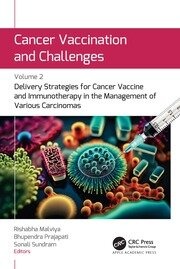
Cancer vaccination and challenges Vol.2 : delivery strategies for cancer vaccine and immunotherapy in the management of various carcinomas
Covers delivery strategies of cancer vaccines for the management of various forms of carcinoma, examining the prospects of delivering immuno-oncology therapies, focusing specifically on effective drug delivery strategies for the treatment of lung, prostate, and pancreatic carcinomas.
Cancer Survivorship : Today and Tomorrow
A diagnosis of cancer provokes myriad responses in patients, chief among them the question: "how long do I have to live?" Increasingly, the answer to that question is not one of months or years, but decades. While there are now nearly 10 million people in the United States who have recovered or are currently recovering from cancer (increased from three million in 1971), the unique challenges encountered by survivors are often met with uncertainity by even the most seasoned physicians, nurses, and clinical social workers because of a lack of formal guidelines for post-treatment care and follow-up.
Cancer Proteomics : From Bench to Bedside
the authors collectively provide the current status of proteomics in cancer therapy and offers the existing technologies used in proteomics that allow for protein profiling and for the identification of druggable targets in human samples. Mass spectrometry based protein characterization and protein microarrays hold great promise of predicting response to specific drugs in cancer therapy. Insightful to the reader with broad perspectives on topics related to the use of proteomic strategies in cancer therapy, Cancer Proteomics offers anticipated challenges that may arise from its application in daily practice.
Cancer Prevention
This volume contains the main proceedings of the fourth international conference on "Cancer Prevention 2006," which was held during February 16–18, 2006, in St. Gallen, Switzerland. Written by international experts in the field, the book comprises a comprehensive update on the most recent developments in the upsurging fields of molecular biology and cancer genetics and their interactions with clinical epidemiology and cancer prevention at various levels: genetic/biologic predisposition and definition of high-risk groups; preclinical models and tumor prevention; prospects of surrogate endpoints and biomarkers; progress in imaging and detection of neoplastic precursor lesions.
Cancer Informatics in the Post Genomic Era : Toward Information-Based Medicine
Medical information science requires analytic tools. This is achieved by developing and assessing methods and systems for the acquisition, processing, and interpretation of patient data, aided by scientific discovery. Cancer Informatics in Post-Genomic Era provides both the necessary methodology and practical information tools.Key challenges include integrating research and clinical care, sharing data, and establishing partnerships within and across sectors of patient diagnosis and treatment.Addressing important clinical questions in cancer research will benefit from expanding computational biology.
Cancer in the Spine : Comprehensive Care
In Cancer in the Spine: Comprehensive Care, distinguished physicians and researchers from prestigious cancer centers around the world critically examine current trends and innovations in spinal cancer management. Detailing both the fundamental principles of diagnosis and treatment planning, and the cutting-edge techniques of tumor treatment, these experts bring together in one volume a guide to coordinated management of all aspects of cancer in the spine.

Cancer in the Arab World
Over the past few decades, the Arab world has witnessed a swift evolution in healthcare provision. Nonetheless, Arab countries have considerable variability in economic capabilities, resource allocation, and intellectual talent that inevitably reflect on access to modern cancer care and prevention. This book is authored by experts from the Arab world who provide vital information on cancer statistics and risk factors, available clinical care pathways and infrastructure, and prevention programs in their individual countries. The chapters also address specific challenges in each country and insights into future directions to achieve optimal care with conventional and novel diagnostics and therapies to keep up with the era of precision medicine.
Cancer immunotherapy : Methods and protocols
Details multiple areas of new and emerging methods to develop the next generation of immunotherapy treatments. Chapters guide readers through analysis and characterisation of the interactions between tumour and immune cells, and cell engineering tools for cancer treatment, to provide a unique and compelling set of techniques instrumental to work with, and engineer, immune cells. Written in the highly successful Methods in Molecular Biology series format, chapters include introductions to their respective topics, lists of the necessary materials and reagents, step-by-step, readily reproducible laboratory protocols, and tips on troubleshooting and avoiding known pitfalls.

Cancer immunotherapy
Defining Cancer as a disease in which some of the body's cells grow uncontrollably and spread to other parts of the body, making it an enormous medical and economic burden accounting for 9.6 million deaths in 2018. Cancer treatments were being introduced for a long time. The development of specific therapies to treat cancer really depends on the continued discovery of the molecular changes that lead to the malignant progression of human cancers. More and more drugs are being developed to block cancer pathways that lead to impaired growth and survival of cancer cells. In this dissertation, the concept of cellular and immunotherapy of cancer will be discussed briefly, taking into considerations the mechanisms of action, the advantages, challenges and drawbacks of the different types of monoclonal antibodies and CAR T-Cell therapy.
