



الصفحة 9
الصفحة 9
Nucleic Acids Hybridization : Modern Applications
Several approaches, such as microarray hybridization, have become extremely popular tools for specialists in biochemistry and biomedicine, while the potential of many other advantageous techniques seems to be underestimated. Written by an international team of authors, this book details the current state-of-art in hybridization techniques. Coverage includes experimental protocols along with comprehensive and detailed method descriptions.

Nucleic Acids and Proteins in Soil
With millions of different bacterial species living in soil, the microbial community is extremely complex, varying at very small scales. Microbe-driven functions are essential for most processes in soil. Thus, a better understanding of this microbial diversity will be invaluable for the management of the various soil functions. Nucleic Acids and Proteins in Soil combines traditional approaches in soil microbiology and biochemistry with the latest techniques in molecular microbial ecology. Included are methods to analyse the presence and importance of nucleic acids and proteins both inside and outside microbial cells, the horizontal gene transfer which drives bacterial diversity, as well as soil proteomes. Further chapters describe techniques such as PCR, fingerprinting, the challenging use of gene arrays for structural and functional analysis, stable isotope probing to identify in situ metabolic functions, and the use of marker and reporter genes in soil microbial ecology.

Nucleation and Atmospheric Aerosols ; 17th International Conference, Galway, Ireland, 2007
Atmospheric particles are ubiquitous in the atmosphere: they form the seeds for cloud droplets and they form haze layers, blocking out incoming radiation and contributing to a partial cooling of our climate. They also contribute to poor air quality and health impacts. This book brings together the leading experts from the nucleation and atmospheric aerosols research communities to present the current state-of-the-art knowledge in these related fields.
Nuclear Science and Safety in Europe
Recent results on the nature of low-, intermediate- and high-energy nuclear forces as well as on the internal structure of nucleons and atomic nuclei are presented. This book Prospects to find a new state of the nuclear matter at extreme conditions that existed in the early Universe and the utilisation of the nuclear energy are discussed.

Nuclear Risks in Central Asia
Insights into uranium production sites and nuclear explosion testing sites in Former Soviet Union countries Unique information on contamination of NORM and other radionuclides in Central Asia and Caucasus area Highlighting the need of radiation protection in areas contaminated by uranium exploitation in Central Asia and Caucasus area

Nuclear Principles in Engineering
Nuclear Principles in Engineering is written for students, engineers, physicians and scientists who need up-to-date information in basic nuclear concepts and calculation methods using numerous examples and illustrative computer application areas.

Nuclear pre-mRNA Processing in Plants
In recent years nuclear pre-mRNA processing has taken center stage as an important regulator of gene expression and ultimately growth and development. Large-scale genome and cDNA sequencing projects together with bioinformatic analyses of these sequences have revealed that alternative splicing of pre-mRNAs contributes greatly to transcriptome and proteome complexity in eukaryotes. During the last few years, tremendous progress has been made in understanding various aspects of pre-mRNA processing including alternative splicing and its importance in plant growth and development as well as in plant responses to hormones and stresses. This book, with contributions from leading scientists in this area, summarizes recent advances in nuclear pre-mRNA processing in plants. It provides researchers in the field, as well as those in related areas, with an up-to-date and comprehensive, yet concise, overview of the current status and future potential of this research in understanding plant biology.
Nuclear Medicine Technology : Review Questions for the Board Examinations
Nuclear medicine technology has been a fascinating subject ever since the early rectilinear scanner produced images, and is becoming ever more interesting (and demanding) with the growth of positron emission tomography and other molecular imaging. Taking and passing the exam offered by the Nuclear Medicine Technology Certi? cation Board (NMTCB), or that offered by the American Registry of Radiologic Techno- gists (ARRT), is the ? nal step in reaching the status of Nuclear M edicine Technologist. These exams are both challenging and the breadth of knowledge that they cover mean that a th- ough review is in order before attempting either exam. This book was created to assist in preparation for those exams. In addition to recalling information, the questions require application of information, and analysis of situations.

Nuclear Medicine Technology : Review Questions for the Board Examinations
Prepares technologists for registry examinations in nuclear medicine technology by providing practice questions and answers and a mock registry exam. This book includes questions and answers regarding NRC regulations.

Nuclear Law : The Global Debate
This open access book traces the journey of nuclear law: its origins, how it has developed, where it is now, and where it is headed. As a discipline, this highly specialized body of law makes it possible for us to benefit from the life-saving applications of nuclear science and technology, including diagnosing cancer as well as avoiding and mitigating the effects of climate change. This book seeks to give readers a glimpse into the future of nuclear law, science and technology. It intends to provoke thought and discussion about how we can maximize the benefits and minimize the risks inherent in nuclear science and technology. This compilation of essays presents a global view in discipline as well as in geography.

Nuclear Import and Export in Plants and Animals
Nuclear Import and Export in Plants and Animals provides insight into the remarkable mechanisms of nuclear import and export. This book covers a range of topics from the nuclear pore structure, to nuclear import and export of macromolecules in plant and animal cells. In addition, the book covers the special cases of nuclear import of Agrobacterium T-DNA during plant genetic transformation, nuclear import and export of animal viruses, and nuclear intake of foreign DNA. A chapter on research methods to study nuclear transport concludes the book.

Nuclear fusion research : Understanding plasma-Surface interactions
It became clear in the early days of fusion research that the effects of the containment vessel (erosion of "impurities") degrade the overall fusion plasma performance. Progress in controlled nuclear fusion research over the last decade has led to magnetically confined plasmas that, in turn, are sufficiently powerful to damage the vessel structures over its lifetime. This book reviews current understanding and concepts to deal with this remaining critical design issue for fusion reactors. It reviews both progress and open questions, largely in terms of available and sought-after plasma-surface interaction data and atomic/molecular data related to these "plasma edge" issues.

Nuclear Fission and Cluster Radioactivity : An Energy-Density Functional Approach
It is the first application to nuclear physics from energy-density functional method, for which Professor Walter Kohn received the Nobel Prize in Chemistry. The book presents a comprehensive extension of the Bohr-Wheeler theory with the present knowledge of nuclear density distribution function.
Nuclear Energy : Principles, Practices, and Prospects
The world faces serious difficulties in obtaining the energy that will be needed in coming decades for a growing population, especially given the problem of climate change caused by fossil fuel use. This book presents a view of nuclear energy as an important carbon-free energy option. It discusses the nuclear fuel cycle, the types of reactors used today and proposed for the future, nuclear waste disposal, reactor accidents and reactor safety, nuclear weapon proliferation, and the cost of electric power. To provide background for these discussions, the book begins with chapters on the history of the development and use of nuclear energy, the health effects of ionizing radiation, and the basic physics principles of reactor operation. The text has been rewritten and substantially expanded for this edition, to reflect changes that have taken place in the eight years since the publication of the first edition and to provide greater coverage of key topics. These include the Yucca Mountain repository plans, designs for next-generation reactors, weapons proliferation and terrorism threats, the potential of alternatives to nuclear energy, and controversies about low-level radiation.

Nuclear Dynamics : Molecular Biology and Visualization of the Nucleus
The dynamics of nuclear structures described in this book furnish the basis for a comprehensive understanding of how the higher-order organization and function of the nucleus is established and how it correlates with the expression of a variety of vital activities such as cell proliferation and differentiation. The resulting volume creates an invaluable source of reference for researchers in the field.

Nuclear Condensed Matter Physics with Synchrotron : Basic Principles, Methodology and Applications
This book provides a comprehensive introduction to the growing field of nuclear condensed matter physics with synchrotron radiation, a technique which finds numerous applications in fields such as magnetism, physics of surfaces and interfaces, lattice dynamics and more. Due to the enormous brilliance of modern synchrotron radiation sources, the method is particularly suited for the investigation of low-dimensional structures such as thin films and nanoparticles. The use of isotopic probe layers, for example, allows one to determine magnetic and vibrational properties with very high spatial resolution; focusing techniques and x-ray interference effects lead to a very high sensitivity for smallest amounts of material. The book is written on an introductory level with many examples employed to illustrate the special experimental possibilities.
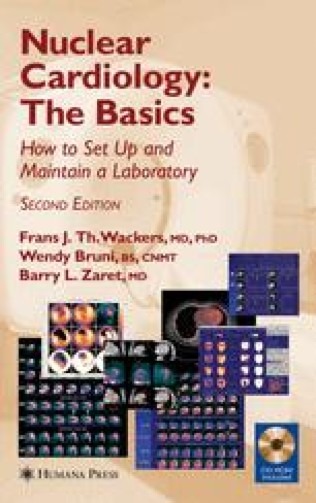
Nuclear Cardiology, The Basics : How to Set Up and Maintain a Laboratory
The purpose of this book is to provide the outline for the "nuts and bolts" establishment and operation of a nuclear cardiology laboratory. In so doing, the authors have attempted to deal with the relevant issues that a laboratory director must address in either setting up the laboratory or maintaining its competitive edge and clinical competence over time. The authors primarily attempted to identify issues related to outpatient imaging facilities. However, where appropriate issues related to inpatients in hospital-based laboratories are also discussed.

Nuclear back-end and transmutation technology for waste disposal : Beyond the Fukushima accident
Covers essential aspects of transmutation technologies, highlighting especially the advances in Japan. The accident at the Fukushima Daiichi Nuclear Power Plant (NPP) has caused us to focus attention on a large amount of spent nuclear fuels stored in NPPs. In addition, public anxiety regarding the treatment and disposal of high-level radioactive wastes that require long-term control is growing. The Japanese policy on the back-end of the nuclear fuel cycle is still unpredictable in the aftermath of the accident. Therefore, research and development for enhancing the safety of various processes involved in nuclear energy production are being actively pursued worldwide.

Nuclear and Radiological Emergencies in Animal Production Systems, Preparedness, Response and Recovery
This volume explains how major nuclear and radiological emergencies (NREs) can have implications at local, national and international level. The response to NREs requires a competent decision-making structure, clear communication and effective information exchange. National veterinary services have the responsibility to plan, design and manage animal production system in their countries. These activities cover animal health, animal movement control, production control and improvement, and control of the products of animal origin before their placement on the market.

NSTAR 2007 ; Proceedings of The 11th Workshop on The Physics of Excited Nucleons, 5–8 September 2007, Bonn, Germany
The excitation spectrum of the nucleon offers insights into the non-perturbative regime of QCD. The NStar workshops are a series of meetings that bring together experimenters and theoreticians working on baryon resonances and related areas. This work covers the proceedings that constitute an archival record of the progress in the field.
