



الصفحة 9
الصفحة 9

Logic for Programming, Artificial Intelligence, and Reasoning ; 15th International Conference, LPAR 2008, Doha, Qatar, November 22-27, 2008. Proceedings
This book constitutes the refereed proceedings of the 15th International Conference on Logic for Programming, Artificial Intelligence, and Reasoning, LPAR 2008, which took place in Doha, Qatar, during November 22-27, 2008.The 45 revised full papers presented together with 3 invited talks were carefully revised and selected from 153 submissions. The papers address all current issues in automated reasoning, computational logic, programming languages and their applications and are organized in topical sections on automata, linear arithmetic, verification knowledge representation, proof theory, quantified constraints, as well as modal and temporal logics.
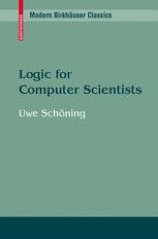
Logic for Computer Scientists
This book introduces the notions and methods of formal logic from a computer science standpoint, covering propositional logic, predicate logic, and foundations of logic programming. It presents applications and themes of computer science research such as resolution, automated deduction, and logic programming in a rigorous but readable way.The style and scope of the work, rounded out by the inclusion of exercises, make this an excellent textbook for an advanced undergraduate course in logic for computer scientists.
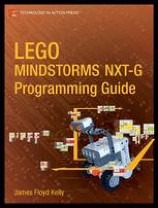
LEGO® MINDSTORMS® NXT-G Programming Guide
LEGO MINDSTORMS NXT-G Programming Guide provides programming techniques simple enough to be understood by young programmers, ages 10 and up, and provides a test robot (with instructions) in the appendix for running the programs

Learning to Live in the Knowledge Society ; IFIP 20th World Computer Congress, IFIP TC 3 ED-L2L Conference September 7–10, 2008, Milano, Italy
The IFIP series publishes state-of-the-art results in the sciences and technologies of information and communication. The scope of the series includes: foundations of computer science; software theory and practice; education; computer applications in technology; communication systems; systems modeling and optimization; information systems; computers and society; computer systems technology; security and protection in information processing systems; artificial intelligence; and human-computer interaction. Proceedings and post-proceedings of refereed international conferences in computer science and interdisciplinary fields are featured. These results often precede journal publication and represent the most current research.
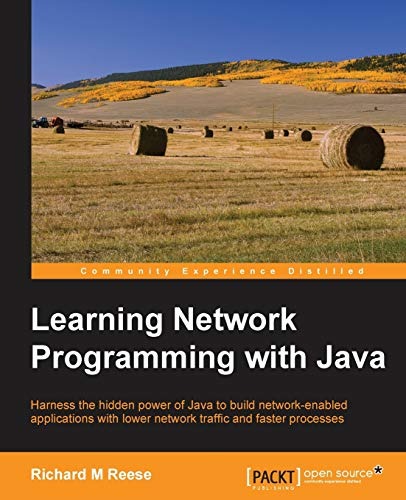
Learning network programming with Java
Learn to deliver superior server-to-server communication through the networking channels / Gain expertise of the networking features of your own applications to support various network architectures such as client/server and peer-to-peer Explore the issues that impact scalability, affect security, and allow applications to work in a heterogeneous environment

Learning Classifier Systems ; 10th International Workshop, IWLCS 2006, Seattle, MA, USA, July 8, 2006 and 11th International Workshop, IWLCS 2007, London, UK, July 8, 2007, Revised Selected Papers
Constitutes the thoroughly refereed joint post-conference proceedings of two consecutive International Workshops on Learning Classifier Systems that took place in Seattle, WA, USA in July 2006, and in London, UK, in July 2007 - all hosted by the Genetic and Evolutionary Computation Conference, GECCO.The 14 revised full papers presented were carefully reviewed and selected from the workshop contributions. The papers are organized in topical sections on knowledge representation, analysis of the system, mechanisms, new directions, as well as applications.
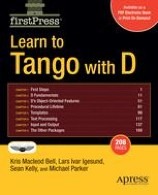
Learn to Tango with D
Learn to Tango with D introduces you to the powerful D language, with special attention given to the Tango software library. A concise yet thorough overview of the language's syntax and features is presented, followed by an introduction to Tango, the popular general–purpose library you'll find invaluable when building your D applications.

Languages and Compilers for Parallel Computing ; Vol. 2481 : 15th Workshop, LCPC 2002, College Park, MD, USA, July 25-27, 2002, Revised Papers
LCPC 2002 brought together over 60 researchers from academia and research institutions from many countries. The program of 26 papers was selected from 32 submissions. Each paper was reviewed by at least three Program Committee members and sometimes by additional reviewers. Prior to the workshop, revised versions of accepted papers were informally published on the workshop’s website and in a paper proceedings that was distributed at the meeting. This year, the workshopwas organizedinto sessions of papers on related topics, and each session consisted of two to three 30-minute presentations.Based on feedback from the workshop,the papers were revised and submitted for inclusion in the formal proceedings published in this volume. Two papers were presented at the workshop but later withdrawn from the ?nal proceedings by their authors. We were very lucky to have Bill Carlson from the Department of Defense give the LCPC 2002 keynote speech on “UPC: A C Language for Shared M- ory Parallel Programming.” Bill gave an excellent overview of the features and programming model of the UPC parallel programming language.

Languages and Compilers for Parallel Computing ; 21th International Workshop, LCPC 2008, Edmonton, Canada, July 31 - August 2, 2008, Revised Selected Papers
This book constitutes the thoroughly refereed post-conference proceedings of the 21th International Workshop on Languages and Compilers for Parallel Computing, LCPC 2008, held in Edmonton, Canada, in July/August 2008.The 18 revised full papers and 6 revised short papers presented were carefully reviewed and selected from 35 submissions. The papers address all aspects of languages, compiler techniques, run-time environments, and compiler-related performance evaluation for parallel and high-performance computing and comprise

Languages and Compilers for Parallel Computing ; 20th International Workshop, LCPC 2007, Urbana, IL, USA, October 11-13, 2007, Revised Selected Papers
This book constitutes the thoroughly refereed post-conference proceedings of the 20th International Workshop on Languages and Compilers for Parallel Computing, LCPC 2007, held in Urbana, IL, USA, in October 2007.The 23 revised full papers presented were carefully reviewed and selected from 49 submissions. The papers are organized in topical sections on reliability, languages, parallel compiler technology, libraries, run-time systems and performance analysis, and general compiler techniques.

Language and Automata Theory and Applications ; 2nd International Conference, LATA 2008, Tarragona, Spain, March 13-19, 2008. Revised Papers
This book constitutes the refereed proceedings of the Second International Conference on Language and Automata Theory and Applications, LATA 2008, held in Tarragona, Spain, in March 2008.The 40 revised full papers presented were carefully reviewed and selected from 134 submissions. The papers deal with the various issues related to automata theory and formal languages

Knowledge discovery, knowledge engineering and knowledge management ; 10th International Joint Conference, IC3K 2018, Seville, Spain, September 18-20, 2018, Revised Selected Papers
Constitutes the thoroughly refereed proceedings of the 10th International Joint Conference on Knowledge Discovery, Knowledge Engineering and Knowledge Management, IC3K 2018, held in Seville, Spain, in September 2018. The 12 full papers presented were carefully reviewed and selected from 167 submissions. The papers are organized in topical sections on knowledge discovery and information retrieval; knowledge engineering and ontology development; and knowledge management and information sharing.
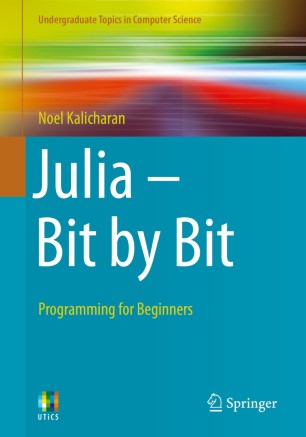
Julia - Bit by Bit : Programming for Beginners
The main goal of this book is to teach fundamental programming principles to beginners using Julia, one of the fastest growing programming languages today. Julia can be classified as a "modern" language, possessing many features not available in more popular languages like C and Java.
JavaScript data structures and algorithms : An Introduction to understanding and implementing core data structure and algorithm fundamentals
Combines clear explanations of data structure and algorithm theory with practical code samples, examples and exercises, all specifically relevant to JavaScript Provides background information on object-oriented programming and native JavaScript concepts to help understand how everything fits together Illustrates how these theoretical computer science concepts ties back to practical applications in software engineering
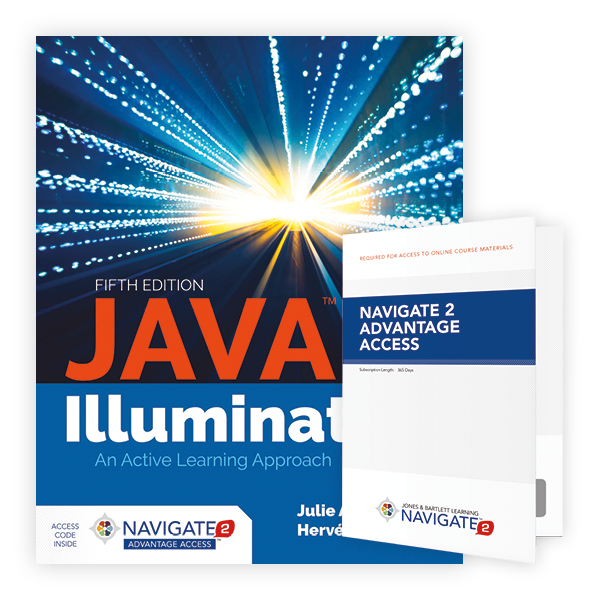
Java Illuminated ; 5th ed.
Provides learners with an interactive, user-friendly approach to learning the Java programming language. Comprehensive but accessible, the text takes a progressive approach to object-oriented programming, allowing students to build on established skills to develop new and increasingly complex classes. Java Illuminated follows an activity-based active learning approach that ensures student engagement and interest.
Java Design Patterns : A Hands-On Experience with Real-World Examples
Covers classical design patterns with the latest editions of Java and Eclipse Includes implementation of the Java design patterns in real-world applications Each chapter has a Q&A section to help you understand the pros and cons of each design pattern
Java Challenges 100+ : Proven Tasks that Will Prepare You for Anything
Expand your knowledge of Java with this entertaining learning guide, which features 100+ exercises and programming challenges. Java Challenges will prepare you for your next exam or job interview, and covers many practical topics, such as strings, arrays, data structures, recursion, and date and time. The APIs and other material included in this book are Java 17 compatible. You will: Improve your Java knowledge by solving enjoyable but challenging programming puzzles / Solve mathematical problems, recursions, strings, arrays and more / Manage data processing and data structures like lists, sets, maps / Handle advanced recursion as well as binary trees, sorting and searching / Gamify key fundamentals for fun and easier reinforcement
Java 17 Recipes : A Problem-Solution Approach
Quickly find solutions to dozens of common programming problems encountered while building Java applications, with recipes presented in the popular problem-solution format. Look up the programming problem that you want to resolve. Read the solution. Apply the solution directly in your own code. Problem solved! covers of some of the newest features, APIs, and more such as pattern matching for switch, Restore Always-Strict-Floating-Point-Semantics, enhanced pseudo-random number generators, the vector API, sealed classes, and enhancements in the use of String. Source code for all recipes is available in a dedicated GitHub repository. This must-have reference belongs in your library. You will learn : Look up solutions to everyday problems involving Java SE 17 LTS and other recent releases / Develop Java SE applications using the latest in Java SE technology / Incorporate Java major features introduced in versions 17, 16, and 15 into your code

Java 17 Quick Syntax Reference : A Pocket Guide to the Java SE Language, APIs, and Library
Packed with useful information and is a must-have for any Java programmer. You will: Run a Java file with a single command / Learn what a switch expression is and how to use it / Use pattern matching / Code with Java modules / Create text blocks to handle multiline strings / Learn what sealed classes are and how to use these and more
Java 17 for Absolute Beginners : Learn the Fundamentals of Java Programming
It teaches Java development in language anyone can understand, giving you the best possible start.
