



الصفحة 9
الصفحة 9
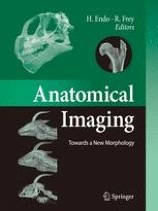
Anatomical Imaging : Towards a New Morphology
This book presents selected works of contemporary evolutionary morphologists and includes such topics as broad scale reconstructions of the brain and ear of dinosaurs, inference of locomotor habits from cancellous bone architecture in fossil primates, and a comparison of the independently evolved manipulating apparatuses in the lesser and giant pandas. Insight is provided into the application of modern noninvasive technologies, including digital imaging techniques and virtual 3D reconstruction, to the investigation of complex anatomical features and coherences. In combination with traditional methods, this allows for the formulation of improved hypotheses on coordinated function and evolution. The creation of virtual translucent specimens makes it possible to realize the age-old dream of the classical anatomists: looking through the skin into the inner organization of an organism. On full display here is the dramatic and promising impact that modern imaging techniques have on scientific progress in evolutionary morphology.

An illustrated guide to oral histology
Delivers a collection of high-definition histological and pathological images, presenting both diseased and normal oral tissues. also includes core topics such as: An introduction to tooth development, including the bud, cap, early bell, and late bell stages A thorough exploration of enamel, dentin, cementum and dental pulp A discussion of the periodontal ligament, including alveolar crest fibers, horizontal, oblique, apical, and inter-radicular fibers, transseptal fibers, and gingival fibers A guide to alveolar bone, oral mucosa, and salivary glands Perfect for postgraduate dental students, An Illustrated Guide to Oral Histology will also be useful to undergraduate dental students, and those looking to improve their understanding of the microscopic structure of dental tissues and their pathologies.

An Archaeology of Colonial Identity : Power and Material Culture in the Dwars Valley, South Africa
This book is the based on the work of many people, and while I discuss many of them in the general context of this book in Chapter 1. The backbone of the book is based on a project, 'Farm Lives' conducted between 1999 and 2002, funded exclusively by the McDonald Institute for Archaeolog-ical Research at the University of Cambridge.

Ambient intelligence : A novel paradigm
Ambient Intelligence (AmI) is an integrating technology for supporting a pervasive and transparent infrastructure for implementing smart environments. Such technology is used to enable environments for detecting events and behaviors of people and for responding in a contextually relevant fashion. AmI proposes a multi-disciplinary approach for enhancing human machine interaction. The authors start with a description of the iDorm as an example of a smart environment conforming to the AmI paradigm, and introduces computer vision as an important component of the system. Other computer vision examples describe visual monitoring for the elderly, classic and novel surveillance techniques using clusters of cameras installed in indoor and outdoor application domains, and the monitoring of public spaces. Face and speech recognition systems are also covered as well as enhanced LEGO blocks for novel educational purposes. The book closes with a provocative chapter on how a cybernetic system can be designed as the backbone of a human machine interaction.

Algorithms – ESA 2007 ; 15th Annual European Symposium, Eilat, Israel, October 8-10, 2007, Proceedings
This book presented submissions in the engineering and applications track. The papers address all current subjects in algorithmics reaching from design and analysis issues of algorithms over to real-world applicat.

Agent-oriented software engineering VII ; 7th International Workshop, AOSE 2006, Hakodate, Japan, May 8, 2006, Revised and Invited Papers
Software architectures that contain many dynamically interacting components, each with their own thread of control, and engaging in complex coordination protocols, are difficult to correctly and efficiently engineer. Agent-oriented modelling techniques are important for supporting the design and development of such applications.The book is organized in topical sections on modelling and design of agent systems, modelling open agent systems, formal reasoning about designs, as well as testing, debugging and evolvability.

Agent-oriented software engineering VI ; 6th International Workshop, AOSE 2005, Utrecht, The Netherlands, July 25, 2005. Revised and Invited Papers
This book represents the thoroughly refereed post-proceedings of the 6th International Workshop on Agent-Oriented Software Engineering, AOSE 2005, held in Utrecht, The Netherlands, in July 2005 as part of AAMAS 2005. The 18 revised full papers were carefully selected from 35 submissions during two rounds of reviewing and improvement. The papers are organized in topical sections on modeling tools, analysis and validation tools, multiagent systems design, implementation tools, and experiences and comparative evaluations.

Agent-oriented information systems II ; 6th International bi-conference workshop, AOIS 2004, Riga, Latvia, June 8, 2004 and New York, NY, USA, July 20, 2004, revised selected papers
Information systems have become the backbone of all kinds of organizations - day. In almost every sector – manufacturing, education, health care, government and businesses large and small – information systems are relied upon for - eryday work, communication, information gathering and decision-making. Yet, the in?exibilities in current technologies and methods have also resulted in poor performance, incompatibilities and obstacles to change. As many organizations are reinventing themselves to meet the challenges of global competition and e-commerce, there is increasing pressure to develop and deploy new technologies that are ?exible, robust and responsive to rapid and unexpected change. Agent concepts hold great promise for responding to the new realities of - formation systems. They o?er higher-level abstractions and mechanisms which address issues such as knowledge representation and reasoning, communication, coordination, cooperation among heterogeneous and autonomous parties, p- ception, commitments, goals, beliefs, intentions, etc., all of which need conc- tual modelling. On the one hand, the concrete implementation of these concepts can lead to advanced functionalities.

Aesthetic Facial Surgery
Rhytidoplasty is a palliative procedure in which face wrinkles are surgically removed to promote a more youthful appearance.The first sections focus on the surgical planning, including psychological considerations, preparation of the patient and anatomical and biochemical changes caused by the aging process. It also describes the surgical anatomy of the forehead, face, neck and eyelids. The third section provides a comprehensive overview of the basic techniques of facelift with details of refined surgical approaches for each segment of the face and neck. It highlights liposuction techniques, lipoinjection as well as transference of stem cells, showing their importance in reshaping the facial contours. It addresses both the treatment of soft tissue and craniofacial bone structures to improve the aesthetics of the face. The next sections present the final scars after face-lifting, minimally invasive procedures as complementary approaches during rhytidoplasty and the associated procedures during rhytidoplasty. The last section discusses postoperative care.

Advances in Esthetic Implant Dentistry
A comprehensive and highly illustrated reference on current topics in esthetic dental implant therapy. Offering innovative step-by-step protocols for surgical techniques and case studies, the book presents practical, clinically oriented guidance firmly anchored in solid scientific research. A companion website provides videos of clinical procedures and follow-up case studies. Emphasizes the physiology of labial plate of bone and its influence to the overall fate of implant placement in fresh extraction sites, including several cutting-edge techniques to restore and treat deficient labial plate of bone. A novel chapter offers a solid protocol to diagnose, categorize, and treat implant-related gingival recession predictably.

Advances in Bioactivation Research
This volume provides researchers with recent information on bioactivation reactions of drugs and toxicants. In other sections, focus is on recent applications of bioactivation research in pharmacology, toxicology, and environmental health sciences, where contributors demonstrate the integration of bioactivation research.

Advances in Ad Hoc and Sensor Networks
This volume provides a complete survey of the state-of-the-art research that encompasses all areas of ad hoc and sensor networks. These chapters focus on the theoretical and experimental study of advanced research topics involving security and trust, broadcasting and multicasting, power control and energy efficiency, and QoS provisioning.

Advances and Technical Standards in Neurosurgery ; Vol. 30
This series, sponsored by the European Association of Neurosurgical Societies, has already become a classic. In general, one volume is published per year. The Advances section presents fields of neurosurgery and related areas in which important recent progress has been made. The Technical Standards section features detailed descriptions of standard procedures to assist young neurosurgeons in their post-graduate training. The contributions are written by experienced clinicians and are reviewed by all members of the Editorial Board.
Advanced Bioimaging Technologies in Assessment of the Quality of Bone and Scaffold Materials : Techniques and Applications
This book provides a perspective on the current status of bioimaging technologies developed to assess the quality of musculoskeletal tissue with an emphasis on bone and cartilage. It offers evaluations of scaffold biomaterials developed for enhancing the repair of musculoskeletal tissues. These bioimaging techniques include micro-CT, nano-CT, pQCT/QCT, MRI, and ultrasound, which provide not only 2-D and 3-D images of the related organs or tissues, but also quantifications of the relevant parameters. The advance bioimaging technologies developed for the above applications are also extended by incorporating imaging contrast-enhancement materials.
Advanced bioceramics : Properties, processing, and applications
Offers a comprehensive view of properties and processing of bioceramics. Highlights applications in dentistry, orthopaedic and maxillofacial implants, and regenerative and tissue engineering. Covers ISO/ASTM specifications such as processing, clinical applications, recycling/reuse and disposal standards.

Adult stem cells : Methods and protocols
Expands on the previous edition with updated chapters covering a broader range of tissues and techniques pertaining to stem cell technologies. The chapters also cover topics such as the generation of iPSC-derived cells unique to the individual human genome addressing the possibility of more personalized clinical applications to an individual with a specific degenerative disease; and the use of nanoparticles such as 3D scaffolds and biomaterials as a means of improving stem cell viability after transplantation in the host tissue. Written in the highly successful Methods in Molecular Biology series format, chapters include introductions to their respective topics, lists of the necessary materials and reagents, step-by-step, readily reproducible laboratory protocols, and tips on troubleshooting and avoiding known pitfalls.

Adipose Tissue and Adipokines in Health and Disease
The aim of Adipose Tissue and Adipokines in Health and Disease is to provide comprehensive information regarding adipose tissue, its physiological functions and its role in disease. This volume contains a collection of information spanning the entire range of adipose tissue studies, from basic anatomical and physiological research to epidemiology and clinical aspects, in one place. This book is indispensable for basic researchers and clinicians interested in the fields of obesity, metabolic diseases, inflammation and immunity, and specialists in each of the pathologies associated with obesity.

70 Years of Levothyroxine
Presents the history, pharmacokinetics and pharmacodynamics of levothyroxine, discussing its role in the thyroid pathophysiology of patients of various ages and during pregnancy. It also describes the influence of levothyroxine on heart, bone and in cancer. When it was first synthesized in 1949, levothyroxine represented a significant advance in the treatment of hypothyroidism, providing a safe and effective treatment option for millions of hypothyroid patients around the globe. This synthetic form of thyroxine is now one of the most prescribed drugs in the world. Levothyroxine was first introduced by Merck KGaA,Darmstadt, Germany, in 1972, and since then the company has remained actively engaged in research on this mainstay of hypothyroidism treatment.
3D printing in oral & maxillofacial surgery
A comprehensive guide to 3D printing and 3D bioprinting methods and their application in oral and maxillofacial surgeries. Among the 3D printing methods considered are fused deposition modeling, selective laser sintering, photopolymer jetting, powder binder printing, and stereolithography, while the coverage of 3D bioprinting encompasses inkjet, microextrusion, and laser techniques. In each case, the relevance of the technique to oral and maxillofacial surgery is explained. In addition, the available inks and bioinks for 3D printing are reviewed. The roles of soft and hard tissue printing in oral and maxillofacial tissue engineering and the use of 3D printing in multi- and interfacial tissue engineering are then examined in depth. The particular value of 3D printing in the treatment of critically sized defects is discussed separately. Finally, up-to-date information is provided on guided tissue/bone regeneration using 3D printing. The book will be of interest to both oral and maxillofacial surgeons and biomedical engineers.
3D cell culture : Methods and protocols
Expands on the previous edition with discussions about the latest organoid models developed for many more organs; new hydrogels and devices for 3D culture; and the organoid systems that have been improved by incorporating more components of tissue microenvironments in the in vitro culture. The chapters in this book are organized into five parts and cover topics such as biofabrication, organoids, microfluidic systems, bioprinting, and image analysis. Written in the highly successful Methods in Molecular Biology series format, chapters include introductions to their respective topics, lists of the necessary materials and reagents, step-by-step, readily reproducible laboratory protocols, and tips on troubleshooting and avoiding known pitfalls.
