



الصفحة 9
الصفحة 9

Generative and transformational techniques in software engineering II : International Summer School, GTTSE 2007, Braga, Portugal, July 2-7, 2007. Revised Papers
This tutorial book presents an augmented selection of the material presented at the International Summer School on Generative and Transformational Techniques in Software Engineering, GTTSE 2007, held in Braga, Portugal, in July 2007.The 7 tutorial lectures presented together with 5 short tutorials and 4 contributions to the participants workshop were carefully selected during multiple rounds of reviewing and improvement. The tutorials given by renowned representatives of complementary approaches and problem domains combine foundations, methods, examples, and tool support.

Gas Transport in Porous Media
This book presents a compilation of state-of-the art studies on gas and vapor transport processes in porous and fractured media. A broad set of models and processes is presented, including advection/diffusion, the Dusty Gas Model, enhanced vapor diffusion, phase change, coupled processes, solid/vapor sorption, and vapor-pressure lowering. Numerous applications are also presented that illustrate these processes and models in current problems facing the scientific community.

Game Theory : Decisions, Interaction and Evolution
This introduction to game theory is written from a mathematical perspective. Its primary purpose is to be a first course for undergraduate students of mathematics, but it also contains material which will be of interest to advanced students or researchers in biology and economics.An understanding of basic calculus and probability is assumed but no prior knowledge of game theory is required. Detailed solutions are provided for the numerous exercises.

Fuzzy sets and their extensions : Representation, aggregation and models : Intelligent systems from decision making to data mining, web intelligence and computer vision
This book presents an up-to-date state of current research in the use of fuzzy sets and their extensions, paying attention to foundation issues and to their application to four important areas where fuzzy sets are seen to be an important tool for modelling and solving problems.
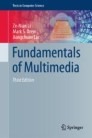
Fundamentals of multimedia ; 3rd ed.
Addresses real issues commonly faced in the workplace. The essential concepts are explained in a practical way to enable students to apply their existing skills to address problems in multimedia. Fully revised and updated, this new edition now includes coverage of such topics as 3D TV, social networks, high-efficiency video compression and conferencing, wireless and mobile networks, and their attendant technologies.

Fundamentals of multimedia ; 2nd ed.
Addresses real issues commonly faced in the workplace. The essential concepts are explained in a practical way to enable students to apply their existing skills to address problems in multimedia. Fully revised and updated, this new edition now includes coverage of such topics as 3D TV, social networks, high-efficiency video compression and conferencing, wireless and mobile networks, and their attendant technologies.

Functional and logic programming ; 8th International Symposium, FLOPS 2006, Fuji-Susono, Japan, April 24-26, 2006, Proceedings
This book constitutes the refereed proceedings of the 8th International Symposium on Functional and Logic Programming, FLOPS 2006, held in Fuji-Susono, Japan, in April 2006. The 17 revised full papers presented together with 2 invited contributions were carefully reviewed and selected from 51 submissions. The papers are organized in topical sections on data types, FP extensions, type theory, LP extensions, analysis, contracts, as well as Web and GUI.

Frontiers of WWW Research and Development -- APWeb 2006 ; 8th Asia-Pacific Web Conference, Harbin, China, January 16-18, 2006, Proceedings
This book constitutes the refereed proceedings of the 8th Asia-Pacific Web Conference, APWeb 2006, held in Harbin, China in January 2006. The 56 revised full papers and 42 revised short papers presented together with 4 invited keynote papers, 6 industry papers, 19 demo papers, and 11 special papers on ICT advances for water resources management were carefully reviewed and selected from 413 submissions. The papers cover all current issues on WWW-related technologies and new advanced applications for researchers and practitioners from both academic and industry.
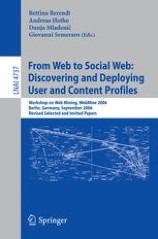
From web to social web : Discovering and deploying user and content profiles ; Workshop on Web Mining, WebMine 2006, Berlin, Germany, September 18, 2006
This book constitutes the refereed proceedings of the Workshop on Web Mining, WebMine 2006, held in Berlin, Germany, September 2006. Topics included are data mining based on analysis of bloggers and tagging, web mining, XML mining and further techniques of knowledge discovery.

From P2P to Web Services and Grids : Peers in a Client/Server World
Provides an overview of peer-to-peer (P2P) technologies that have revolutionized the way we think about distributed computing and the internet. This book compares these technologies to alternative solutions, most notably web services and Grid computing but also other technologies, such as client/server based systems and agent technologies.

From integrated publication and information systems to information and knowledge environments : Essays dedicated to Erich J. Neuhold on the Occasion of His 65th Birthday
This book constitutes a commemorative volume devoted to Erich J. Neuhold on the occasion of his 65th birthday. The 32 invited reviewed papers presented are written by students and colleagues of Erich Neuhold throughout all periods of his scientific career. The papers are organized in the following topical sections: Database management enabling information systems Semantic Web drivers for advanced information management Securing dynamic media content integration From digital libraries to intelligent knowledge environments Visualization – key to external cognition in virtual information environments From human-computer interaction to human-artefact interaction Domains for virtual information and knowledge environments.

From grids to service and pervasive computing
Grids are a crucial enabling technology for scientific and industrial development. Peer-to-peer computing, grid, distributed storage technologies, emerging web service technologies, and other types of networked distributed computing have provided new paradigms exploiting distributed resources. Grids are revolutionizing computing as profoundly as e-mail and the Web.From Grids to Service and Pervasive Computing, the 10th edited volume of the CoreGRID series, is based on the 2008 CoreGRID Symposium, held August 25-26 in the Canary Islands, Spain.

From Energetics to Ecosystems : the Dynamics and Structure of Ecological Systems
Ecosystems are complex and enigmatic entities that are ultimately our life support systems. Understanding these systems to the point of being able to predict their behaviour in the face of perturbations requires that researchers adopt a number of strategies that vary in both approach and scale. This book, in a sense, is representative of some of the developments that have unfolded when math and physics met ecology. Here, some of the world’s leading ecologists examine ecosystems from theoretical, experimental, and empirical viewpoints, from energetics to ecosystems. The book begins with simplifying and synthesizing nature’s complex relationships. It then moves on to explore the mapping between food web structure and function and ends with the role of theory in integrating different research areas. From the breadth of systems analyzed to the rigor of approaches taken, this book is not only a useful resource for students and researchers in ecology, but also serves as a fitting tribute to the life and work of Peter Yodzis.

From Data and Information Analysis to Knowledge Engineering ; Proceedings of the 29th Annual Conference of the Gesellschaft für Klassifikation e.V., University of Magdeburg, March 9-11, 2005
The volume contains revised versions of selected papers presented during the 29th Annual Conference of the Gesellschaft für Klassifikation (GfKl), the German Classification Society, held at the Otto-von-Guericke-University of Magdeburg, Germany, in March 2005. In addition to papers on the traditional subjects Classification, Clustering, and Data Analysis, there are many papers on a wide range of topics with a strong relation to Computer Science. Examples are Text Mining, Web Mining, Fuzzy Data Analysis, IT Security, Adaptivity and Personalization, and Visualization. Application-oriented topics include Economics, Marketing, Banking and Finance, Medicine, Bioinformatics, Biostatistics, and Music Analysis.

Foundations of Security : What Every Programmer Needs to Know
Foundations of Security: What Every Programmer Needs to Know teaches new and current software professionals state-of-the-art software security design principles, methodology, and concrete programming techniques they need to build secure software systems.

Foundations of Popfly : Rapid Mashup Development
Author Eric Griffin shows you how to mix applications and share your hybrids with the world, using the Popfly Mashup Creator and Popfly Web Page Creator.

Foundations of Microsoft® Expression Web : The Basics and Beyond
Expression Web, one of the excellent programs within the suite, is a powerful web site creation tool that allows you to rapidly build up standards-compliant web pages, style them with CSS, add dynamic ASP.NET functionality to them, and publish them to the weball from the comfort of one program, and "Foundations of Microsoft Expression Web: The Basics and Beyond" is one of the first books available on the program.

Foundations of Intelligent Systems ; Vol. 4203 ; 16th International Symposium, ISMIS 2006, Bari, Italy, September 27-29, 2006, Proceedings
This book constitutes the refereed proceedings of the 16th International Symposium on Methodologies for Intelligent Systems, ISMIS 2006. The book presents 81 revised papers together with 3 invited papers. Topical sections include active media human-computer interaction, computational intelligence, intelligent agent technology, intelligent information retrieval, intelligent information systems, knowledge representation and integration, knowledge discovery and data mining, logic for AI and logic programming, machine learning, text mining, and Web intelligence.

Foundations of Intelligent Systems ; Vol. 3488 ; 15th International Symposium ISMIS 2005, Saratoga Springs, NY, USA, May 25-28, 2005, Proceedings
This volume contains the papers selected for presentation at the 15th International S- posiumonMethodologiesforIntelligentSystems, ISMIS2005, heldinSaratogaSprings, NewYork,25-28May,2005. ThesymposiumwasorganizedbySUNYatAlbany. Itwas sponsored by the Army Research Of?ce and by several units of the University at Albany including its Division for Research, College of Arts and Sciences, Department of C- puter Science, and Institute for Informatics, Logics, and Security Studies (formerly the Institute for Programming and Logics). The Program Committee selected the following major areas for ISMIS 2005: intelligent information systems, knowledge discovery and data mining, knowledge - formation and integration, knowledge representation, logic for arti?cial intelligence, soft computing, Web intelligence, Web services, and papers dealing with applications of intelligent systems in complex/novel domains. The contributed papers were selected from almost 200 full draft papers by the Program Committee members.

Foundations of Atlas : Rapid Ajax Development with ASP.NET 2.0
This book introduces a fast-track path to understanding Atlas, and how this technology can increase the power and functionality of your code while conserving time and effort. The book begins with a bare-bones introduction that explains how Atlas relates to Ajax. Microsoft Atlas is a web-client framework that makes building Ajax-style applications easier. It provides a prewritten framework that gives you a structured environment in which to work. Atlas also provides you with an object model and standardized debugging to make development faster and simpler. Ajax is a way of combining a number of Web technologies including JavaScript, dynamic HTML, and a feature known as XMLHttp (which reduces the need for client browsers to constantly reconnect to the server every time new information is downloaded). But at the moment, people developing with Ajax have to write their code from the ground up, which is complex and time consuming.
