



الصفحة 9
الصفحة 9

Handbook of Life Course Health Development
Synthesizes and analyzes the growing knowledge base on life course health development (LCHD) from the prenatal period through emerging adulthood, with implications for clinical practice and public health. It presents LCHD as an innovative field with a sound theoretical framework for understanding wellness and disease from a lifespan perspective, replacing previous medical, biopsychosocial, and early genomic models of health. Interdisciplinary chapters discuss major health concerns (diabetes, obesity), important less-studied conditions (hearing, kidney health), and large-scale issues (nutrition, adversity) from a lifespan viewpoint. In addition, chapters address methodological approaches and challenges by analyzing existing measures, studies, and surveys. The book concludes with the editors’ research agenda that proposes priorities for future LCHD research and its application to health care practice and health policy.

Handbook of Instruments in Dentistry
Instrumentation is an important aspect of surgical and dental clinical practice. The instruments have evolved over the period of time in terms of metallurgy, design and cost effectiveness. Many types of instruments are commercially available but it is a big dilemma for the clinician to decide as to which is the best. To optimise the clinical results, choice of proper instruments and its proper and effective utilization is of immense importance. This aspect is badly neglected in the curricula and no structured training is offered. The clinician develops the skill of instrumentation by self-perception or by imitation. The choice of instrument also varies from clinician to clinician as it depends upon the skill and convenience of the individual clinician.

Handbook of cancer survivorship
This book responds to the diverse needs of survivors and their support communities by comprehensively addressing the major issues in the field, from the burden of survivorship to secondary prevention. Editor Michael Feuerstein, himself a cancer survivor, and sixty other top scientist-practitioners analyze in depth how survivors meet and manage the challenges of life after cancer, and what clinicians, researchers, and public health systems can do to ease the transition.

Handbook of Behavioral and Cognitive Therapies with Older Adults
The book enhances the professional’s understanding of the learning and self regulating capacities of older adults. Its consistent and easy-access format features empirical reviews, recommended cognitive and behavioral interventions specific to the problem, instructive case studies, and salient diversity issues. In their choice of topics, the editors have assembled the Handbook to fit the unique challenges of both older individuals and the practitioners working with them.

Growing Black Holes: Accretion in a Cosmological Context ; Proceedings of the MPA/ESO/MPE/USM Joint Astronomy Conference Held at Garching, Germany, 21-25 June 2004
Supermassive black holes are now believed to play an important role in the evolution of the Universe. Every respectable galaxy hosts in its center a black hole that appears to regulate the growth of the galaxy itself. In this book, leading experts in the field review the most recent theoretical and observational results on the following topics: * formation and growth of the first black holes in the Universe and their role in the formation and evolution of galaxies * the physics of black-hole accretion and the production of relativistic jets * binary black-hole mergers and gravitational radiation. Theoretical work is supplemented by the most recent exciting results from space and ground based observatories. This volume is useful research and reference tool for the entire astrophysical community.

Green Function Theory of Chemisorption
The book provides an introduction to the Green-Function (GF) theory of chemisorption. It is self-contained, and requires only a basic knowledge of quantum mechanics and solid-state physics. The GF approach lends itself well to the pedagogically desirable modellistic treatment of the subject. Throughout each chapter, step-by-step details are provided by which the calculations are performed, so that readers are led from the simple to the more advanced aspects, in a straightforward manner. In this way, students gain confidence to read the current literature on their own.

Global Conflict Resolution Through Positioning Analysis
Positioning analysis penetrates beneath surface issues to their underlying psychological causes and social effects, with the intention of defusing conflict and preventing existing conflict from escalating. As the growing literature shows, positioning analysis methods are not only effective in interpersonal and intergroup problems, but have considerable potential for resolving disputes on the world stage. Global Conflict Resolution through Positioning Analysis starts with the daily disputes that result from our multiple social identities and evolving self-definitions, offers a new framework for understanding historical conflict, and brings vital new perspectives to current political and ideological battles. Twenty expert contributors examine scenarios as simple as a committee meeting of four people, as complicated as centuries-old social movements and the shifting tensions in the Middle East.

Geometry of Quantum Theory ; 2nd ed.
This book a classic on the foundations of quantum theory. This view, which is essentially geometric and relies on the concept of symmetry. The mathematical treatment of symmetry in quantum theory is based on the theory of group representations, and this book includes a self-contained treatment of the parts of this theory that are most useful in quantum physics.

Geometry and Topology in Hamiltonian Dynamics and Statistical Mechanics
This book explores the foundations of hamiltonian dynamical systems and statistical mechanics, in particular phase transition, from the point of view of geometry and topology. A broad participation of topology in these fields has been lacking and this book will provide a welcome overview of the current research in the area, in which the author himself is a pioneer. Using geometrical thinking to solve fundamental problems in these areas, compared to the purely analytical methods usually used in physics could be highly productive. The author skillfully guides the reader, whether mathematician or physicists through the background needed to understand and use these techniques.

Geometric Qp Functions
This book documents the rich structure of the holomorphic Q functions which are geometric in the sense that they transform naturally under conformal mappings. Particular emphasis is placed on recent developments based on the interaction between geometric function/measure theory and other branches of mathematical analysis, including potential theory, complex variables, harmonic analysis, functional analysis, and operator theory." "Largely self-contained, this book will be an instructional and reference work for advanced courses and research in conformal analysis, geometry, or function spaces.

Geometric numerical integration : Structure-preserving algorithms for ordinary differential equations
Numerical methods that preserve properties of Hamiltonian systems, reversible systems, differential equations on manifolds and problems with highly oscillatory solutions are the subject of this book. A complete self-contained theory of symplectic and symmetric methods, which include Runge-Kutta, composition, splitting, multistep and various specially designed integrators, is presented and their construction and practical merits are discussed. The long-time behaviour of the numerical solutions is studied using a backward error analysis (modified equations) combined with KAM theory. The book is illustrated by many figures, it treats applications from physics and astronomy and contains many numerical experiments and comparisons of different approaches.

Geometric Data Analysis : From Correspondence Analysis to Structured Data Analysis
Geometric Data Analysis (GDA) is the name suggested by Stanford University to designate the approach to Multivariate Statistics initiated.as Correspondence Analysis, an approach that has become more and more used and appreciated over the years. This book presents the full formalization of GDA in terms of linear algebra - the most original and far-reaching consequential feature of the approach - and shows also how to integrate the standard statistical tools such as Analysis of Variance, including Bayesian methods. Chapter 9, Research Case Studies, is nearly a book in itself; it presents the methodology in action on three extensive applications, one for medicine, one from political science, and one from education (data borrowed from the Stanford computer-based Educational Program for Gifted Youth ). Thus the readership of the book concerns both mathematicians interested in the applications of mathematics, and researchers willing to master an exceptionally powerful approach of statistical data analysis.

Geometric and Topological Methods for Quantum Field Theory
This volume offers an introduction, in the form of four extensive lectures, to some recent developments in several active topics at the interface between geometry, topology and quantum field theory. The first lecture is by Christine Lescop on knot invariants and configuration spaces, in which a universal finite-type invariant for knots is constructed as a series of integrals over configuration spaces. This is followed by the contribution of Raimar Wulkenhaar on Euclidean quantum field theory from a statistical point of view. The author also discusses possible renormalization techniques on noncommutative spaces. The third lecture is by Anamaria Font and Stefan Theisen on string compactification with unbroken supersymmetry. The authors show that this requirement leads to internal spaces of special holonomy and describe Calabi-Yau manifolds in detail. The last lecture, by Thierry Fack, is devoted to a K-theory proof of the Atiyah-Singer index theorem and discusses some applications of K-theory to noncommutative geometry. These lectures notes, which are aimed in particular at graduate students in physics and mathematics, start with introductory material before presenting more advanced results. Each chapter is self-contained and can be read independently.
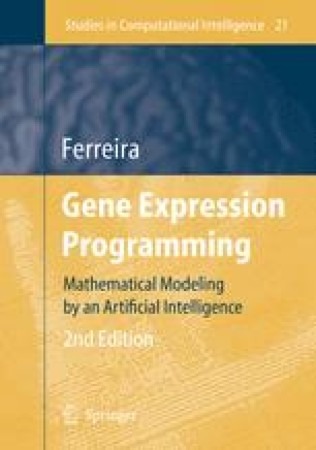
Gene Expression Programming : Mathematical Modeling by an Artificial Intelligence
This monograph provides all the implementation details of GEP so that anyone with elementary programming skills will be able to implement it themselves. The book also includes a self-contained introduction to this new exciting field of computational intelligence, including several new algorithms for decision tree induction, data mining, classifier systems, function finding, polynomial induction, times series prediction, evolution of linking functions, automatically defined functions, parameter optimization, logic synthesis, combinatorial optimization, and complete neural network induction. The book also discusses some important and controversial evolutionary topics that might be refreshing to both evolutionary computer scientists and biologists.

Gender Differences in Computer and Information Literacy : An In-depth Analysis of Data from ICILS
When computer technology was first introduced in schools, there was a prevailing belief that information and communication technologies were ‘boys’ toys’; boys were assumed to have more positive attitudes toward using computer technologies. As computer technologies have become more established throughout societies, gender gaps in students’ computer and information literacy appear to be closing, although studies into gender differences remain sparse.

Fuzzy Equational Logic
The book deals with similarity relations defined on a set with functions. The functions are required to map similar elements to similar ones. The book presents basic mathematical properties of structures consisting of similarity-preserving functions and logics for reasoning about similarities. The presented text is self-contained. The notions and results are demonstrated through examples which are graphically illustrated. The book is useful for researchers, but it can also be used as a graduate text.

Fuzzy Control : Fundamentals, Stability and Design of Fuzzy Controllers
The book provides a critical discussion of fuzzy controllers from the perspective of classical control theory. Special emphases are placed on topics that are of importance for industrial applications, like (self-) tuning of fuzzy controllers, optimisation and stability analysis. The book is written as a textbook for graduate students as well as a comprehensive reference book about fuzzy control for researchers and application engineers. Starting with a detailed introduction to fuzzy systems and control theory the reader is guided to up-to-date research results.

Fuzzy Choice Functions : A Revealed Preference Approach
This book extends the theory of revealed preference to fuzzy choice functions and provides applications to multicriteria decision making problems. The main topics of revealed preference theory (rationality, revealed preference and congruence axioms, consistency conditions) are treated in the framework of fuzzy choice functions. New topics, such as the degree of dominance and similarity of vague choices, are developed. The results obtained are applied to economic problems where partial information and human subjectivity involve vague choices and vague preferences. The book contains a number of new results achieved by the author. Even though the text is reasonably self-contained, previous knowledge of revealed preference and fuzzy set theory is helpful for the reader.

Fundamentals of the Physics of Solids ; Vol. I : Structure and Dynamics
This book aims to deliver a comprehensive and self-contained account of the vast field of solid-state physics. It goes far beyond most classic texts in the presentation of the properties of solids and experimentally observed phenomena, along with the basic concepts and theoretical methods used to understand them and the essential features of various experimental techniques.

Fundamentals of Robotic Mechanical Systems : Theory, Methods, and Algorithms
Fundamentals of Robotic Mechanical Systems, Third Edition addresses robots at large - such as multi-fingered hands, walking machines, flight simulators, and machine tools - that rely on mechanical systems to perform their tasks. The author establishes the foundations on which the design, control, and implementation of the underlying mechanical subsystems are based. The treatment assumes familiarity with some calculus, linear algebra, and elementary mechanics; however, the elements of rigid-body mechanics and linear transformations are reviewed in the first chapters, making the presentation self-contained.
