



الصفحة 9
الصفحة 9

Computer algebra in scientific computing ; 22nd International Workshop, CASC 2020, Linz, Austria, September 14–18, 2020, Proceedings
This book constitutes the refereed proceedings of the 22nd International Workshop on Computer Algebra in Scientific Computing, CASC 2020, held in Linz, Austria, in September 2020. The conference was held virtually due to the COVID-19 pandemic. The 34 full papers presented together with 2 invited talks were carefully reviewed and selected from 41 submissions. They deal with cutting-edge research in all major disciplines of computer algebra. The papers cover topics such as polynomial algebra, symbolic and symbolic-numerical computation, applications of symbolic computation for investigating and solving ordinary differential equations, applications of CAS in the investigation and solution of celestial mechanics problems, and in mechanics, physics, and robotics.

Computer Aided Systems Theory – EUROCAST 2007 ; 11th International Conference on Computer Aided Systems Theory, Las Palmas de Gran Canaria, Spain, February 12-16, 2007, Revised Selected Papers
This book presented formal approaches, Computation and Simulation in Modelling Biological Systems, Intelligent Information Processing, Computers in Education, Grid Computing, Applied Formal Verification, Cellular Automata, Computer Vision, Heuristic Problem So.

Computational Intelligence in Multimedia Processing : Recent Advances
This book presents a large number of interesting applications to intelligent multimedia processing of various Computational Intelligence techniques, such as rough sets, Neural Networks; Fuzzy Logic; Evolutionary Computing; Artificial Immune Systems; Swarm Intelligence; Reinforcement Learning and evolutionary computation.

Computational intelligence and bioinspired systems ; 8th International Work-conference on artificial neural networks, IWANN 2005, Vilanova i la Geltrú, Barcelona, Spain, June 8-10, 2005, Proceedings
We present in this volume the collection of finally accepted papers of the eighth edition of the “IWANN” conference (“International Work-Conference on Artificial Neural Networks”). This biennial meeting focuses on the foundations, theory, models and applications of systems inspired by nature (neural networks, fuzzy logic and evolutionary systems). For scientists, engineers and professionals working in the area, this is a very good way to get solid and competitive applications. We are facing a real revolution with the emergence of embedded intelligence in many artificial systems (systems covering diverse fields: industry, domotics, leisure, healthcare, … ). So we are convinced that an enormous amount of work must be, and should be, still done. Many pieces of the puzzle must be built and placed into their proper positions, offering us new and solid theories and models (necessary tools) for the application and praxis of these current paradigms. The above-mentioned concepts were the main reason for the subtitle of the IWANN 2005 edition: “Computational Intelligence and Bioinspired Systems.” papers was addressing the following topics: 1. Mathematical and theoretical methods in computational intelligence.

Computational intelligence : Principles, techniques and applications
The book Computational Intelligence: Principles, Techniques and Applications presents both theories and applications of Computational Intelligence in a clear, precise and highly comprehensive style. The textbook addresses the fundamental aspects of Fuzzy Sets and Logic, Neural Networks, Evolutionary Computing and Belief Networks. The application areas include Fuzzy Databases, Fuzzy Control, Image Understanding, Expert Systems, Object Recognition, Criminal Investigation, Telecommunication Networks and Intelligent Robots. The book contains many numerical examples and homework problems with sufficient hints so that the students can solve them on their own. Emerging areas of Computational Intelligence such as artificial life, particle swarm optimization, artificial immune systems, fuzzy chaos theory, rough sets and granular computing have also been addressed with examples in this book. The book ends with a discussion on a number of open- ended research problems in Computational Intelligence. Graduate students interested to pursue their research in this subject will greatly be benefited with these problems.

Computational intelligence : Methods and techniques
This book focuses on various techniques of computational intelligence, both single ones and those which form hybrid methods. Those techniques are today commonly applied issues of artificial intelligence, e.g. to process speech and natural language, build expert systems and robots.

Computational Geometry : Algorithms and Applications
This introduction to computational geometry focuses on algorithms. Modern insights in computational geometry are used to provide solutions that are both efficient and easy to understand and implement.
Cognitive Supervision for Robot-Assisted Minimally Invasive Laser Surgery
This thesis lays the groundwork for the automatic supervision of the laser incision process, which aims to complement surgeons’ perception of the state of tissues and enhance their control over laser incisions. The research problem is formulated as the estimation of variables that are representative of the state of tissues during laser cutting. Prior research in this area leveraged numerical computation methods that bear a high computational cost and are not straightforward to use in a surgical setting. This book proposes a novel solution to this problem, using models inspired by the ability of experienced surgeons to perform precise and clean laser cutting. It shows that these new models, which were extracted from experimental data using statistical learning techniques, are straightforward to use in a surgical setup, allowing greater precision in laser-based surgical procedures.
Manufacturing Systems Control Design : A Matrix-based Approach
The matrix-based approach presented here is a solution to the real-time application of control in discrete event systems and flexible manufacturing systems (FMS), and offers a sound practical basis for the design of controllers for manufacturing systems.

Manufacturing Systems and Technologies for the New Frontier ; The 41st CIRP Conference on Manufacturing Systems May 26–28, 2008, Tokyo, Japan
Manufacturing systems and technology stand on a new frontier, facing up to the challenges posed by the ever-evolving requirements of global sustainability. Value-creation is taking its place alongside more traditional production-process priorities. Collected here are over a hundred papers concerned with all manner of new directions in manufacturing systems and given at the 41st CIRP Conference on Manufacturing Systems. The high-quality material presented in this volume includes reports of work from both scientific and engineering standpoints and several invited and keynote papers addressing the current cutting edge and likely future trends in manufacturing systems.
Machine-learning-assisted intelligent processing and optimization of complex systems
Focuses on the most recent developments in intelligent optimization methods and their applications in various test cases. The reprint covers various topics, including distributed multiagent modeling, metaheuristic algorithms, multisource data fusion, mobile computing and mobile sensing, machine learning-based intelligent processing for modeling complex manufacturing systems, and data-driven intelligent modeling
Machine Learning Techniques and Analytics for Cloud Security
covers new methods, surveys, case studies, and policy with almost all machine learning techniques and analytics for cloud security solutions
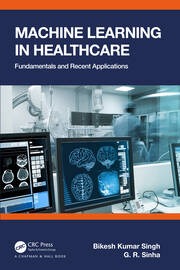
Machine learning in healthcare : Fundamentals and recent applications
Discusses how to build various ML algorithms and how they can be applied to improve healthcare systems. Healthcare applications of AI are innumerable: medical data analysis, early detection and diagnosis of disease, providing objective-based evidence to reduce human errors, curtailing inter- and intra-observer errors, risk identification and interventions for healthcare management, real-time health monitoring, assisting clinicians and patients for selecting appropriate medications, and evaluating drug responses. Extensive demonstrations and discussion on the various principles of machine learning and its application in healthcare is provided, along with solved examples and exercises.
Machine Learning for Cyber Physical Systems : Selected papers from the International Conference ML4CPS 2020
Presents new approaches to Machine Learning for Cyber Physical Systems, experiences and visions. It contains selected papers from the fifth international Conference ML4CPS – Machine Learning for Cyber Physical Systems, which was held in Berlin, March 12-13, 2020.

Machine Learning for Cyber Physical Systems : Selected papers from the International Conference ML4CPS 2018
Presents new approaches to Machine Learning for Cyber Physical Systems, experiences and visions. Cyber Physical Systems are characterized by their ability to adapt and to learn: They analyze their environment and, based on observations, they learn patterns, correlations and predictive models. Typical applications are condition monitoring, predictive maintenance, image processing and diagnosis. Machine Learning is the key technology for these developments.
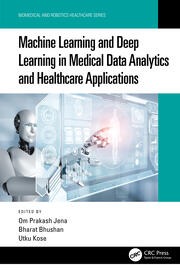
Machine learning and deep learning in medical data analytics and healthcare applications
Introduces and explores a variety of schemes designed to empower, enhance, and represent multi-institutional and multi-disciplinary machine learning (ML) and deep learning (DL) research in healthcare paradigms. Serving as a unique compendium of existing and emerging ML/DL paradigms for the healthcare sector, this book demonstrates the depth, breadth, complexity, and diversity of this multi-disciplinary area. It provides a comprehensive overview of ML/DL algorithms and explores the related use cases in enterprises such as computer-aided medical diagnostics, drug discovery and development, medical imaging, automation, robotic surgery, electronic smart records creation, outbreak prediction, medical image analysis, and radiation treatments.

Logic Programming and Nonmonotonic Reasoning ; 9th International Conference, LPNMR 2007, Tempe, AZ, USA, May 15-17, 2007, Proceedings
This book constitutes the refereed proceedings of the 9th International Conference on Logic Programming and Nonmonotonic Reasoning, LPNMR 2007, held in Tempe, AZ, USA, May 2007.
Linear Systems Control : Deterministic and Stochastic Methods
Modern control theory and in particular state space or state variable methods can be adapted to the description of many different systems because it depends strongly on physical modeling and physical intuition. The laws of physics are in the form of differential equations and for this reason, this book concentrates on system descriptions in this form. This means coupled systems of linear or nonlinear differential equations. The physical approach is emphasized in this book because it is most natural for complex systems. It also makes what would ordinarily be a difficult mathematical subject into one which can straightforwardly be understood intuitively and which deals with concepts which engineering and science students are already familiar.

Leveraging applications of formal methods, verification and validation : Engineering Principles ; 9th International Symposium on Leveraging Applications of Formal Methods, ISoLA 2020, Rhodes, Greece, October 20–30, 2020, Proceedings, Part II
Constitutes the refereed proceedings of the 9th International Symposium on Leveraging Applications of Formal Methods, ISoLA 2020, which was planned to take place during October 20–30, 2020, on Rhodes, Greece. The event itself was postponed to 2021 due to the COVID-19 pandemic. The papers presented were carefully reviewed and selected for inclusion in the proceedings. Each volume focusses on an individual topic with topical section headings within the volume: Part II, Engineering Principles : Automating Software Re-Engineering ; Rigorous Engineering of Collective Adaptive Systems.
Leonardo´s Lost Robots
Reinterprets Leonardo's legacy of notes, showing that apparently unconnected fragments from dispersed manuscripts actually comprise cohesive designs for functioning automata. Using the rough sketches scattered throughout almost all of Leonardo's notebooks, the author has reconstructed Leonardo's programmable cart, which was the platform for other automata: a Robot Lion, a Robot Knight, and a hydraulically powered automaton for striking a bell.
