



الصفحة 9
الصفحة 9
Machine Learning and Robot Perception
Presents some of the most recent research results in the area of machine learning and robot perception. The chapters represent new ways of solving real-world problems. This book will appeal to researchers, senior undergraduate/postgraduate students, application engineers and scientists.
Mac OS X Leopard : Beyond the Manual
Good computer books make assumptions about the reader: what they do and don't know when they pick up the book, and what they want to know when they put it down. For each reader this could be very different; therefore, a book that suits one person may not be the best for another. Mac OS X Leopard: Beyond the Manual makes some assumptions too, ones that tend to differ from other Mac OS X books. First of all, we assume that you have used a computer in that past: that you know how to use a mouse and you know the proper place to stick a DVD to get it to play in your computer. We won't be showing you these things. (We will, however, demonstrate to our Mac converts how to “right click” on a trackpad with only one button!).
Logic Programming with Prolog
Logic Programming is the name given to a distinctive style of programming, very different from that of conventional programming languages such as C++ and Java. By far the most widely used Logic Programming language is Prolog. Prolog is a good choice for developing complex applications, especially in the field of Artificial Intelligence. This book does not assume that the reader is an experienced programmer or has a background in Mathematics, Logic or Artificial Intelligence. It starts from scratch and aims to arrive at the point where quite powerful programs can be written in the language. It is intended both as a textbook for an introductory course and as a self-study book. On completion the reader will know enough to use Prolog in their own research or practical projects. Each chapter has self-assessment exercises so that the reader may check their own progress. A glossary of the technical terms used completes the book.

LMI Approach to Analysis and Control of Takagi-Sugeno Fuzzy Systems with Time Delay
A fuzzy system is, in a very broad sense, any fuzzy logic-based system where fuzzy logic can be used either asthebasisfor the representation of different forms of system knowledge or the model for the interactions and relationships among the system variables. Fuzzy systems have proven to be an important tool for modeling complex systems for which, due to complexity or imprecision, classical tools are unsuccessful. There have been diverse fields of applications of fuzzy technology from medicine to management, from engineering to behavioral science, from vehicle control to computational linguistics, and so on. Fuzzy modeling is a conjunction to understand the s- tem’s behavior and build useful mathematical models. Different types of fuzzy models have been proposed in the literature, among which the Takagi-Sugeno (T-S) fuzzy model is a rule-based one suitable for the accurate approximation and identi?cation of a wide class of nonlinear systems.
Linsuffisance cardiaque aiguë = Acute heart failure
Acute heart failure is one of the oldest described medical conditions. However, although its clinical symptomatology is fairly obvious and known to everyone: dyspnea, liver pain, crackles on auscultation, the epidemiology has only been explored for very recent years. In all of the cardiology and resuscitation books of the past 40 years, acute heart failure has been considered a catch-all ranging from acute simple lung edema in hypertensive crisis to cardiogenic shock following heart attack. myocardium. It was all called "acute heart failure." This book is based on the recent Recommendations of the European Society of Cardiology and the European Society of Intensive Care Medicine which advocate the designation "Acute heart failure syndrome" in which the decompensation of heart failure chronic, hypertensive surge, cardiogenic shock, right heart failure, and high output heart failure are separate entities.
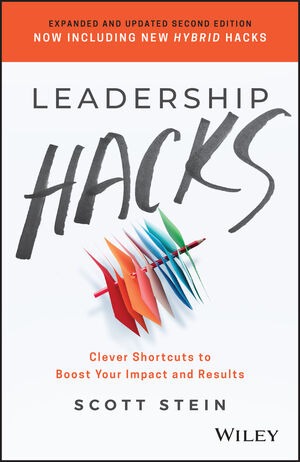
Leadership hacks : Clever shortcuts to boost your impact and results
Identify what distractions slow you down fast-track your productivity to do more in less time streamline delegation so your people perform faster learn the communication and technology shortcuts that get faster results create and lead a hybrid workforce that increases performance. Leadership Hacks shows you how to hack your day, shift your approach and boost your communication so you can lead in a more effective and efficient way, no matter where your team is.

Large scale management of distributed systems ; 17th IFIP/IEEE International Workshop on distributed systems: operations and management, DSOM 2006, Dublin, Ireland, October 23-25, 2006, Proceedings
Presents the proceedings of the 17 IFIP/IEEE International Workshop on Distributed Systems : Operations and Management (DSOM 2006), which was held rd th in Dublin, Ireland during October 23 to 25 , 2006. In line with its reputation as one of the pre-eminent fora for the discussion and debate of advances of distributed systems management, the 2006 iteration of DSOM brought together an international audience of researchers and practitioners from both industry and academia. th DSOM 2006 was the 17 in a series of annual workshops, and it followed the footsteps of highly successful previous meetings, the most recent of which were held in Barcelona, Spain (DSOM 2005), Davis, USA (DSOM 2004), Heidelberg, Germany (DSOM 2003), Montreal, Canada (DSOM 2002) and Nancy, France (DSOM 2001). The goal of the DSOM workshops is to bring together researchers in the areas of networks, systems and services management, from both industry and academia, to discuss recent advances and foster future growth in these ?elds. In contrast to the larger management symposia, such as Integrated Management (IM) and Network Operations and Management (NOMS), the DSOM workshops are organised as sing- track programmes in order to stimulate interaction among participants.

IUTAM Symposium on Mechanics and Reliability of Actuating Materials ; Proceedings of the IUTAM Symposium held in Beijing, China, 1-3 September, 2004
The general assembly of IUTAM approved in August, 2002 at Cambridge University, UK, a proposal to hold an IUTAM symposium to summarize the relevant research findings. The main themes of the symposium are: (i) the constitutive relations of actuating materials that couple mechanical, electrical, thermal and magnetic properties, as well as incorporate phase transformation and domain switch; (ii) the physical mechanisms of deformation, damage, and fatigue crack growth of actuating materials; (iii) the development of failure-resilient approaches that base on the macro-, meso-, and micro-mechanics analyses; (iv) the investigation of microstructural evolution, stability of phase transformation, and size effects of ferroelectric ceramics, shape memory alloys, actuating polymers, and bio-actuating materials.

Complex Motion ; 1st International Workshop, IWCM 2004, Günzburg, Germany, October 12-14, 2004, Revised Papers
The world we live in is a dynamic one: we explore it by moving through it, and many of the objects which we are interested in are also moving. Trafic, for instance, is an example of a domain where detecting and processing visual motion is of vital interest, both in a metaphoric as well as in a purely literal sense. Visual communication is another important example of an area of science which is dominated by the need to measure, understand, and represent visual motion in an eficient way. Visual motion is a subject of research which forces the investigator to deal with complexity; complexity in the sense of facing efiects of motion in a very large diversity of forms, starting from analyzing simple motion in a changing envir- ment (illumination, shadows, . . . ), under adverse observation conditions, such as bad signal-to-noiseratio (low illumination, small-scaleprocesses, low-dosex-ray, etc. ), covering also multiple motions of independent objects, occlusions, and - ing as far as dealing with objects which are complex in themselves (articulated objects such as bodies of living beings). The spectrum of problems includes, but does not end at, objects which are not ‘bodies’ at all, e. g. , when anal- ing fiuid motion, cloud motion, and so on. Analyzing the motion of a crowd in a shopping mall or in an airport is a further example that implies the need to struggle against the problems induced by complexity.

Comparative Evaluation of XML Information Retrieval Systems ; 5th International Workshop of the Initiative for the Evaluation of XML Retrieval, INEX 2006 Dagstuhl Castle, Germany, December 17-20, 2006 Revised and Selected Papers
This book covered methodology and seven additional tracks on ad-hoc, natural language processing, heterogeneous collection, multimedia, interactive, use case, as well as document mining.

Building a collaborative project management system: (Click)
Speaking on construction projects, we can imagine the huge amount of work, effort and time spent to complete any project. Because of the need for tools that facilitate the process of managing and tracking work and managing huge data and information and making it common to all the stockholder involved in the project, this system has been found to meet those needs of engineers, where it can manage employees, materials ,workers and the huge amount of data and enables it to track the progress of work .This system provides the possibility of communication between managers and this The system is considered a tool of the BIM system, which stands for Building Information Modeling.

Brute Force : Cracking the data encryption standard
In the 1960s, it became increasingly clear that more and more information was going to be stored on computers, not on pieces of paper. With these changes in technology and the ways it was used came a need to protect both the systems and the information. For the next ten years, encryption systems of varying strengths were developed, but none proved to be rigorous enough. In 1973, the NBS put out an open call for a new, stronger encryption system that would become the new federal standard. Several years later, IBM responded with a system called Lucifer that came to simply be known as DES (data encryption standard).

Brilliantguard : AI-powered healthcare prototype for mobile & automotive integration
Brilliantguard is an AI-powered healthcare and safety prototype designed to support individuals with special needs, the elderly users, and patients with chronic conditions such as alzheimer’s disease. The system integrates augmented reality (AR), an AI based chatbot, and bitcoin-based payments into a unified platform combining mobile apps, smartwatches, and automotive sensors. It enables real-time health monitoring, predictive alerts with preliminary health suggestions, medication reminders, initial fault detection, and geofencing-based tracking for alzheimer’s patients. Emergency alerts are automatically triggered in response to abnormal health readings or car crashes.

Brain thoughts recognition
Humans controlling machines with their minds may sound like something from a scifi movie, but it’s becoming a reality through brain-computer interfaces BCI. Where BCI technology allows a human brain and an external device to talk to each other—to exchange signals. It gives humans the ability to directly control machines, without the physical constraints of the body. There are two ways to implement the BCI: Noninvasive tools often use sensors applied on or near the head to track and record brain activity, or Invasive BCI would require surgery. Electronic devices would need to be implanted beneath the skull, directly into the brain, to target specific sets of neurons. In order to implement a non-invasive BCI in a mobile phone, this study developed a mobile application to help paralyzed people who do not have the ability to use their phones to spend their basic daily needs, such as using the keyboard and interacting with PDF, etc.
Big Data in Context : Legal, Social and Technological Insights
Sheds new light on a selection of big data scenarios from an interdisciplinary perspective. It features legal, sociological and economic approaches to fundamental big data topics such as privacy, data quality and the ECJ’s Safe Harbor decision on the one hand, and practical applications such as smart cars, wearables and web tracking on the other. Addressing the interests of researchers and practitioners alike, it provides a comprehensive overview of and introduction to the emerging challenges regarding big data.All contributions are based on papers submitted in connection with ABIDA (Assessing Big Data), an interdisciplinary research project exploring the societal aspects of big data and funded by the German Federal Ministry of Education and Research.
Bézier and Splines in image processing and machine vision
Digital image processing and machine vision have grown considerably during the last few decades. Of the various techniques, developed so far splines play a positive and significant role in many of them. This book deals with various image processing and machine vision problems efficiently with splines.

Benign anorectal diseases : Diagnosis with endoanal and endorectal ultrasound and new treatment options
New three-dimensional endoanal and endorectal ultrasonographic and magnetic resonance imaging techniques have given better insight into the complex anatomy of the pelvic floor and its pathologic modification in benign anorectal diseases. Obstetrical events leading to fecal incontinence in females, the relationship between fistulous tracks and the sphincter complex, and mechanisms of obstructed defecation syndrome can now be accurately evaluated, which is of fundamental importance for decision making.

Basic Fracture Mechanics and its Applications
Presents specific aspects of how fracture mechanics is used to address fatigue crack growth, environment assisted cracking, and creep and creep-fatigue crack growth. Other topics include mixed-mode fracture and materials testing and selection for damage tolerant design, alongside in-depth discussions of ensuring structural integrity of components through real-world examples. There is a strong focus throughout the book on the practical applications of fracture mechanics. It provides a clear description of the theoretical aspects of fracture mechanics and also its limitations.

Autonomous Navigation in Dynamic Environments
The purpose of this book is to address the challenging problem of Autonomous Navigation in Dynamic Environments, and to present new ideas and approaches in this newly emerging technical domain. The book surveys the state-of-the-art, discusses in detail various related challenging technical aspects, and addresses upcoming technologies in this field. The aim of the book is to establish a foundation for a broad class of mobile robot mapping and navigation methodologies for indoor, outdoor, and exploratory missions.Three main topics located on the cutting edge of the state of the art are addressed, from both the theoretical and technological point of views: Dynamic world understanding and modelling for safe navigation, Obstacle avoidance and motion planning in dynamic environments, and Human-robot physical interactions. Several models and approaches are proposed for solving problems such as Simultaneous Localization and Mapping (SLAM) in dynamic environments, Mobile obstacle detection and tracking, World state estimation and motion prediction, Safe navigation in dynamic environments, Motion planning in dynamic environments, Robust decision making under uncertainty, and Human-Robot physical interactions.

Automated multi-camera surveillance : Algorithms and practice
This book discusses and proposes techniques for development of an automated multi-camera surveillance system for outdoor environments, while identifying the important issues that a system needs to cope with in realistic surveillance scenarios. The goal of the research presented in this book is to build systems that can deal effectively with these realistic surveillance needs.
