



الصفحة 9
الصفحة 9

GN Company for face masks and hand sanitizers production
If there is any product that has been in high demand in Pharmacies and Supermarkets since the advent of the corona virus, then it must be face mask and sanitizers. The fact that wearing of face masks during the COVID-19 pandemic received varying recommendations from different public health agencies and governments means that the product is bound to sell well. In essence, starting a face mask and sanitizers production company is a business you should consider as an aspiring entrepreneur. This business that is still open for investors to come and compete for the available market. From here we got the idea to start up this business GN company for Masks and Hand Sanitizers.

Global Production : A Handbook for Strategy and Implementation
What is the best configuration for a global production network? What are the different dynamics in low-cost vs. high-cost countries? Getting the answers right is key to building a competitive and efficient global production network. Centers of economic activity are shifting profoundly, globally and even regionally. Production is shifting even more dramatically than the economy as a whole, making it critical for decision makers to know what criteria matter most and how to make the right decisions on where to invest. Regardless of the industry involved, an optimized global footprint can translate to a competitive advantage. A comprehensive redesign typically yields a 20 to 40 percent reduction in manufacturing costs. Global production and purchasing operations create a platform for entry into new markets. Planning and implementing a sustainable globalization strategy, however, takes considerable effort; this book is there to help in that task.

Geographies of the University
Raises awareness of the histories, geographies, and practices of universities and analyzes their role as key actors in today’s global knowledge economy. Universities are centers of research, teaching, and expertise with significant economic, social, and cultural impacts at different geographical scales. Scholars from a variety of disciplines and countries offer original analyses and discussions along five main themes: historical perspectives on the university as a site of knowledge production, cultural encounter, and political interest; institutional perspectives on university governance and the creation of innovative environments; relationships between universities and the city; the impact of universities on national and regional economies and cultures; and the processes of internationalization through student mobility, the creation of education hubs, and global regionalism in higher education.

Genome Mapping and Genomics in Arthropods
Mapping of animal genomes has generated huge databases and several new concepts and strategies, which are useful to elucidate origin, evolution and phylogeny. Genetic and physical maps of genomes further provide precise details on chromosomal location, function, expression and regulation of academically and economically important genes. The series "Genome Mapping and Genomics in Animals" provides comprehensive and up-to-date reviews on genomic research on a large variety of selected animal systems, contributed by leading scientists from around the world.Insects and other arthropods, the largest group of animals in number of species, have global impact on agriculture, industry, human health and environment. They are of particular economic importance for food production as pollinators, for natural products like silk and also as pests and parasites. Arthropods covered in this volume include honeybee, bumblebee, the parasitic Jewel Wasp, silkworm, pea aphid, mosquito, Hessian fly and tick.
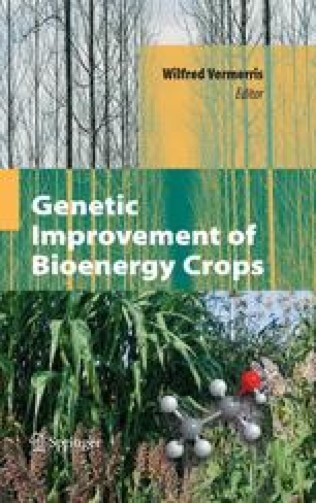
Genetic Improvement of Bioenergy Crops
This book presents an overview of the major bioenergy crops that can be used for the production of biomass and ethanol, with a focus on their genetic improvement. In order to maintain focus, biodiesel and the genetic improvement of oil crops are not covered. The available genetic resources are largely untapped and offer major opportunities to significantly enhance the contribution of bioenergy, while addressing many of the economic and ecological concerns.

Gender and migration : IMISCOE short reader
This short reader offers a critical review of the debates on the transformation of migration and gendered mobilities primarily in Europe, though also engaging in wider theoretical insights. Building on empirical case studies and grounded in an analytical framework that incorporates both men and women, masculinities, sexualities and wider intersectional insights, this reader provides an accessible overview of conceptual developments and methodological shifts and their implications for a gendered understanding of migration in the past 30 years. It explores different and emerging approaches in major areas, such as: gendered labour markets across diverse sectors beyond domestic and care work to include skilled sectors of social reproduction; the significance of families in migration and transnational families.

Fungi as an Alternative Source of Anticancer and Antioxidant
Fungi are an " excellent but underexplored source " for new therapeutic compounds. The limited availability of bioactive principles in plant sources could be surpassed by exploiting the chemical entities in the endophytes fungi . fungi represent a rich source of bioactive metabolite that can manipulated to produce desirable novel analogs. In addition to the active substances that can be extracted from the fungi, so that they are useful in several mechanisms. Exploring and exploiting of metabolites from endophytic in terrestrial, mangrove and marine habitats may provide an avenue for discovery of drug candidates against deadly human disease. This review focuses on the production of antioxidant and anticancer from severa fungi habitats.

Funds, Flows and Time : An Alternative Approach to the Microeconomic Analysis of Productive Activities
The subject of this book is production, which is an important and extensive field in economic science. In fact, production, distribution and consump tion were long considered the three federated kingdoms which together formed the great empire of the economy. According to other slightly dif ferent traditions, production also held pride of place, specifically as a basic link in the long chain of social reproduction. Today, whatever the theoreti cal approach, production is a fundamental requirement for human survival. This was not, however, always the case. For much of the history of man kind hominids were hunter, scavenger and gatherers, with very little con trol over their environment, and extremely little in the way of artefacts with which to work. However, since the Neolithic revolution, productive processes have constituted an essential mechanism, providing human soci ety with goods and services to satisfy its needs and cravings.

Fundamentals in Nuclear Physics : From Nuclear Structure to Cosmology
Explores nuclear physics and its applications ranging from the structure of nuclei and their reactions, to astrophysics and cosmology. The physics is introduced with arguments based on simple ideas such as the empirical structure of nuclear forces and its interplay with the Pauli principle and Coulomb repulsion. The book then develops elementary nuclear models and illustrates nuclear systematics with experimental data. Reactions and decays are discussed both phenomenologically and from the point of view of fundamental electro-weak interaction theory. The discussions of fission and fusion emphasize nuclear energy production. This leads directly into nuclear astrophysics and nucleosynthesis. The book ends with a presentation of the latest ideas about cosmology. As a primer this course will lay the foundations for more specialized subjects within the vast domain of nuclear physics as a whole. This book emerged from a series of topical courses the authors delivered at the Ecole Polytechnique and will be useful for advanced undergraduates and for scientists in a variety of fields.

Fundamental Numerical Methods for Electrical Engineering
The book presents fundamental numerical methods which are most frequently applied in the electrical (electronic) engineering. All methods discussed are illustrated with real-world examples of applications. It is shown how real engineering questions can be transformed into the corresponding mathematical problems and next effectively solved by using appropriate numerical methods.

Functional Foods
Functional Foods Presenting cutting-edge information on new and emerging food engineering processes, Functional Foods, the second volume in the groundbreaking new series, “Bioprocessing in Food Science,” is an essential reference on the modeling, quality, safety, and technologies associated with food processing operations today.

Frontiers in Water Resource Economics
This edited volume focuses on recent methodological advanced within the field of water resource economics and shows how these advances can be applied to the economics of water issues. It identifies five areas of particular importance -- asymmetric information and game theory, uncertainty, space, water quality, and production and technology adoption.

Foundations and applications of MIS : A model theory approach
Foundations and Applications of MIS presents a unique systems theory approach to management information system (MIS) development. The development is driven by the need to eliminate ambiguity in specification, design and construction of the application software. Further, the authors show that the considerable effort being expanded nowadays on validation, verification and testing, as required in current software engineering practices, will be reduced. The approach also reinforces the belief that MIS development is independent of software development. The work presents an approach that provides a theoretical foundation for MIS development from the systems theoretic viewpoint along with practical applications ranging from a transaction processing system to a solver system. Both formal systems theory and automatic system generation based on the authors' newly extended Prolog offer a significant increase in the efficiency of specification, design and production of the application software, as well as an increase in the functional reliability of the software produced. The book assumes a working knowledge of elementary set theory, logic, and familiarity with some systems concepts, such as the automaton model.

Fostering transformative change for sustainability in the context of socio-ecological production landscapes and seascapes (SEPLS)
This book is a compilation of case studies that provide useful knowledge and lessons that derive from on-the-ground activities and contribute to policy recommendations, focusing on the relevance of social-ecological production landscapes and seascapes (SEPLS) to “transformative change.” The concept of “transformative change” has been gaining more attention to deal with today’s environmental and development problems, whereas both policy and scientific communities have been increasingly calling for transformative change toward sustainable society. The Intergovernmental Science-Policy Platform on Biodiversity and Ecosystem Services (IPBES) has planned to start the so-called “assessment on transformative change” if approved by the IPBES plenary to be held in 2021
Formulas, ingredients and production of cosmetics technology of skin- and hair-care products in Japan
Provides the comprehensive knowledge and instruction necessary for researchers to design and create cosmetics products. The book’s chapters cover a comprehensive list of topics, which include, among others, the basics of cosmetics, such as the raw materials of cosmetics and their application; practical techniques and technologies for designing and manufacturing cosmetics, as well as theoretical knowledge; emulsification; sensory evaluations of cosmetic ingredients; and how to create products such as soap-based cleansers, shampoos, conditioners, creams, and others. The potential for innovation is great in Japan’s cosmetics industry. This book expresses the hope that the high level of dedicated research continues and proliferates, especially among those who are innovators at heart.

Forms of List-Making : Epistemic, Literary, and Visual Enumeration
This book attempts to show that an examination of the list’s formal features has the potential to produce genuine insights into the production of knowledge, the poetics of literature and the composition of visual art. Following a conceptual introduction, the twelve single-authored chapters place the list in a variety of well-researched contexts, including ancient Roman historiography, medieval painting, Enlightenment periodicals, nineteenth-century botanical geography, American Beat poetry and contemporary photobooks.

Formal approaches to software testing and runtime verification ; 1st Combined International Workshops FATES 2006 and RV 2006, Seattle, WA, USA, August 15-16, 2006, Revised Selected Papers
Software validation is one of the most cost-intensive tasks in modern software production processes. The objective of FATES/RV 2006 was to bring sci- tists from both academia and industry together to discuss formal approaches to test and analyze programs and monitor and guide their executions. Formal approaches to test may cover techniques from areas like theorem proving, model checking, constraint resolution, static program analysis, abstract interpretation, Markov chains, and various others. Formal approaches to runtime veri?cation use formal techniques to improve traditional ad-hoc monitoring techniques used in testing, debugging, performance monitoring, fault protection, etc.

Foot-and-Mouth Disease Virus
The chapters in this volume provide an account of the present knowledge and understanding of Foot and Mouth disease virus pathogenesis and global epidemiology, the detailed structure of the virus itself and the properties of its RNA genome. Also considered are the immune response of the host and the state of the art in vaccine production, and the nature of virus evolution.

Food Safety Culture : Creating a Behavior-Based Food Safety Management System
Food safety awareness is at an all time high, new and emerging threats to the food supply are being recognized, and consumers are eating more and more meals prepared outside of the home. Accordingly, retail and foodservice establishments, as well as food producers at all levels of the food production chain, have a growing responsibility to ensure that proper food safety and sanitation practices are followed, thereby, safeguarding the health of their guests and customers. Achieving food safety success in this changing environment requires going beyond traditional training, testing, and inspectional approaches to managing risks. It requires a better understanding of organizational culture and the human dimensions of food safety. To improve the food safety performance of a retail or foodservice establishment, an organization with thousands of employees, or a local community, you must change the way people do things. You must change their behavior. In fact, simply put, food safety equals behavior.

Food preservation and safety of natural products
Food Preservation and Safety of Natural Products addresses the most common causes of food spoilage that create significant loss to global food production while also discussing how food serves as a vehicle for the transmission of pathogenic microorganisms responsible for mild to debilitating health conditions in humans. The book provides essential information for food safety professionals on issues relating to foodborne diseases and offers potential solutions by presenting various methods of incorporating natural products in food production to prevent the spread of foodborne pathogenic organisms. The demand for green consumerism and consumers general distaste for synthetic food additives poses a serious challenge to food safety and preservation. Natural products are used as green and sustainable source of bioactive compounds that can be applied in various fields including food. The use of plant and other natural products in food preservation is on the rise, hence this book reviews microbial mediated food spoilage, foodborne pathogens and food contamination and offers applications of natural products in food preservation.
