



الصفحة 9
الصفحة 9

Fundamentals of Structural Mechanics, Dynamics, and Stability
Presents the material from the general (theory and fundamentals) to the particular (specific applications). Emphasizes the relevant mathematical concepts as related to structural mechanics in each chapter. Presents structural simulations using strucutral analysis software (ANSYS). Explains the Finite Element Method for elastic bodies, trusses, frames, non-linear behavior of materials, and more. Includes numerous worked examples and case studies throughout

Fundamentals of Structural Mechanics
With the advent of the finite element method, our ability to compute has surpassed our ability to formulate theory. As a result, continuum mechanics is no longer the province of the specialist. What an engineer needs to know about mechanics has been forever changed by our capacity to compute. This book attempts to capitalize on the pedagogi cal opportunities implicit in this shift of perspective. It now seems more ap propriate to focus on fundamental principles and formulations than on classical solution techniques.

Fundamentals of Structural Dynamics : Theory and Computation
Emphasizes numerical methods, nonlinear response of structures, and the analysis of continuous systems (e.g., wave propagation). Fundamentals of Structural Dynamics: Theory and Computation builds the theory of structural dynamics from simple single-degree-of-freedom systems through complex nonlinear beams and frames in a consistent theoretical context supported by an extensive set of MATLAB codes that not only illustrate and support the principles, but provide powerful tools for exploration. The book is designed for students learning structural dynamics for the first time but also serves as a reference for professionals throughout their careers.

Fundamentals of Solid State Engineering
Fundamentals of Solid State Engineering, 2nd Edition, provides a multi-disciplinary introduction to Solid State Engineering, combining concepts from physics, chemistry, electrical engineering, materials science and mechanical engineering. Basic physics concepts are introduced, followed by a thorough treatment of the technology for solid state engineering. Topics include compound semiconductor bulk and epitaxial thin films growth techniques, current semiconductor device processing and nano-fabrication technologies. Examples of semiconductor devices and a description of their theory of operation are then discussed, including transistors, semiconductor lasers and photodetectors.

Fundamentals of Shock Wave Propagation in Solids
This book forms an introduction to important aspects of shock-wave propagation in solid materials. Emphasis is on the regime of moderate compression that can be produced by high-velocity impact or detonation of chemical explosives.
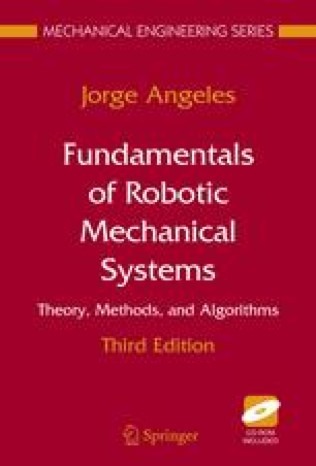
Fundamentals of Robotic Mechanical Systems : Theory, Methods, and Algorithms
Fundamentals of Robotic Mechanical Systems, Third Edition addresses robots at large - such as multi-fingered hands, walking machines, flight simulators, and machine tools - that rely on mechanical systems to perform their tasks. The author establishes the foundations on which the design, control, and implementation of the underlying mechanical subsystems are based. The treatment assumes familiarity with some calculus, linear algebra, and elementary mechanics; however, the elements of rigid-body mechanics and linear transformations are reviewed in the first chapters, making the presentation self-contained.

Fundamentals of quantum optics and quantum information
This book is an introduction to the two closely related subjects of quantum optics and quantum information. Essentially, the physical aspects of quantum information processing have now become an integral part of quantum optics.

Fundamentals of Protein NMR Spectroscopy
NMR spectroscopy has proven to be a powerful technique to study the structure and dynamics of biological macromolecules. Fundamentals of Protein NMR Spectroscopy is a comprehensive textbook that guides the reader from a basic understanding of the phenomenological properties of magnetic resonance to the application and interpretation of modern multi-dimensional NMR experiments on 15N/13C-labeled proteins. Beginning with elementary quantum mechanics, a set of practical rules is presented and used to describe many commonly employed multi-dimensional, multi-nuclear NMR pulse sequences. A modular analysis of NMR pulse sequence building blocks also provides a basis for understanding and developing novel pulse programs.

Fundamentals of Multibody Dynamics : Theory and Applications
This textbook—a result of the author’s many years of research and teaching—brings together diverse concepts of dynamics, combining the efforts of many researchers in the field of mechanics. Bridging the gap between dynamics and engineering applications such as microrobotics, virtual reality simulation of interactive mechanical systems, nanomechanics, flexible biosystems, crash simulation, and biomechanics, the book puts into perspective the importance of modeling in the dynamic simulation and solution of problems in these fields.

Fundamentals of Friction and Wear on the Nanoscale
In the past twenty years, powerful tools such as atomic force microscopy have made it possible to accurately investigate the phenomena of friction and wear, down to the nanometer scale. Readers of this book will become familiar with the concepts and techniques of nanotribology, explained by an international team of scientists and engineers, actively involved and with long experience in this field. Edited by two pioneers in the field, 'Fundamentals of Frictions and Wear at the Nanoscale' is suitable both as first introduction to this fascinating subject, and also as a reference for researchers wishing to improve their knowledge of nanotribology and to keep up with the latest results in this field.

Fundamentals of fluid mechanics : For scientists and engineers
Provides a coherent and structured overview of fluid mechanics, a discipline concerned with many natural phenomena and at the very heart of the most diversified industrial applications and human activities.

Fundamentals of biomechanics
The book presents a comprehensive review of the major concepts of biomechanics and summarizes them in nine principles of biomechanics. Throughout the text are numerous examples of applying these principles to the work of kinesiology professionals. Specific case studies are presented in four application chapters: physical education, coaching, strength and conditioning, and sports medicine.

Fundamentals of airplane flight mechanics
Airplane flight mechanics is the application of Newton's laws to the study of airplane trajectories (performance), stability, and aerodynamic control. This text is limited to flight in a vertical plane and is divided into two parts. The first part, trajectory analysis, is concerned primarily with the derivation of analytical solutions of trajectory problems associated with the sizing of commercial jets, that is, take-off, climb, cruise, descent, and landing, including trajectory optimization. The second part, stability and control, is further classified as static or dynamic. On each iteration of airplane sizing, the center of gravity is placed so that the airplane is statically stable. Dynamic stability and control is included to study the response of an airplane to control and gust inputs, which is needed for the design of automatic flight control systems. Algorithms are presented for estimating lift, drag, pitching moment, and stability derivatives.

Functional Data Analysis
This monograph presents many ideas and techniques for such data. Included are expressions in the functional domain of such classics as linear regression, principal components analysis, linear modeling, and canonical correlation analysis, as well as specifically functional techniques such as curve registration and principal differential analysis. Data arising in real applications are used throughout for both motivation and illustration, showing how functional approaches allow us to see new things, especially by exploiting the smoothness of the processes generating the data. The data sets exemplify the wide scope of functional data analysis; they are drawn from growth analysis, meteorology, biomechanics, equine science, economics, and medicine.The book presents novel statistical technology, much of it based on the authors’ own research work, while keeping the mathematical level widely accessible.

Frontiers of Fundamental Physics ; Proceedings of the Sixth International Symposium "Frontiers of Fundamental and Computational Physics", Udine, Italy, 26-29 September 2004
The Sixth International Symposium "Frontiers of Fundamental and Computational Physics", Udine, Italy, 26-29 September 2004, aimed at providing a platform for a wide range of physicists to meet and share thoughts on the latest trends in various, mainly cross-disciplinary research areas. This includes the exploration of frontier lines in High Energy Physics, Theoretical Physics, Gravitation and Cosmology, Astrophysics, Condensed Matter Physics, Fluid Mechanics. Such frontier lines were unified by the use of computers as an, often primary, research instruments, or dealing with issues related to information theory.

Frontiers of Computational Science ; Proceedings of the International Symposium on Frontiers of Computational Science 2005
With the dramatic increase in speed and capacity of modern computers, computational approaches are becoming of crucial importance in various fields of science and engineering. Computational science is the interdisciplinary science, which promotes systematic development of methodologies and framework of computational approaches, basic studies of algorithms and soft-computation technologies and vast areas of applications. This volume is the proceedings of International Symposium on Frontiers of Computational Science 2005, containing papers from 7 plenary and keynote lecturers, 17 invited lecturers and 33 contributed papers. This book discusses the high-level use of computers in a wide variety of areas such as fluid mechanics, material and genome sciences.

Frontiers in Quantum Systems in Chemistry and Physics
The basic theory of matter on the nanoscale is quantum mechanics and the application of quantum mechanics to the study of the many-body problem in molecules and materials is a rapidly developing field of research. Frontiers in Quantum Systems in Chemistry and Physics defines the leading edge; hence it describes the new theoretical developments available to a wider audience and presents theories which provide, for example, new insights into the structure of increasing complex molecular systems or molecules in a variety of environments. New computational techniques and practices are accessed, exploiting the wide range of equipment available to the researcher from “leadership” class supercomputers to distributed workstations and the internet.
From Vectors to Tensors
It is true that there exist many books dedicated to linear algebra and some what fewer to multilinear algebra, written in several languages, and perhaps one can think that no more books are needed. However, it is also true that in algebra many new results are continuously appearing, different points of view can be used to see the mathematical objects and their associated structures, and different orientations can be selected to present the material, and all of them deserve publication. he book assumes a certain knowledge of linear algebra, and is intended as a textbook for graduate and postgraduate students and also as a consultation book. It is addressed to mathematicians, physicists, engineers, and applied scientists with a practical orientation who are looking for powerful tensor tools to solve their problems.

From microphysics to macrophysics : Methods and applications of statistical physics; Vol.1
Volume 1 discusses in detail the probabilistic description of quantum or classical systems, the Boltzmann-Gibbs distributions, the conservation laws, and the interpretation of entropy as missing information. Thermodynamics and electromagnetism in matter are dealt with, as well as applications to gases, both dilute and condensed, and to phase transitions.

From microphysics to macrophysics : Methods and applications of statistical physics ; Vol.2
Volume 2 applies statistical methods to systems governed by quantum effects, in particular to solid state physics, explaining properties due to the crystal structure or to the lattice excitations or to the electrons. Liquid helium is discussed and radiative equilibrium and transport are studied. The last chapters are devoted to non-equilibrium processes and to kinetic equations, with many applications included.
