



الصفحة 9
الصفحة 9

Embedded System Design
Embedded System Design starts with an introduction into the area and a survey of specification languages for embedded systems. A brief overview is provided of hardware devices used for embedded systems and also presents the essentials of software design for embedded systems. Real-time operating systems and real-time scheduling are covered briefly. Techniques for implementing embedded systems are also discussed, using hardware/software codesign. It closes with a survey on validation techniques. Embedded System Design can be used as a text book for courses on embedded systems and as a source which provides pointers to relevant material in the area for PhD students and teachers. The book assumes a basic knowledge of information processing hardware and software.

ECOOP 2008 - Object-Oriented Programming ; 22nd European Conference Paphos, Cyprus, July 7-11, 2008 Proceedings
This book constitutes the refereed proceedings of the 22nd European Conference on Object-Oriented Programming, ECOOP 2008, held in Paphos, Cyprus, in July 2008.

ECOOP 2005 - object-oriented programming ; 19th European Conference, Glasgow, UK, July 25-29, 2005. Proceedings
The 19th Annual Meeting of the European Conference on Object-Oriented Programming—ECOOP 2005—took place during the last week of July in Glasgow, Scotland, UK. This volume includes the refereed technical papers p- sented at the conference, and two invited papers. It is traditional to preface a volume of proceedings such as this with a note that emphasizes the importance of the conference in its respective ?eld. Although such self-evaluations should always be taken with a large grain of salt, ECOOP is undisputedly the pre- inent conference on object-orientation outside of the United States. In its turn, object-orientationis today’s principaltechnology not only for programming,but also for design, analysisand speci?cation of softwaresystems.

ECOOP 2002 - Object-Oriented Programming ; 16th European Conference Malaga, Spain, June 10-14, 2002 Proceedings
Constitutes the proceedings of the 16th European Conference on Object-Oriented Programming held in Spain in 2002. The 25 papers cover aspect-oriented software development, Java virtual machines, distributed systems, patterns and architectures, languages, optimization and more.

Economic evaluations in exploration
This textbook, now in its second English edition, is originally a translation of the G- man textbook “Rechnen für Lagerstättenkundler und Rohstoffwirtschaftler, Teil 1”, also translated into the Chinese and Russian languages. Compared to the previous English and German editions the chapters have been updated with new examples and in many cases amended. The textbook is intended for the economic geologist who deals with the evaluation of deposits at an early stage of development. Once an exploration project has reached the feasibility stage, the exact calculations that are necessary for a comprehensive te- nical and economic assessment will be performed by a team of geologists, mining engineers, metallurgists, and economists. In the early stages of exploration, however, any evaluator of deposits must be able to cover the whole spectrum himself. Since only order of magnitude parameters are available at this early stage, the c- culations can only yield order of magnitude results.

Earthquakes : Simulations, Sources and Tsunamis
This book includes a variety of studies that focus on the modeling of tsunamis and earthquakes, both large-scale simulation and visualization programs, as well as detailed models of small-scale features. Particular attention is paid to computational techniques, languages, and hardware that can be used to facilitate data analysis, visualization, and modeling. Also included are studies of several earthquake forecasting techniques and associated comparisons of their results with historic earthquake data. Finally, the volume ends with theoretical analyses of statistical properties of seismicity by internationally recognized experts in the field. This volume will be of particular interest to researchers interested in the multiscale simulation and visualization of large earthquakes and tsunamis.
Early Aspects: Current Challenges and Future Directions ; 10th International Workshop, Vancouver, Canada, March 13, 2007, Revised Selected Papers
Traditionally, aspect-oriented software development (AOSD) has focused on the implementation phase of the software lifecycle: aspects are identified and captured mainly in code. Therefore, most current AOSD approaches place the burden for aspect identification and management on the programmer working at low levels of abstraction. However, aspects are often present well before the implementation phase, such as in domain models, requirements and software architecture. Identification and capture of these early aspects ensure that aspects related to the problem domain (as opposed to merely the implementation) will be appropriately captured, reasoned about and available. This offers improved opportunities for early recognition and negotiation of trade-offs and allows forward and backward aspect traceability. This makes requirements, architecture, and implementation more seamless, and allows a more systematic application of aspects.

Domain-driven design with Java, a practitioner's guide : create simple, elegant, and valuable software solutions for complex business problems
Helps you as a developer and architect to put your knowledge to work in order to create elegant software designs that are enjoyable to work with and easy to reason about. You'll begin with an introduction to the concepts of domain-driven design and discover various ways to apply them in real-world scenarios. You'll also appreciate how DDD is extremely relevant when creating cloud native solutions that employ modern techniques such as event-driven microservices and fine-grained architectures. As you advance through the chapters, you'll get acquainted with core DDD's strategic design concepts such as the ubiquitous language, context maps, bounded contexts, and tactical design elements like aggregates and domain models and events. You'll understand how to apply modern, lightweight modeling techniques such as business value canvas, Wardley mapping, domain storytelling, and event storming, while also learning how to test-drive the system to create solutions that exhibit high degrees of internal quality.
DNA Computing ; 7th International Workshop on DNA-Based Computers, DNA7, Tampa, FL, USA, June 10-13, 2001, Revised Papers
Constitutes the post-proceedings of the 7th International Workshop on DNA-Based Computers, held in Florida in 2001. The 26 papers cover experimental tools, theoretical tools, probabilistic computational models, computer simulation and sequence design, algorithms, experimental solutions and more.

Distributed Embedded Control Systems : Improving Dependability with Coherent Design
Distributed Embedded Control Systems handles the domains encountered when designing a distributed embedded computer control system as an integrated whole. First to be discussed are some basic issues about real-time systems and their properties, specifically safety. Then, system and hardware architectures are dealt.
Distributed Applications and Interoperable Systems ; 8th IFIP WG 6.1 International Conference, DAIS 2008, Oslo, Norway, June 4-6, 2008. Proceedings
This volume contains the proceedings of DAIS 2008, the 8th IFIP International Conference on Distributed Applications and Interoperable Systems.

Digital VLSI Design with Verilog : A Textbook from Silicon Valley Technical Institute
Digital VLSI Design With Verilog is all an engineer needs for in-depth understanding of the verilog language: Syntax, synthesis semantics, simulation, and test. For a reader with access to appropriate electronic design tools, all solutions can be developed, simulated, and synthesized as described in the book.

DevOps Tools for Java Developers : Best Practices from Source Code to Production Containers
Explore software lifecycle best practices Use DevSecOps methodologies to facilitate software development and delivery Understand the business value of DevSecOps best practices Manage and secure software dependencies Develop and deploy applications using containers and cloud native technologies Manage and administrate source control repositories and development processes Use automation to set up and administer build pipelines Identify common deployment patterns and antipatterns Maintain and monitor software after deployment

Developments in language theory ; 8th International Conference, DLT 2004, Auckland, New Zealand, December 13-17, Proceedings
Basic Notions of Reaction Systems / A Kleene Theorem for a Class of Communicating Automata with Effective Algorithms / Algebraic and Topological Models for DNA Recombinant Processes / Contributed Papers : Regular Expressions for Two-Dimensional Languages Over One-Letter Alphabet / On Competence in CD Grammar Systems / The Dot-Depth and the Polynomial Hierarchy Correspond on the Delta Levels, and other

Developments in Language Theory ; 12th International Conference, DLT 2008, Kyoto, Japan, September 16-19, 2008. Proceedings
This book constitutes the refereed proceedings of the 12th International Conference on Developments in Language Theory, DLT 2008, held in Kyoto, Japan, September 2008.

Development of linguistic linked open data resources for collaborative data-Intensive research in the language sciences
This volume examines the challenges inherent in making diverse data in linguistics and the language sciences open, distributed, integrated, and accessible, thus fostering wide data sharing and collaboration. It is unique in integrating the perspectives of language researchers and technical LOD (linked open data) researchers. Reporting on both active research needs in the field of language acquisition and technical advances in the development of data interoperability, the book demonstrates the advantages of an international infrastructure for scholarship in the field of language sciences.
Deployment and operation of complex software in heterogeneous execution environments : The SODALITE approach
This book provides an overview of the work developed within the SODALITE project, which aims at facilitating the deployment and operation of distributed software on top of heterogeneous infrastructures, including cloud, HPC and edge resources. The experts participating in the project describe how SODALITE works and how it can be exploited by end users. While multiple languages and tools are available in the literature to support DevOps teams in the automation of deployment and operation steps, still these activities require specific know-how and skills that cannot be found in average teams. The SODALITE framework tackles this problem by offering modelling and smart editing features to allow those we call Application Ops Experts to work without knowing low level details about the adopted, potentially heterogeneous, infrastructures. The framework offers also mechanisms to verify the quality of the defined models, generate the corresponding executable infrastructural code, automatically wrap application components within proper execution containers, orchestrate all activities concerned with deployment and operation of all system components, and support on-the-fly self-adaptation and refactoring.
Dependable software engineering : Theories, tools, and applications ; 6th International Symposium, SETTA 2020, Guangzhou, China, November 24–27, 2020, Proceedings
This book constitutes the proceedings of the 6th International Symposium on Dependable Software Engineering, SETTA 2020, held in Guangzhou, China, in November 2020. The 10 full and 1 short paper included in this volume were carefully reviewed and selected from 20 submissions. They deal with latest research results and ideas on bridging the gap between formal methods and software engineering.

Deontic Logic in Computer Science ; 9th International Conference, DEON 2008, Luxembourg, Luxembourg, July 15-18, 2008. Proceedings
This volume presents the refereed proceedings of the 9th International Conference on Deontic Logic in Computer Science, DEON 2008, held in Luxembourg in July 2008.
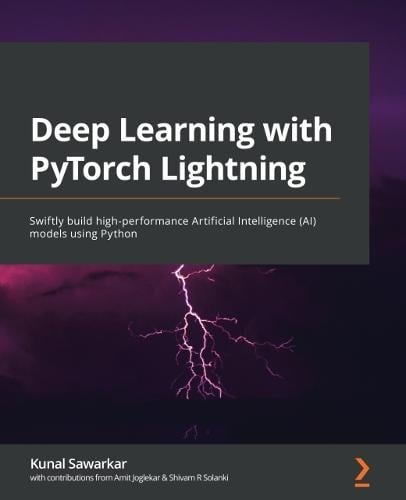
Deep Learning with PyTorch Lightning : Build and train high-performance artificial intelligence and self-supervised models using Python
You’ll learn how to configure PyTorch Lightning on a cloud platform, understand the architectural components, and explore how they are configured to build various industry solutions. You’ll build a neural network architecture, deploy an application from scratch, and see how you can expand it based on your specific needs, beyond what the framework can provide. In the later chapters, you’ll also learn how to implement capabilities to build and train various models like Convolutional Neural Nets (CNN), Natural Language Processing (NLP), Time Series, Self-Supervised Learning, Semi-Supervised Learning, Generative Adversarial Network (GAN) using PyTorch Lightning.
