



الصفحة 9
الصفحة 9

Natriuretic Peptides : The Hormones of the Heart
The rapid knowledge in the field of neuro-humoral regulation of cardiovascular pathophysiology is changing the picture of current diagnosis and treatment of cardiac patients. The emerging conceptual revolutionary idea is that heart acts not as a pump, merely, but as a "gland", that is as a regulator of circulatory homeostasis and salt-water balance. Cardiovascular pathophysiology has to be written, indeed, on this basis: this physiology textbook gives an up-to-date description of the complexity and novelty of actual knowledge, with all its potential clinical implications.

NATO and terrorism catastrophic terrorism and first responders : Threats and mitigation
In this important new book a group of experts represents the current knowledge on the various terrorism threats to first responders resulting from the novel use of conventional weapons, as well radiological, nuclear, biological and chemical weapons. Also, the current situation in selected countries of different sizes and practical experience with terrorism countermeasures (Austria, Israel, Slovenia, Russia, U.S.) is reviewed, focusing on the national operational logistics and the individual needs for improving the present situation. Finally, this book offers innovative solutions to strengthen the level of protection of the first responders, culminating in fifty-one practically applicable recommendations

National Systems of Innovation in Comparison : Structure and Performance Indicators for Knowledge Societies
The book documents major elements of the joint work of eight leading German institutes, elaborated in the context of a regular annual report on Germany's technological performance. It provides much more than the pure compilation of quantitative indicators for international benchmarking, but gives support to an appropriate interpretation of the referring results and suggests relevant conclusions for innovation policy. A special focus is on Germany; so the book also aims at non-German readers interested in specific features of the German innovation system.

NASAs Scientist-Astronauts
Mounting pressure in the early 1960s from the National Academy of Sciences (NAS) to study ways of expanding the role of astronauts to conduct science on future space missions led to NASA’s conclusion that flying scientifically trained crewmembers would generate greater returns from each mission. NASA and industry studies continued investigating possibilities that could lead to the eventual creation of the first space stations using surplus Apollo hardware, through the Apollo Applications Programme (AAP).

Nanotribology and nanomechanics : An introduction ; 2nd ed.
This volume serves as a timely, practical introduction to the principles of nanotribology and nanomechanics and applications to magnetic storage systems, MEMS/NEMS and BioMEMS/bioNEMS. Assuming some familiarity with macrotribology/mechanics, the book comprises chapters by internationally recognized experts, who integrate knowledge of the field from the mechanics and materials-science perspectives. They cover key measurement techniques, their applications, and theoretical modelling of interfaces, each beginning their contributions with macro- and progressing to microconcepts

Nanotribology and nanomechanics : An introduction ; 1st ed.
This volume serves as a timely, practical introduction to the principles of nanotribology and nanomechanics and applications to magnetic storage systems and MEMS/NEMS. Assuming some familiarity with macrotribology/mechanics, the book comprises chapters by internationally recognized experts, who integrate knowledge of the field from the mechanics and materials-science perspectives. They cover key measurement techniques, their applications, and theoretical modelling of interfaces, each beginning their contributions with macro- and progressing to microconcepts.
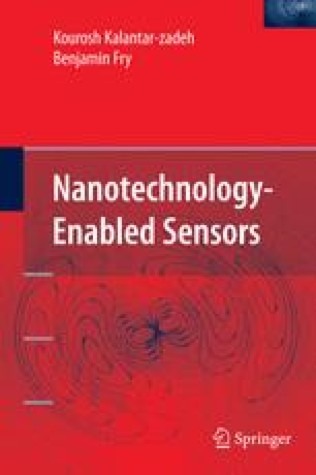
Nanotechnology-Enabled Sensors
Nanotechnology provides us with tools to create functional materials, devices, and systems by controlling materials at the atomic and molecular scales, and at the same time make use of novel properties and phenomena. Considering that most chemical and biological sensors, as well as many physical sensors, depend on interactions occurring within the nano scale range, the impact that nanotechnology will have on the sensor world is significant. Nanotechnology enabled sensors find applications in several novel fields such as sensing single molecules, bio-hazards, toxic chemicals, gas sensors, process control and diagnostics.
Nanotechnology in endodontics : Current and potential clinical applications
Provides detailed information on the emerging applications of nanomaterials and nanoparticles within endodontics, highlighting the exciting potential clinical impact of nanotechnology in the field. The range of applications covered is diverse, encompassing drug and gene delivery, tissue engineering, antibacterial strategies, dentin tissue stabilization, dentin pulp regeneration and use in restorative and endodontic materials. Important scientific background information relating to each application is provided, with clear coverage of basic principles. In addition, potential pitfalls are identified and explained. The cytotoxicity of nanomaterials and nanoparticles is also addressed in a separate chapter. The book will be of value both for endodontic practitioners and for all scientists and graduate students who are interested in the application of nanotechnology in endodontics.

Nanotechnology based cosmetics
Explores the applications and advantages of nanotechnology-based cosmetic products compared to conventional formulations. It examines the principles and mechanisms of nanotechnology in enhancing cosmetic product efficacy, delivery, and performance. Key applications covered include nanoparticles for sunscreens, nanoencapsulation for controlled release, nanoemulsions, liposomes for targeted delivery, and antimicrobial nanoparticles. Analyzes case studies from major international cosmetic companies utilizing nanotechnology. It also discusses challenges like safety concerns, potential toxicity, regulations, labeling, consumer awareness, and environmental impact.

Nanotechnology ¿ Toxicological Issues and Environmental Safety and Environmental Safety
Nanotechnology is one of the fastest growing technological fields of the 21st century. Nanotechnologies will impact numerous industries, including daily consumer products, health care, energy, and transportation. However, the success of the emerging nanotechnology applications will depend on dynamic development of nanomaterial toxicology, risk and exposure assessment. Little is known about the potential adverse health and ecological effects of exposure to engineered nanomaterials, the main components of many nanotechnologies. Concerns are coming from the initial toxicological studies as well as the research and epidemiological reports on ultrafine particle toxicity. This book provides a summary of the state-of-art knowledge on nanomaterials and nanoparticles – toxicological issues; risk assessment and control measures.

Nanotechnology : Assessment and Perspectives
A new definition of Nanotechnology by the authors is used as an anchor for the various sections of the book. This leads to an integrated text reflecting the multidimensional challenges occurring around Nanotechnology. The most important results of the study are transferred into acting recommendations concerning scientific progress, industrial relevance, economic potential, educational needs, potential adverse health effects and philosophical aspects of Nanotechnology.

Nanotechnologies, Hazards and Resource Efficiency : A Three-Tiered Approach to Assessing the Implications of Nanotechnology and Influencing its Development
Nanotechnology is frequently described as an enabling technology and 1 fundamental innovation, i.e. it is expected to lead to numerous innovative developments in the most diverse fields of technology and areas of app- cation in society and the marketplace. The technology, it is believed, has the potential for far-reaching changes that will eventually affect all areas of life. Such changes will doubtlessly have strong repercussions for society and the environment and bring with them not only the desired and intended effects such as innovations in the form of improvements to products, pr- esses and materials; economic growth; new jobs for skilled workers; relief for the environment; and further steps toward sustainable business, but also unexpected and undesirable side effects and consequences.

Nanostructures : Fabrication and Analysis
The main theme of this book is the exploration the underlying physical laws that permit the fabrication of nanometer-scale structures. As researchers attempt to fabricate nanometer-scale structures which do not exist per se, they must still employ the natural laws to fabricate them through processes such as self-assembly. So it turns out that our techniques for fabrication of nanometer-scale structures are not artificial but actually rely on the natural laws. We even find that nanometer-scale structures, e.g. fullerenes, are fabricated in nature beneath the surface of the Earth. This fact may be called the ubiquity of the nanometer-scale structures. The topics presented in the book include: scanning probe-related and near-field techniques, nanolithography, self assembling and design of novel nanostructures, as well as new nanodevices and their application.

Nanostructured Materials by High-Pressure Severe Plastic Deformation
Recently, it was reported that nanostructured materials processed under high pressure by HPT and ECAP have an extraordinary combination of both high strength and high ductility, which are two desirable, but rarely co-existing properties. These findings indicate that high-pressure is a critical factor that can be employed to process nanostructured materials with superior mechanical, and possibly also physical, properties. It is the objective of this workshop to review our current knowledge, identify issues for future research, and discuss future directions on the processing and properties of nanostructured materials via SPD techniques, with a special emphasis on high-pressure effects.

Nanostructured Coatings
Controlling the performance of structures and components of all sizes and shapes through the use of engineered coatings has long been a key strategy in materials processing and technological design. The ever-increasing sophistication of en- neered coatings and the rapid trend toward producing increasingly smaller devices with greater demands on their fabrication, properties and performance have led to signicant progress in the science and technology of coatings, particularly in the last decade or two. Nanostructured coatings constitute a major area of sci- ti?c exploration and technological pursuit in this development.Nanostructured coatings demand study in a highly interdisciplinary research arena which encompasses: surface and interface science study of defects modern characterization methodologies cutting-edge experimental developments to deposit.

Nanoscaled Semiconductor-on-Insulator Structures and Devices
This proceedings volume constitutes an archive of the contributions of the key-speakers who attended the NATO Advanced Research Workshop on “Nanoscaled Semiconductor-On-Insulator Structures and devices” held in the Tourist and Recreation Centre “Sudak” (Crimea, Ukraine) from 15 to 19 October 2006. The semiconductor industry has sustained a very rapid growth during the last three decades through impressive technological developments which have resulted in products with higher performance and lower cost per function. After many years of development it is now confidently predicted that semiconductor-on-insulator materials will enter and increasingly be used by manufacturing industry. The wider use of semiconductor (es- cially silicon) on insulator materials will not only enable the benefits of these materials to be demonstrated but, also, will drive down the cost of substrates which, in turn, will stimulate the development of other novel devices and applications.

Nanoscale Assembly : Chemical Techniques
Recent advances have pushed the limits of lithography firmly into the sub-100 nm domain, with smallest feature sizes around 10 nm. However, compared to living organisms, devices fabricated using nanolithography are not nearly as complex, as they are essentially 2D and contain only a limited number of chemical elements. For centuries, Nature has been a major inspiration for science. First of all to learn how Life functions at cellular level, but increasingly, as a blueprint for designing non-natural devices where the building blocks and their assembly are inspired by biological examples. The key tool in translating these examples into the domain of engineering, has been self-assembly or self-organization. This book gathers a spectrum researchers who have not only furthered our knowledge of self-assembly using small molecules, polymers and colloidal particles as building blocks, but who have also shown it to be a practical tool in the assembly of an astonishing variety of devices, ranging from molecular electronics to biosensors.

Nanopharmaceuticals in regenerative medicine
A collective and comprehensive volume of the latest innovations in nanoscience technology for practical use in clinical, biomedicine and diagnostic arena. The term nanotechnology pops up in every segment of modern-day life. The primary aim of this book is to deliver the precise information to students, educators, technologists and researchers. A conglomerate of scientists from various research fields contributed to the chapters, giving detailed descriptions on the most recent developments of nanotechnology in the area of disease management. This book will also be useful for industrial research and development partners, start-up entrepreneurs, government policy makers and other professionals who are interested in nanomedicines.
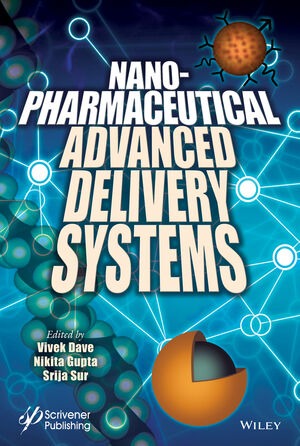
Nanopharmaceutical advanced delivery systems
Provides a single volume covering detailed descriptions about various delivery systems, their principles and how these are put in use for the treatment of multiple diseases. It is divided into four sections where the first section deals with the introduction and importance of novel drug delivery system. Deals with the most advanced drug delivery systems like microbubbles, dendrimers, lipid-based nanoparticles, nanofibers, microemulsions etc., describing the major principles and techniques of the preparations of the drug delivery systems. Elaborates on the treatments of diverse diseases like cancer, topical diseases, tuberculosis etc.

Nanoparticle-Based Drug Delivery in Cancer Treatment
Discusses nanotechnological developments of interfering RNA-based nanoparticles, delivery vehicles, and validated therapeutic RNAi–molecular target interactions and explains the results of clinical and preclinical trials. The book also gives strategies for universal methods of constructing hybrid organic–inorganic nanomaterials that can be widely applied in the biomedical field. Focuses on : Recent advances of nanoparticle-mediated siRNA delivery systems and their application in clinical trials for cancer therapy Material platforms that establish NPs and both localized and controlled gene silencing The most promising systems for clinical application Surveys progress in nanoparticle-based nanomedicine in cancer treatment The most advanced of the nonviral nanocarriers for delivery of oligonucleotides to malignant blood cancer cells
