



الصفحة 9
الصفحة 9

Migration of organisms : Climate. geography. ecology
The editor presents a suitable collection of topics, to achieve the goal of this book, which is explaining the migration of organisms through many examples of different groups of marine and non-marine organisms, ranging from micro-invertebrates to large vertebrates (mammals), and focusing on several aspects that are not collected together.

Migration and Environmental Change in Morocco : In search for Linkages Between Migration Aspirations and (Perceived) Environmental Changes
This book studies the migration aspirations and trajectories of people living in two regions in Morocco that are highly affected by environmental change or emigration, namely Tangier and Tinghir, as well as the migration trajectories of immigrants coming from these regions currently living in Belgium

Migrants, Refugees and Asylum Seekers’ Integration in European Labour Markets : A Comparative Approach on Legal Barriers and Enablers
This book discusses how, and to what extent, the legal and institutional regimes and the socio-cultural environments of a range of European countries (the Czech Republic, Denmark, Finland Greece, Italy, Switzerland and the UK), in the framework of EU laws and policies, have a beneficial or negative impact on the effective capacity of these countries to integrate migrants, refugees and asylum seekers into their labour markets.

Mid-Infrared Coherent Sources and Applications
Coherent sources of mid-infrared (mid-IR) radiation are of great interest for a wide range of scienti?c and technological applications from spectroscopy and frequency metrology to information technology, industrial process control, pho- chemistry, photobiology and photomedicine. The mid-IR spectrum, which may be de?ned as wavelengths beyond ?2µm, covers important atmospheric windows, and numerous molecular gases, toxic agents, air, water, and soil pollutants, c- ponents of human breath, and several explosive agents have strong absorption ?ngerprints in this region. The development of practical coherent solid-state sources in the mid-IR can thus provide indispensable tools for a variety of - plications in environmental monitoring and pollution control, detection of water and soil contaminants, food quality control, agriculture and life sciences, and n- invasive disease diagnosis and therapy through breath analysis.

Microwave Radiometry of Vegetation Canopies
Research into microwave radiation from the Earth’s surface in the presence of vegetation canopies, as well as the development of algorithms for retrieval of soil and vegetation parameters from microwave radiometric measurements, have been actively conducted for the last 30 years by scientific groups worldwide. The capability of the microwave radiometric method to determine soil moisture and vegetation biometric indices was revealed 25 years ago by the author and his colleagues. Soil moisture and vegetation covers play a key role in the hydrological cycle and in water and energy transfer on the border of land surface and atmosphere through evaporation and transpiration. Accomplishment of large international projects shows that microwave radiometry of soil and vegetation has become an instrument of practical application and operational use. A systematic account of questions concerning the microwave radiometry of the Earth’s surface in the presence of vegetation canopies is the main objective of the book.

Microwave Dielectric Behaviour of Wet Soils
This book, aimed for agriculture and soil physicists and those working in the areas of remote sensing, deals with the physical and dielectric properties of soils, methods of soil, dielectric measurements using microwaves and remote sensing techniques. Some of the results on soil moisture measurements, theoretical models of soil moisture data and the recently used synthetic aperture radar techniques for the purpose of remote sensing and their interpretation of soil moistures are also discussed. The course contents are developed and updated with the help of the latest literature available which will help bridge the existing need of scientists in the area.
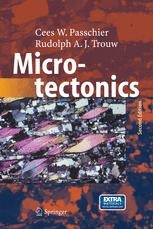
Microtectonics
The book mainly focusses on optical microscopy as a tool to study microstructures, but also describes other techniques such as EBSD and tomography. Many photographs and explanatory drawings clarify the text. Newest developments in microtectonics have been included in all chapters so that al chapters have been revised and updated, e.g. new information on brittle microstructures. Two new chapters have been added, on primary structures and experimental microstructures. Chapters on veins, shear zones, natural microgauges experimental modelling techniques and alternative techniques have been completely renewed
Microsoft Dynamics NAV : Jump Start to Optimization
Mastering Microsoft Dynamics NAV for beginners and IT professionals: from jump start to optimization. This book covers general use and shows you how to tailor Microsoft Dynamics NAV to mirror your firm's unique needs. Learn skills that enable you to navigate and interpret the world of possibilities locked within the ERP system. Through easy, concrete examples, you will master the layered environment and be able to use and create reports, forms, import/export functions and more. This book gives you the basis you need to demand the best information infrastructure for your enterprise.

Microplastic in the Environment : Pattern and Process
This book examines global plastic pollution, an issue that has become a critical societal challenge with implications for environmental and public health. This volume provides a comprehensive, holistic analysis on the plastic cycle and its subsequent effects on biota, food security, and human exposure. Importantly, global environmental change and its associated, systems-level processes, including atmospheric deposition, ecosystem complexity, UV exposure, wind patterns, water stratification, ocean circulation, etc., are all important direct and indirect factors governing the fate, transport and biotic and abiotic processing of plastic particles across ecosystem types.

Microorganisms in soils : Roles in genesis and functions
The following key topics are covered: Microorganisms in bioerosion, humification, mineralization and soil aggregation; Microbial energetics and microbes in biogeochemical processes such as carbon and nitrogen cycles and phosphorus bio-availability; Interactions in the mycorrhizosphere, e.g. between mycorrhizal fungi and bacteria; Impact of microbes on plant nutrient cycling and the possible effects of transgenic rhizospheres on soil fungi; Functions of microbes in specific soil compartments such as soil surface or toxic metal polluted soils; Regulation of microbial activities in functional domains that are influenced by biotic or abiotic factors; Use of marker genes and isotopes as examples for modern techniques in soil microbiology.

Microorganisms and Bioterrorism
The purpose of this book is to bring together, in a single volume, the most up-to-date information concerning microbes with potential as bioterrorist weapons. The primary audience includes microbiologists, including bacteriologists, virologists and mycologists, in academia, government laboratories and research institutes at the forefront of studies concerning microbes which have potential as bioterrorist weapons, public health physicians and researchers and scientists who must be trained to deal with bioterrorist attacks as well as laboratory investigators who must identify and characterize these microorganisms from the environment and from possibly infected patients.

Micrometeorology
This book focuses on atmospheric processes which directly effect human environments within the lowest 100-1000 meters of the atmosphere over regions of only a few kilometers in extent. The book is the English translation of the second edition of the German book "Applied Meteorology – Micrometeorological Methods".

Micrometeorites and the Mysteries of Our Origins
This book relates an attempt to decrypt the still-obscure first billion years of history of the young Earth, during a cataclysmic period during which our planet was heavily bombarded by bodies ranging in size from that of Mars to 0.1 mm sized tiny micrometeorites. It was thus found that micrometeorites played an essential role in the formation of the post-lunar atmosphere. They also provided a surprisingly large diversity of reactions in the organic prebiotic chemistry required for the birth of life on our blue planet. The author presents a wide-ranging review of the type of knowledge required to decrypt this history, which provides extensive background information from astronomy, planetary dynamics, planetology, astrobiology and earth sciences. This book will appeal to both the scientist and the general reader. It will be a source of material for lectures, and possibly new investigations, in these fields.

Micromammals and Macroparasites : From Evolutionary Ecology to Management
Small mammals are among the most ubiquitous and important components of terrestrial ecosystems. They have coevolved, and now coexist, with a diverse array of parasites, such that not only are all aspects of their biology influenced by parasitism but they also play key roles in the transmission and maintenance of parasitic diseases. This book provides a comprehensive survey of the diversity and biology of metazoan parasites affecting small mammals, of their impact on host individuals and populations, and of the management implications of these parasites for conservation biology and human welfare. Designed for a broad, multidisciplinary audience, it will be an essential resource for researchers, students, and practitioners alike in the fields of parasitology, evolutionary ecology, wildlife management, and conservation biology.

Microgravity Two-phase Flow and Heat Transfer
Multiphase thermal systems (involving more than one phase or one component) have numerous applications in aerospace, heat-exchanger, transport of contaminants in environmental systems, and energy transport and energy conversion systems. Advances in understanding the behaviour of multiphase thermal systems could lead to higher efficiency energy production systems, improved heat-exchanger design, and safer and enhanced treatment of hazardous waste. But such advances have been greatly hindered by the strong effect of gravitational acceleration on the flow. Depending on the flow orientation and the phase velocities, gravitational forces could significantly alter the flow regime, and hence the pressure-drop and heat-transfer coefficients associated with the flow. A reduced gravity environment (or "microgravity"), provides an excellent tool to study the flow without the masking effects of gravity. This book presents for the first time a comprehensive coverage of all aspects of two-phase flow behaviour in the virtual absence of gravity.
Microearthquake Seismology and Seismotectonics of South Asia
This volume comprehensively deals with plate tectonics and seismic waves in general and earthquake monitoring by permanent and temporary networks for active fault mapping, aftershock, swarm and induced seismicity investigations in interplate collision and subduction zones and in intraplate shield region.

Microdynamics Simulation
This volume deals with the simulation of metamorphic and tectonic microstrucutres in rocks with a special emphasis on the modelling package "Elle". The first part provides a review of the problems and opportunities in the modelling of microstructures, followed by an introduction to various numerical modelling techniques. In the second part examples of the modelling of different processes which alter rock microstructure are presented, beginning with individual processes and progressing to modelling multiple coupled processes.

Microbiomes and emerging applications
Covers a range of important topics and recent advances in metagenomics, microbiomes and their emerging applications, including microbiota transplantation and its health implications. It also discusses microbiome composition and development in humans. The contributors of this volume provide detailed information on prebiotics and probiotics for enhanced human health. They also introduce microbiomes as the next frontiers in medicine, agriculture, industry and environment. A chapter is presented that discusses probiotic research studies in Nigeria and Canada that led to the discovery of Lactobacillus pentosus KCA1. The book contains timely knowledge and will be useful reference material for scientists and researchers working in the fields of food and agricultural biotechnology, biopharmaceuticals and medical biotechnology, fermentation technology, environmental biotechnology, microbiomes and microbial biotechnology and health care.
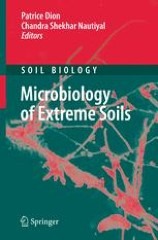
Microbiology of Extreme Soils
This volume provides an excellent introduction to the study of extreme soil micro-biology, and a variety of the challenging and fascinating environments that Earth-bound microbes face. Some are natural, and some are the result of human activity, and all of them have lessons to teach us about life’s adaptations within the “extreme” hori-zons of terrestrial soils. What’s more, each of these chapters (including the chapter on the soils of Mars by Ronald L. Crawford and David A. Newcombe) can give us insights into strategies that may make life possible beyond the safe confines of our present-day biosphere, to other worlds in this solar system and beyond

Microbiologically Influenced Corrosion : An Engineering Insight
Microbiologically-influenced corrosion (MIC) is one of the greatest mysteries of corrosion science and engineering, due to the complexities resulting from the involvement of living things such as bacteria. Bacteria are not only able to affect our health, but are also capable of impacting upon everyday life through a wide range of industrial sectors and the economy. Microbiologically Influenced Corrosion: An Engineering Insight introduces a new approach to the basics of MIC and explains how to recognise, understand, mitigate and/or prevent this type of corrosion. Topics explored include stress corrosion cracking and microbial corrosion, the pros and cons of biocides, the involvement of magnetic bacteria in microbial corrosion, and a new interpretation of cathodic protection based on recent research in microbial environments.
