



الصفحة 9
الصفحة 9

Accelerator Programming Using Directives ; 6th International Workshop, WACCPD 2019, Denver, CO, USA, November 18, 2019, Revised Selected Papers
This book constitutes the refereed post-conference proceedings of the 6th International Workshop on Accelerator Programming Using Directives, WACCPD 2019, held in Denver, CO, USA, in November 2019. The 7 full papers presented have been carefully reviewed and selected from 13 submissions. The papers share knowledge and experiences to program emerging complex parallel computing systems. They are organized in the following three sections: porting scientific applications to heterogeneous architectures using directives; directive-based programming for math libraries; and performance portability for heterogeneous architectures.
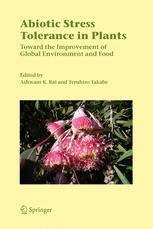
Abiotic Stress Tolerance in Plants : Toward the Improvement of Global Environment and Food
Stresses in plants caused by salt, drought, temperature, oxygen, and toxic compounds are the principal reason for reduction in crop yield. For example, high salinity in soils accounts for large decline in the yield of a wide variety of crops world over; ~1000 million ha of land is affected by soil salinity. Increased sunlight leads to the generation of reactive oxygen species, which damage the plant cells. The threat of global environment change makes it increasingly demanding to generate crop plants that could withstand such harsh conditions. Much progress has been made in the identification and characterization of the mechanisms that allow plants to tolerate abiotic stresses.
A Biomass Future for the North American Great Plains : Toward Sustainable Land Use and Mitigation of Greenhouse Warming
The Great Plains of North America is a major global breadbasket but its agriculture is stressed by drought, heat spells, damaging winds, soil erosion and declining ground water resources. This book explores the possibility that the ecology and economy of the Plains region (and similar regions) would benefit from the introduction of perennial biomass crops. Biomass production and processing on the Plains (possibly aided by genetic engineering) would partially restore a perennial vegetative cover and create new employment opportunities. Biomass also offers a means of reducing fossil fuel use, providing fuel to local power plants and a feedstock for production of cellulosic ethanol, a gasoline substitute. Interest in biofuels is growing rapidly in public, political and business circles with rising fossil fuel prices and because of a growing recognition of the need for energy independence in petroleum importing countries.

3D Imaging, Analysis and Applications
This textbook is designed for postgraduate studies in the field of 3D Computer Vision. It also provides a useful reference for industrial practitioners; for example, in the areas of 3D data capture, computer-aided geometric modelling and industrial quality assurance. This second edition is a significant upgrade of existing topics with novel findings. Additionally, it has new material covering consumer-grade RGB-D cameras, 3D morphable models, deep learning on 3D datasets, as well as new applications in the 3D digitization of cultural heritage and the 3D phenotyping of crops.

3D cell culture : Methods and protocols
Expands on the previous edition with discussions about the latest organoid models developed for many more organs; new hydrogels and devices for 3D culture; and the organoid systems that have been improved by incorporating more components of tissue microenvironments in the in vitro culture. The chapters in this book are organized into five parts and cover topics such as biofabrication, organoids, microfluidic systems, bioprinting, and image analysis. Written in the highly successful Methods in Molecular Biology series format, chapters include introductions to their respective topics, lists of the necessary materials and reagents, step-by-step, readily reproducible laboratory protocols, and tips on troubleshooting and avoiding known pitfalls.
