



الصفحة 9
الصفحة 9

Contaminated land : Investigation, assessment and remediation
The first edition of this ICE design and practice guide became one of the most popular ICE publications after it was published in 1994. Since the first edition, there has been a multitude of legislation on the environment and the adoption of many of the principles of the European Landfill Directive. This has meant specialists, regulators and engineers are grappling with interpretation of guidance frameworks, new levels of testing accuracy and increased public perception of environmental damage.

Construction risk management decision making : Understanding current practices
Effective risk management is a vital component of all successful construction projects. Although quantitative tools for evaluating data and minimizing risk are readily available, construction managers commonly adopt a more innate, experience-based approach. In Construction Risk Management Decision Making, project manager and senior consultant Alex C. Arthur provides step-by-step advice on assessing and prioritizing risk using qualitative decision-making systems in the construction industry.
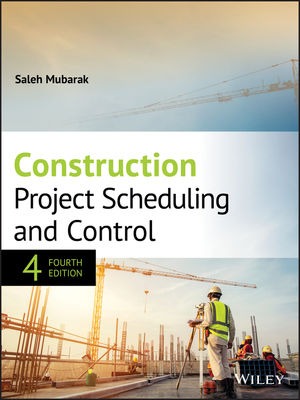
Construction Project Scheduling and Control
Introduces students to entirely new definitions and theories of the Critical Path Method (CPM), the leading scheduling method, as well as the most up-to-date information on Building Information Modeling (BIM). The new edition will include updated worked problems and scheduling software exercises, as well as revised teaching materials such as lecture slides and an instructor's manua

Construction materials : Their nature and behaviour
Provides an understanding of materials’ behaviour through knowledge of their chemical and physical structure. It covers the main classes of construction materials: metals, concrete, other ceramics (including bricks and masonry), polymers, fibre composites, bituminous materials, timber, and glass.
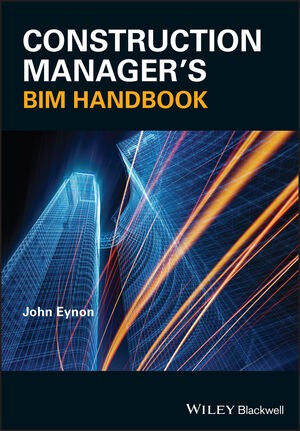
Construction Manager's BIM Handbook
Ensures the reader understands what BIM is, what the UK strategy is and what it means for key roles in the construction team. By providing concise summaries of key aspects of BIM, explaining the government documents and intentions, and providing pointers on implementation all readers will be fully aware of the implications of BIM for them and their organisations, and can begin to adopt this approach in future projects.

Construction and Building Automation : From Concepts to Implementation
Intended to be used as a textbook in undergraduate civil engineering and construction courses to introduce cutting edge mechanical, electrical and computer science topics that are needed for civil and construction engineers to collaborate in inter-disciplinary automation projects. Introduces hardware and software needed for automating engineering tasks ; Presents examples of applications in the control of building systems ; Illustrates of the use of automation for improving construction processes ; Provides a lucid introduction to advanced computing concepts, machine learning, artificial intelligence, and control algorithms to construction and engineering students.

Conflict prevention in project management : Strategies, methods, checklists, and case studies
This handbook is about the handling of external conflicts in international technical projects written for Project Managers and Engineers, Sales Managers, Executives and Legal Managers as seen from the client's as well as from the contractor's side. It is also for students seeking to become leaders in these disciplines and not to reproduce mistakes that others have made before them. The book does not try to give legal advice, but it helps engineers and project managers how to plan and execute their project in order to avoid major conflicts during the project.
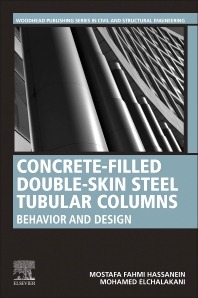
Concrete-Filled Double-Skin Steel Tubular Columns: Behavior and Design
Concrete-Filled Double-Skin Steel Tubular Columns: Behavior and Design provides a thorough review of the recent advances on the behaviour and design of concrete-filled double-skin steel tubular (CFDST) columns. Drawing on their extensive knowledge and research, the authors cover topics such as different CFDST columns under axial compression, innovative techniques including the use of rubberised concrete, columns with different cross-sections, and steel material envelops and failure modes.

Concrete materials and technology : A practical guide
Demands an underlying knowledge of concrete fundamentals as well as its constituent materials, and in various formulations. Starting with the basics, Concrete Materials and Technology: A Practical Guide examines the production and chemistry of cement, as well as the different types and their applications. Quality control processes and numerous methods for testing are presented and explained in detail.

Concrete gravity and arch dams on rock foundation
Presents and analyzes the designs of erected concrete dams, which allows for a better understanding of the approaches and decision-making principles for designing dams, taking into account the specifics of natural, construction, and other conditions, and also analyzes a number of new solutions that reflect the various ways that engineering theory and practice has sought further improvement of concrete dams.

Concrete floors and slabs ; Proceedings of the International Seminar held at the University of Dundee, Scotland, UK on 5–6 September 2002
Concrete is a global material that underwrites commercial wellbeing and social development. There is no substitute that can be used on the same engineering scale and its sustainability, expolitation and further development are imperatives to creating and maintaing a healthy economy and environment worldwide. The pressure for change and improvement of performance is relentless and necessary. Concrete must keep evolving to satisfy the increasing demands of all its users.

Concrete composite columns : Behavior and design
Moves beyond existing resources, to study the relationship between existing composite structures and design methods for the sectional form of concrete composite structure. Chapters cover the failure criteria of concrete; confined concrete types; models including axial stress prediction, analysis oriented constitutive, and design-oriented constitutive models; the design and analysis of section form; double confined concrete; seismic behaviors of concrete composite columns; and the seismic design of concrete composite columns.

Concrete bridge strengthening and repair
Covering a wide range of structural elements and related defects, this collection of twenty concrete bridge strengthening and repair case studies showcases solutions to real problems encountered in the field and the processes by which those solutions were developed. Drawing on a lifetime of experience Atkins consultant Iain Kennedy Reid provides insight into methods of investigation and diagnosis of problems relating to beams, slabs, columns and panel walls, as well as how to apply demand-led research to these problems in a practical way.

CONCREEP 10 : Mechanics and physics of creep, shrinkage, and durability of concrete and concrete structures
Contains 187 papers invited on the basis of carefully peer-reviewed abstracts. It elucidates the intricacies of concrete, linking atomistic physics to real life civil engineering design. Topics include: microstructures and micromechanics; multiscale creep, shrinkage, fracture, and durability properties; constitutive and numerical modeling; simulation and design of concrete structures; molecular- to lab-scale simulations and characterization of concrete; macroscopic material testing; creep and shrinkage of concrete under extreme conditions; monitoring of concrete structures and exploitation of measurement data; and creep and shrinkage properties of new cementitious materials.

Conceptual structural design : Bridging the gap between architects and engineers
Aims to 'bridge the gap' between engineers' and architects' understanding of structural form. It aims to inspire designers to develop innovative and viable structural forms. This book is presented in two parts. The first part is theoretical and investigates source of inspiration for developing structural form; learning from natural forms; applying our own intuition; seeking inspiration from precedents; applying understanding of structural principles; and developing design through physical models.

Computer-Aided Highway Engineering
Aimed at developing professional knowledge in the field of highway engineering with adequate skills in planning, designing and implementation of the highway project with an exposure of hands on training of computer software in designing the worldwide road infrastructures. It discusses Digital Terrain Model (DTM) using satellite data including highway geometric, pavement and tunnel design, supported by relevant tutorials. Quantity estimation, cost estimation and production of various types of construction drawings are described in detail with theory and tutorials backed by real project data. Recognizes the role of information and computer technology in various aspects of highway design. Reviews different tasks for feasibility studies and DPR with software applications. Explores topographic survey, Digital Terrain Model (DTM) and highway geometrics and, pavement and drainage design. Discusses project estimations for various revisions of the engineering work. Includes HEADS Pro along with chapter wise tutorials containing design and field data, tutorial guides and various tutorial videos.

Computational Structural Concrete : Theory and Applications
Concrete is by far the most used building material due to its advantages: it is shapeable, cost-effective and available everywhere. Combined with reinforcement it provides an immense bandwidth of properties and may be customized for a huge range of purposes. Thus, concrete is the building material of the 20th century. To be the building material of the 21th century its sustainability has to move into focus. Reinforced concrete structures have to be designed expending less material whereby their load carrying potential has to be fully utilized.

Computational Fluid Dynamics for Wind Engineering
Covers topics such as: Fluid mechanics, turbulence in fluid mechanics, turbulence modelling, and mathematical modelling of wind engineering problems The finite difference method for CFD, solutions to the incompressible Navier-Stokes equations, visualization, and animation in CFD, and the application of CFD to building and bridge aerodynamics How to compare CFD analysis with wind tunnel measurements, field measurements, and the ASCE-7 pressure coefficients Wind effects and strain on large structures

Computational Fluid Dynamics : Applications in Water, Wastewater and Stormwater Treatment
Provides a valuable introduction and overview of computational fluid dynamics and how it can be used in the water and wastewater industry. This book reviews procedures for conducting flow, transport, and reaction simulations using computational fluid dynamics along with specific practical examples.

Computational Engineering : Introduction to Numerical Methods
This book is an introduction to modern numerical methods in engineering. It covers applications in fluid mechanics, structural mechanics, and heat transfer as the most relevant fields for engineering disciplines such as computational engineering, scientific computing, mechanical engineering as well as chemical and civil engineering. The content covers all aspects in the interdisciplinary field which are essential for an ''up-to-date'' engineer.
