



الصفحة 9
الصفحة 9

Computational intelligence in economics and finance ; Vol. II
Computational intelligence (CI), as an alternative to statistical and econometric approaches, has been applied to a wide range of economics and finance problems in recent years, for example to price forecasting and market efficiency. This book contains research ranging from applications in financial markets and business administration to various economics problems. Not only are empirical studies utilizing various CI algorithms presented, but so also are theoretical models based on computational methods. In addition to direct applications of computational intelligence, readers can also observe how these methods are combined with conventional analytical methods such as statistical and econometric models to yield preferred results.

Computational intelligence and security ; Vol. 3801 ; International Conference, CIS 2005, Xi'an, China, December 15-19, 2005, Proceedings, Part I
The two volume set LNAI 3801 and LNAI 3802 constitute the refereed proceedings of the annual International Conference on Computational Intelligence and Security, CIS 2005, held in Xi'an, China, in December 2005. The 338 revised papers presented - 254 regular and 84 extended papers - were carefully reviewed and selected from over 1800 submissions. The first volume is organized in topical sections on learning and fuzzy systems, evolutionary computation, intelligent agents and systems, intelligent information retrieval, support vector machines, swarm intelligence, data mining, pattern recognition, and applications.

Computational intelligence : Methods and techniques
This book focuses on various techniques of computational intelligence, both single ones and those which form hybrid methods. Those techniques are today commonly applied issues of artificial intelligence, e.g. to process speech and natural language, build expert systems and robots.

Computational Discovery of Scientific Knowledge : Introduction, Techniques, and Applications in Environmental and Life Sciences
Advances in technology have enabled the collection of data from scientific observations, simulations, and experiments at an ever-increasing pace. For the scientist and engineer to benefit from these enhanced data collecting capabilities, it is becoming clear that semi-automated data analysis techniques must be applied to find the useful information in the data. Computational scientific discovery methods can be used to this end: they focus on applying computational methods to automate scientific activities, such as finding laws from observational data. In contrast to mining scientific data, which focuses on building highly predictive models, computational scientific discovery puts a strong emphasis on discovering knowledge represented in formalisms used by scientists and engineers, such as numeric equations and reaction pathways. This state-of-the-art survey provides an introduction to computational approaches to the discovery of scientific knowledge and gives an overview of recent advances in this area, including techniques and applications in environmental and life sciences.

Combinatorics, Algorithms, Probabilistic and Experimental Methodologies ; 1st International Symposium, ESCAPE 2007, Hangzhou, China, April 7-9, 2007, Revised Selected Papers
This book address practical large data processing problems with different, and eventually converging, methodologies from major important disciplines such as computer science, combinatorics, and statistics. The symposium provides an interdisciplinary forum for researchers across their discipline boundaries to exchange their approaches, to search for ideas, methodologies, and tool boxes, to find better, faster and more accurate solutions thus fostering innovative ideas as well as to develop research agenda of common interest.

Combinatorial pattern matching ; Vol.4009) ; 17th Annual Symposium, CPM 2006, Barcelona, Spain, July 5-7, 2006, Proceedings
The book presents 33 revised full papers together with 3 invited talks, organized in topical sections on data structures, indexing data structures, probabilistic and algebraic techniques, applications in molecular biology, string matching, data compression, and dynamic programming

Combinatorial pattern matching ; 18th Annual Symposium, CPM 2007, London, Canada, July 9-11, 2007, Proceedings
This book presented original research contri- tions on computational pattern matching and analysis, data compression and compressed text processing, sufix arrays and trees, and computational biology. Combinatorial Pattern Matching addresses issues of searching and matching strings and more complicated patterns such as trees, regular expressions, graphs, point sets, and arrays.The goal is to derive non-trivial combinatorial properties of such structures and to exploit these properties in order to either achieve superior performance for the corresponding computational problems or pinpoint conditions under which searches cannot be performed eficiently.
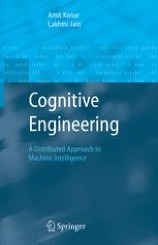
Cognitive engineering : A distributed approach to machine intelligence
Cognitive Engineering: A Distributed Approach to Machine Intelligence explores the design issues of intelligent engineering systems. Beginning with the foundations of psychological modeling of the human mind, the main emphasis is given to parallel and distributed realization of intelligent models for application in reasoning, learning, planning and multi-agent co-ordination problems. The last two chapters provide case studies on human-mood detection and control, and behavioral co-operation of mobile robots. This is the first comprehensive text of its kind, bridging the gap between Cognitive Science and Cognitive Systems Engineering. Each chapter includes plenty of numerical examples and exercises with sufficient hints, so that the reader can solve the exercises on their own. Computer simulations are also included in most chapters to give a clear idea about the application of the algorithms undertaken in the book. In addition, mathematical analysis on convergence and stability of the neuro-fuzzy models will enable the reader to pursue their research career in cognitive engineering.

Mathematical Control Theory : An Introduction
Mathematical Control Theory: An Introduction presents, in a mathematically precise manner, a unified introduction to deterministic control theory. With the exception of a few more advanced concepts required for the final part of the book, the presentation requires only a knowledge of basic facts from linear algebra, differential equations, and calculus. In addition to classical concepts and ideas, the author covers the stabilization of nonlinear systems using topological methods, realization theory for nonlinear systems, impulsive control and positive systems, the control of rigid bodies, the stabilization of infinite dimensional systems, and the solution of minimum energy problems.

Markov Decision Processes with Their Applications
Markov decision processes (MDPs), also called stochastic dynamic programming, were first studied in the 1960s. MDPs can be used to model and solve dynamic decision-making problems that are multi-period and occur in stochastic circumstances. There are three basic branches in MDPs: discrete-time MDPs, continuous-time MDPs and semi-Markov decision processes. Starting from these three branches, many generalized MDPs models have been applied to various practical problems. These models include partially observable MDPs, adaptive MDPs, MDPs in stochastic environments, and MDPs with multiple objectives, constraints or imprecise parameters.

Machine Learning: ECML 2007 ; 18th European Conference on Machine Learning, Warsaw, Poland, September 17-21, 2007, Proceedings
The two premier annual European conferences in the areas of machine learning and data mining have been collocated ever since the ?rst joint conference in Freiburg, 2001. The European Conference on Machine Learning (ECML) traces its origins to 1986, when the ?rst European Working Session on Learning was held in Orsay, France. The European Conference on Principles and Practice of KnowledgeDiscoveryinDatabases(PKDD) was?rstheldin1997inTrondheim, Norway.

Machine learning challenges : Evaluating predictive uncertainty, Visual Object Classification, and Recognizing Textual Entailment, 1st Pascal Machine Learning Challenges Workshop, MLCW 2005, Southampton, UK, April 11-13, 2005, Revised Selected Papers
Constitutes the refereed post-proceedings of the First PASCAL Machine Learning Challenges Workshop, MLCW 2005. 25 papers address three challenges: finding an assessment base on the uncertainty of predictions using classical statistics, Bayesian inference, and statistical learning theory; second, recognizing objects from a number of visual object classes in realistic scenes; third, recognizing textual entailment addresses semantic analysis of language to form a generic framework for applied semantic inference in text understanding.

Logics in Artificial Intelligence ; 11th European Conference, JELIA 2008, Dresden, Germany, September 28-October 1, 2008. Proceedings
Constitutes the refereed proceedings of the 11th European Conference on Logics in Artificial Intelligence, JELIA 2008, held in Dresden, Germany, Liverpool, in September/October 2008.The 32 revised full papers presented together with 2 invited talks were carefully reviewed and selected from 98 submissions. The papers cover a broad range of topics including belief revision, description logics, non-monotonic reasoning, multi-agent systems, probabilistic logic, and temporal logic.

Logics in artificial intelligence ; 10th European Conference, JELIA 2006, Liverpool, UK, September 13-15, 2006, Proceedings
Constitutes the refereed proceedings of the 10th European Conference on Logics in Artificial Intelligence, JELIA 2006. The 34 revised full papers and 12 revised tool description papers presented together with 3 invited talks were carefully reviewed and selected from 96 submissions. The papers cover a range of topics within the remit of the Conference, such as logic programming, description logics, non-monotonic reasoning, agent theories, automated reasoning, and machine learning.

Logical Foundations for Rule-Based Systems
Presents logical foundations for rule-based systems, as seen by the Author. An attempt has been made to provide an in-depth discussion of logical and other aspects of such systems, including languages for knowledge representation, inference mechanisms, inference control, design and verification.
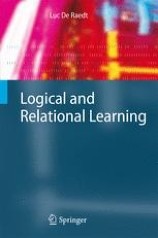
Logical and Relational Learning
This textbook covers logical and relational learning in depth, and hence provides an introduction to inductive logic programming (ILP), multirelational data mining (MRDM) and (statistical) relational learning (SRL). These subfields of data mining and machine learning are concerned with the analysis of complex and structured data sets that arise in numerous applications, such as bio- and chemoinformatics, network analysis, Web mining, natural language processing, within the rich representations offered by relational databases and computational logic.
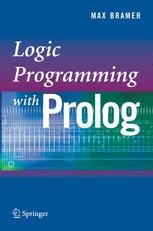
Logic Programming with Prolog
Logic Programming is the name given to a distinctive style of programming, very different from that of conventional programming languages such as C++ and Java. By far the most widely used Logic Programming language is Prolog. Prolog is a good choice for developing complex applications, especially in the field of Artificial Intelligence. This book does not assume that the reader is an experienced programmer or has a background in Mathematics, Logic or Artificial Intelligence. It starts from scratch and aims to arrive at the point where quite powerful programs can be written in the language. It is intended both as a textbook for an introductory course and as a self-study book. On completion the reader will know enough to use Prolog in their own research or practical projects. Each chapter has self-assessment exercises so that the reader may check their own progress. A glossary of the technical terms used completes the book.

Logic Programming and Nonmonotonic Reasoning ; 9th International Conference, LPNMR 2007, Tempe, AZ, USA, May 15-17, 2007, Proceedings
This book constitutes the refereed proceedings of the 9th International Conference on Logic Programming and Nonmonotonic Reasoning, LPNMR 2007, held in Tempe, AZ, USA, May 2007.

Logic Programming and Nonmonotonic Reasoning ; 8th International Conference, LPNMR 2005, Diamante, Italy, September 5-8, 2005, Proceedings
Thesearetheproceedingsofthe8thInternational Conference on Logic Progr- mingandNonmonotonicReasoning (LPNMR2005).Followingthepreviousones held in Washington, DC, USA (1991), Lisbon, Portugal (1993), Lexington, KY, USA(1995), Dagstuhl, Germany(1997), ElPaso, TX, USA(1999), Vienna, A- tria (2001) and Ft. Lauderdale, FL, USA (2004), the eighth conference was held in Diamante, Italy, from 5th to 8th of September 2005. TheaimoftheLPNMRconferencesistobringtogetherandfacilitateinter- tions between active researchers interested in all aspects concerning declarative logic programming, nonmonotonic reasoning, knowledge representation, and the design of logic-based systems and database systems. LPNMR strives to enc- pass theoretical and experimental studies that lead to the implementation of practi...

Logic Programming ; Vol. 4079 ; 22nd International Conference, ICLP 2006, Seattle, WA, USA, August 17-20, 2006, Proceedings
This book constitutes the refereed proceedings of the 22nd International Conference on Logic Programming, ICLP 2006, held in Seattle, WA, USA, in August 2006. The 20 revised full papers and 6 application papers presented together with 2 invited talks, 2 tutorials and special interest papers, as well as 17 poster presentations and the abstracts of 7 doctoral consortium articles, were carefully reviewed and selected from 83 initial submissions. The papers cover all issues of current research in logic programming - they are organized in topical sections on theory, functional and constraint logic programming, program analysis, answer-set programming, semantics, and applications.
