



الصفحة 89
الصفحة 89

An Introduction to Echo Analysis : Scattering Theory and Wave Propagation
The use of various types of wave energy is an increasingly promising, non-destructive means of detecting objects and of diagnosing the properties of quite complicated materials. An analysis of this technique requires an understanding of how waves evolve in the medium of interest and how they are scattered by inhomogeneities in the medium. These scattering phenomena can be thought of as arising from some perturbation of a given, known system and they are analysed by developing a scattering theory. This monograph provides an introductory account of scattering phenomena and a guide to the technical requirements for investigating wave scattering problems.

An Introduction To Chemoinformatics
This, the first text written specifically for this field, aims to provide an introduction to the major techniques of chemoinformatics. The first part of the book deals with the representation of 2D and 3D molecular structures, the calculation of molecular descriptors and the construction of mathematical models. The second part describes other important topics including molecular similarity and diversity, the analysis of large data sets, virtual screening, and library design. Simple illustrative examples are used throughout to illustrate key concepts, supplemented with case studies from the literature.

An effective strategy for safe design in engineering and construction
Achieves three primary goals: To improve the understanding and implementation of the Construction (Design and Management) Regulations 2015 To reduce errors during the design process via the effective implementation of design management strategy To embed the concept of safety in design

Ambient intelligence for scientific discovery : Foundations, theories, and systems
Many difficult scientific discovery tasks can only be solved in interactive ways, by combining intelligent computing techniques with intuitive and adaptive user interfaces. It is inevitable to use human intelligence in scientific discovery systems: human eyes can capture complex patterns and relationships, along with detecting the exceptional cases in a data set; the human brain can easily manipulate perceptions to make decisions. Ambient intelligence is about this kind of ubiquitous and autonomous human interaction with information. Scientific discovery is a process of creative perception and communication, dealing with questions like: how do we significantly reduce information while maintaining meaning, or how do we extract patterns from massive data and growing data resources. Originating from the SIGCHI Workshop on Ambient Intelligence for Scientific Discovery, this state-of-the-art survey is organized in three parts: new paradigms in scientific discovery, ambient cognition, and ambient intelligence systems. Many chapters share common features such as interaction, vision, language, and biomedicine.

Ambient intelligence : A novel paradigm
Ambient Intelligence (AmI) is an integrating technology for supporting a pervasive and transparent infrastructure for implementing smart environments. Such technology is used to enable environments for detecting events and behaviors of people and for responding in a contextually relevant fashion. AmI proposes a multi-disciplinary approach for enhancing human machine interaction. The authors start with a description of the iDorm as an example of a smart environment conforming to the AmI paradigm, and introduces computer vision as an important component of the system. Other computer vision examples describe visual monitoring for the elderly, classic and novel surveillance techniques using clusters of cameras installed in indoor and outdoor application domains, and the monitoring of public spaces. Face and speech recognition systems are also covered as well as enhanced LEGO blocks for novel educational purposes. The book closes with a provocative chapter on how a cybernetic system can be designed as the backbone of a human machine interaction.
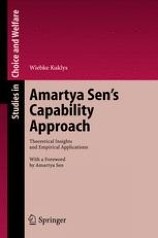
Amartya Sens Capability Approach: Theoretical Insights and Empirical Applications
Kuklys examines how Nobel Prize-winning economist Amartya Sen’s approach to welfare measurement can be put in practice for poverty and inequality measurement in affluent societies such as the UK. Sen argues that an individual’s welfare should not be measured in terms of her income, but in terms what she can actually do or be, her capabilities. In Chapters 1 and 2, Kuklys describes the capability approach from a standard welfare economic point of view and provides a comprehensive literature review of the empirical applications in this area of research. In the remaining chapters, novel econometric techniques are employed to operationalise the concepts of functionings and capability to investigate inequality and poverty in terms of capability in the UK. Kuklys finds that capability measurement is always a useful complement to traditional monetary analysis, and particularly so in the case of capability-deprived disabled individuals.

Alzheimers disease : Cellular and molecular aspects of Amyloid beta
This book contains a survey of present-day research into the biomedical fundamentals of Alzheimer’s disease (AD). It contains 20 chapters dealing with widely ranging topics, all of which have a bearing upon the understanding and treatment of AD. Starting with a broad survey of the contribution that the various microscopical techniques (light microscopy, electron microscopy, atomic force microscopy)

Alternative breast imaging : Four model-based approaches
Medical imaging has been transformed over the past 30 years by the advent of computerized tomography (CT), magnetic resonance imaging (MRI), and various advances in x-ray and ultrasonic techniques. An enabling force behind this progress has been the (so far) exponentially increasing power of computers, which has made it practical to explore fundamentally new approaches. In particular, what our group terms "model-based" modalities-which produce tissue property images from data using nonlinear, iterative numerical modeling techniques-have become increasingly feasible. Alternative Breast Imaging: Four Model-Based Approaches explores our research on four such modalities, particularly with regard to imaging of the breast: (1) MR elastography (MRE), (2) electrical impedance spectroscopy (EIS), (3) microwave imaging spectroscopy (MIS), and (4) near infrared spectroscopic imaging (NIS).
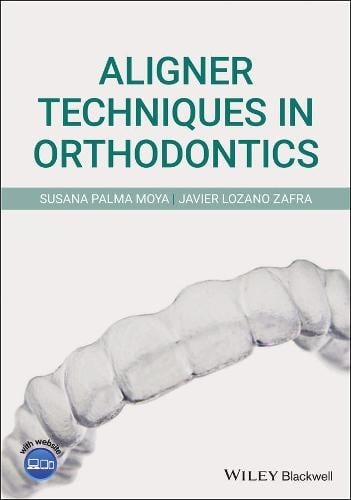
Aligner Techniques in Orthodontics
Filled with the theoretical and practical clinical information on the popular aligner techniques with a focus on Invisalign. Written by practicing orthodontists and noted experts on the topic, the book is designed to help practitioners develop their skills in using aligners in orthodontics. The authors describe in detail the clear and simple methods for treating patients using different aligner techniques, as well as material on treating any given malocclusion.

Aligner systems in invisible orthodontics: basic concepts and clinical management
Describes the processes, techniques and biomechanics involved in providing aligner treatment for different types of malocclusions. It opens with an overview of the material characteristics and the basic concepts of aligner therapy including topics like biocompatibility and intraoral deterioration. The main part of the book is dedicated to the various types of aligners, the methods used in their application and the practical aspects of delivery. It is structured based on the type of malocclusion being managed giving the reader a systematic pattern and a practical way of progressing through the book. The book closes with a discussion of the scientific data available.
Algoritmi : Lo spirito dell’informatica = Algorithms : The spirit of information technology
Algorithms are the heart of computer science and mathematics, since without them the use of computers would not be possible. In this book, which in its English edition has been a longtime bestseller, Harel and Feldmann answer all questions relating to this topic. They talk about the evaluation, correctness and effectiveness of algorithms, but also clarify some doubts about programming techniques and also refer to the very current discussion on quantum computing. The book is useful both as a basic text for an introductory university course in computer science, and as a general introduction to natural sciences, mathematics or engineering.
Algorithms on Trees and Graphs : With Python Code
Introduces graph algorithms on an intuitive basis followed by a detailed exposition using structured pseudocode, with correctness proofs as well as worst-case analyses. Centered around the fundamental issue of graph isomorphism, the content goes beyond classical graph problems of shortest paths, spanning trees, flows in networks, and matchings in bipartite graphs. Advanced algorithmic results and techniques of practical relevance are presented in a coherent and consolidated way. Numerous illustrations, examples, problems, exercises, and a comprehensive bibliography support students and professionals in using the book as a text and source of reference. Furthermore, Python code for all algorithms presented is given in an appendix. Topics and features: Algorithms are first presented on an intuitive basis, followed by a detailed exposition using structured pseudocode / Correctness proofs are given, together with a worst-case analysis of the algorithms / Full implementation of all the algorithms in Python / An extensive chapter is devoted to the algorithmic techniques used in the book / Solutions to all the problems
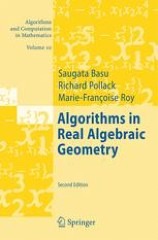
Algorithms in Real Algebraic Geometry
The algorithmic problems of real algebraic geometry such as real root counting, deciding the existence of solutions of systems of polynomial equations and inequalities, finding global maxima or deciding whether two points belong in the same connected component of a semi-algebraic set appear frequently in many areas of science and engineering. In this first-ever graduate textbook on the algorithmic aspects of real algebraic geometry, the main ideas and techniques presented form a coherent and rich body of knowledge, linked to many areas of mathematics and computing.
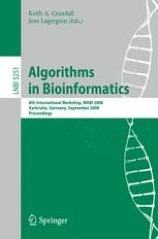
Algorithms in Bioinformatics ; 8th International Workshop, WABI 2008, Karlsruhe, Germany, September 15-19, 2008. Proceedings
This book constitutes the refereed proceedings of the 8th International Workshop on Algorithms in Bioinformatics, WABI 2008, held in Karlsruhe, Germany, in September 2008 as part of the ALGO 2008 meeting.
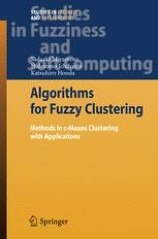
Algorithms for Fuzzy Clustering : Methods in c-Means Clustering with Applications
The main subject of this book is the fuzzy c-means proposed by Dunn and Bezdek and their variations including recent studies. We emphasize in this book is a family of algorithms using entropy or entropy-regularized methods which are less known, but we consider the entropy-based method to be another useful method of fuzzy c-means.
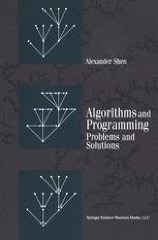
Algorithms and Programming : Problems and Solutions
This book containing classical and well-known problems supplemented by clear and in-depth explanations. The material covered includes such topics as combinatorics, sorting, searching, queues, grammar and parsing, selected well-known algorithms and much more.
Algorithms and data structures for massive datasets
Learn: Probabilistic sketching data structures for practical problems Choosing the right database engine for your application Evaluating and designing efficient on-disk data structures and algorithms Understanding the algorithmic trade-offs involved in massive-scale systems Deriving basic statistics from streaming data Correctly sampling streaming data Computing percentiles with limited space resources Algorithms and Data Structures for Massive Datasets reveals a toolbox of new methods that are perfect for handling modern big data applications. You'll explore the novel data structures and algorithms that underpin Google, Facebook, and other enterprise applications that work with truly massive amounts of data. These effective techniques can be applied to any discipline, from finance to text analysis. Graphics, illustrations, and hands-on industry examples make complex ideas practical to implement in your projects--and there's no mathematical proofs to puzzle over. Work through this one-of-a-kind guide, and you'll find the sweet spot of saving space without sacrificing your data's accuracy. About the Technology Standard algorithms and data structures may become slow--or fail altogether--when applied to large distributed datasets. Choosing algorithms designed for big data saves time, increases accuracy, and reduces processing cost.
Algorithms and data structures : The Basic Toolbox
This book is a concise introduction addressed to students and professionals familiar with programming and basic mathematical language.

Algorithms and architectures for parallel processing ; 8th International Conference, ICA3PP 2008, Cyprus, June 9-11, 2008 Proceedings
This book constitutes the refereed proceedings of the 8th International Conference on Algorithms and Architectures for Parallel Processing, ICA3PP 2008, held in Agia Napa, Cyprus, in June 2008.

Algorithms - ESA 2008 ; 16th Annual European Symposium, Karlsruhe, Germany, September 15-17, 2008. Proceedings
This book constitutes the refereed proceedings of the 16th Annual European Symposium on Algorithms, ESA 2008, held in Karlsruhe, Germany, in September 2008 in the context of the combined conference ALGO 2008.
