



الصفحة 85
الصفحة 85
Compact Lie Groups
This book covers the structure and representation theory of compact Lie groups. The necessary Lie algebra theory is also developed in the text with a streamlined approach focusing on linear Lie groups.

Commutative algebras of Toeplitz Operators on the Bergman Space
This book is devoted to the spectral theory of commutative C*-algebras of Toeplitz operators on the Bergman space and its applications. For each such commutative algebra there is a unitary operator which reduces Toeplitz operators from this algebra to certain multiplication operators, thus providing their spectral type representations. This yields a powerful research tool giving direct access to the majority of the important properties of the Toeplitz operators studied herein, such as boundedness, compactness, spectral properties, invariant subspaces.
Community and Identity in Contemporary Technosciences
This book provides new thinking on scientific identity formation. It thoroughly interrogates the concepts of community and identity, including both historical and contemporaneous analyses of several scientific fields.
Communication Systems
Presents main concepts of mobile communication systems, both analog and digitalIntroduces concepts of probability, random variables and stochastic processes and their applications to the analysis of linear systemsIncludes five appendices covering Fourier series and transforms, GSM cellular systems and more
Clinical Guide to Accelerated Orthodontics : Wth a Focus on Micro-Osteoperforations
A complete reference for all clinicians who are interested in incorporating into their daily practice the techniques available to reduce the duration of orthodontic treatment and to overcome other treatment limitations. It focuses especially on micro-osteoperforations (MOPs) as the most conservative, efficient, and versatile approach to increase the rate of tooth movement.
Clinical education for the health professions : Theory and practice
Explores the contemporary context of health professions education, its philosophical and theoretical underpinnings, whole of curriculum considerations, and its support of learning in clinical settings. In specific topics, it offers approaches to assessment, evidence-based educational methods, governance, quality improvement, scholarship and leadership in health professions education, and some forecasting of trends and practices.

Clinical decision support systems : Theory and practice
Writes the editor, "If used properly, CDSS have the potential to change the way medicine has been taught and practiced." As clinical decision support systems (CDSS) gain an increasingly central role in the delivery of high quality health care, it becomes more important for the health care community to understand their use. This text is designed as a resource for practicing clinicians, informaticians, teachers and students alike, and provides the most current, comprehensive look a the development and evaluation of clinical decision support systems.

Clinical cases in pediatric dentistry ; 2nd ed.
Features comprehensive updates to all 66 cases to include the latest diagnostic and treatment techniques. Each chapter also includes brand-new cases, for a total of 13 entirely new cases. The most current references to the literature, best practices, and evidence based clinical guidelines, plus new and updated self‐assessment questions with detailed answers and explanations, have been added to all the cases. Presents updated content, clinical guidelines, and references in existing cases, with thirteen brand new case scenarios Takes an easy-to-follow format, with patient history and diagnostics, questions, and answers, and explanations for each case Part of the "Clinical Cases" series applying both theory and practice to actual clinical cases Includes access to a companion website featuring additional case studies, charts, tables, web links, and the figures from the book in PowerPoint

Clinical cases in dental hygiene
An indispensable resource to understanding both the theory and practice of dental hygiene, illustrated by real-life cases in a clinically relevant format. Offers a unique case-based format that supports problem-based learning Promotes independent learning through self-assessment and critical thinking Includes a wealth of relevant cases for understanding dental procedures and management of patients. Covers all essential topics within the scope of dental hygiene

Clinical aspects of dental materials : Theory, practice, and cases
The book’s three-part structure addresses types of dental materials in the 22 chapters of Part I, includes laboratory and clinical applications (essentially a built-in lab manual) in Part II, and presents 11 case studies in Part III that serve as an overall review and help students strengthen their critical thinking skills when providing patient care.
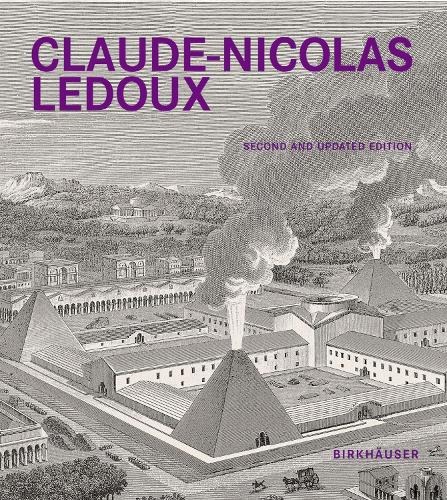
Claude-Nicolas Ledoux : Architecture and uopia in the era of the French revolution
Claude-Nicolas Ledoux (1736-1806) is today regarded as chief representative of French revolutionary architecture. With his extraordinary inventiveness he projected the architectural ideals of his era. Ledoux's influential buildings and projects are presented and interpreted both aesthetically and historically in this book. His best-known projects - the Royal Saltwords of Arc-et-Senans, the tollgates of Paris, the ideal city of Chaux - reveal the architect's allegiance to the principles of antiquity and Renaissance but also illustrate the evolution of his own utopian language. With the French Revolution, Ledoux ceased building as his contemporaries perceived him as a royal architect. He focused on the development of his architectural theory and redefined the vision of the modern architect

Classifying madness : A philosophical examination of the diagnostic and statistical manual of mental disorders
Classifying Madness examines the conceptual foundations of the D.S.M., the main classification of mental disorders used by psychiatrists world-wide. It will be of interest to both mental health professionals and to philosophers interested in classification in science. The D.S.M. has become extremely controversial, and the possibility that there may be philosophical difficulties with it has become a commonplace in the mental health literature. Classifying Madness offers mental health professionals an opportunity to explore suspicions that there might be conceptual problems with the D.S.M. For philosophers, this book aims to contribute to debates in the philosophy of science concerning natural kinds, the theory-ladenness of classification, and the effect of sociological factors in science. These issues are normally approached via a consideration of the natural sciences and, as will be seen, approaching them via a consideration of psychiatry helps shed new light on old problems.
Classification des Groupes Algébriques Semi-simples = The Classification of Semi-Simple Algebraic Groups
The third volume of the Collected Works of Claude Chevalley assembles his work on semi-simple algebraic groups contained, for the most part, in the notes of the famous "Sminaire Chevalley" held at the Ecole Normale Suprieure in Paris between 1956 and 1958 and written up by participants of the seminar namely, P. Cartier, A. Grothendieck, R. Lazard and J.L. Verdier. These texts have been entirely reset in TeX for this edition, and edited and annotated by Pierre Cartier. Almost 50 years after the original writing, these texts still constitute a choice reference from which to enter

Classical Nucleation Theory in Multicomponent Systems
Nucleation is the initial step of every first-order phase transition, and most phase transitions encountered both in everyday life and industrial processes are of the first-order. Using an elegant classical theory based on thermodynamics and kinetics, this book provides a fully detailed picture of multi-component nucleation. As many of the issues concerning multi-component nucleation theory have been solved during the last 10-15 years, it also thoroughly integrates both fundamental theory with recent advances presented in the literature. It covered are: the basic relevant thermodynamics and statistical physics; modelling a molecular cluster as a spherical liquid droplet; predicting the size and composition of the nucleating critical clusters; kinetic models for cluster growth and decay; calculating nucleation rates; and a full derivation and application of nucleation theorems that can be used to extract microscopic cluster properties from nucleation rate measurements.
Classical Methods of Statistics : With Applications in Fusion-Oriented Plasma Physics
Classical Methods of Statistics is a blend of theory and practical statistical methods written for graduate students and researchers interested in applications to plasma physics and its experimental aspects. It can also fruitfully be used by students majoring in probability theory and statistics. In the first part, the mathematical framework and some of the history of the subject are described. Many exercises help readers to understand the underlying concepts. In the second part, two case studies are presented exemplifying discriminant analysis and multivariate profile analysis. The introductions of these case studies outline contextual magnetic plasma fusion research. In the third part, an overview of statistical software is given and, in particular, SAS and S-PLUS are discussed. In the last chapter, several datasets with guided exercises, predominantly from the ASDEX Upgrade tokamak, are included and their physical background is concisely described. The book concludes with a list of essential keyword translations.

Classical Electromagnetic Theory
This book stresses the unity of electromagnetic theory with electric and magnetic fields developed in parallel. SI units are used throughout and considerable use is made of tensor notation and the Levi-Cevita symbol. To more closely display the parallelism, extensive use is made of the scalar magnetic potential particularly in dealing with the Laplace and Poisson equation. 85 worked problems illustrate the theory. Conformal mappings are dealt with in some detail. Relevant mathematical material is provided in appendices.

Classic Works on the Dempster-Shafer Theory of Belief Functions
This book brings together a collection of classic research papers on the Dempster-Shafer theory of belief functions. By bridging fuzzy logic and probabilistic reasoning, the theory of belief functions has become a primary tool for knowledge representation and uncertainty reasoning in expert systems.

Classes of Finite Groups
Many group theorists all over the world have been trying in the last twenty-five years to extend and adapt the magnificent methods of the Theory of Finite Soluble Groups to the more ambitious universe of all finite groups. This is a natural progression after the classification of finite simple groups but the achievements in this area are scattered in various papers.Our objectives in this book were to gather, order and examine all this material, including the latest advances made, give a new approach to some classic topics, shed light on some fundamental facts that still remain unpublished and present some new subjects of research in the theory of classes of finite, not necessarily solvable, groups.

Civil engineering materials : From theory to practice ; 1st ed.
Presents the state-of-the-art in civil engineering materials, including the fundamental theory of materials needed for civil engineering projects and unique insights from decades of large-scale construction in China. The title includes the latest advances in new materials and techniques for civil engineering, showing the relationship between composition, structure and properties, and covering ultra-high-performance concrete and self-compacting concrete developed in China. This book provides comprehensive coverage of the most commonly used, most advanced materials for use in civil engineering. This volume consists of eight chapters covering the fundamentals of materials, inorganic cementing materials, Portland cement concrete, bricks, blocks and building mortar, metal, wood, asphalt and polymers.
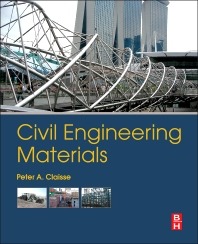
Civil engineering materials
Concentrates on demonstrating methods to obtain, analyse and use information rather than focusing on presenting large amounts of data. Beginning with basic properties of materials, it moves on to more complex areas such as the theory of concrete durability and corrosion of steel.
