



الصفحة 81
الصفحة 81
Bioinformatics and Computational Biology Solutions Using R and Bioconductor
Bioconductor is a widely used open source and open development software project for the analysis and comprehension of data arising from high-throughput experimentation in genomics and molecular biology. Bioconductor is rooted in the open source statistical computing environment R. This volume's coverage is broad and ranges across most of the key capabilities of the Bioconductor project, including: Importation and preprocessing of high-throughput data from microarray, proteomic, and flow cytometry platforms / Curation and delivery of biological metadata for use in statistical modeling and interpretation. / Statistical analysis of high-throughput data, including machine learning and visualization,modeling and visualization of graphs and networks. This book is a dynamic document. Code underlying all of the computations that are shown is made available on a companion website, and readers can reproduce every number, figure, and table on their own computers.
Bioinformatics
In this textbook present mathematical models in bioinformatics and they describe the biological problems that inspire the computer science tools used to handle the enormous data sets involved. The first part of the book covers the mathematical and computational methods, while the practical applications are presented in the second part. The mathematical presentation is descriptive and avoids unnecessary formalism, and yet remains clear and precise. Emphasis is laid on motivation through biological problems and cross applications. Each of the four chapters in the first part is accompanied by exercises and problems to support an understanding of the techniques presented. Each of the six chapters of the second part is devoted to some specific application domain: sequence alignment, molecular phylogenetics and coalescence theory, genomics, proteomics, RNA, and DNA microarrays. Each chapter concludes with a problems and projects section, to deepen the reader's understanding and to allow for the design of derived methods. Many of the projects involve publicly available software and/or Web-based bioinformatics depositories. Finally, the book closes with a thorough bibliography, reaching from classic research results to very recent findings, providing many pointers for future research.Overall, this volume is ideally suited for a senior undergraduate or graduate course on bioinformatics, with a strong focus on its mathematical and computer science background.

Biogeography, Time, and Place : Distributions, Barriers, and Islands
Biogeography considers the distribution of biological units over a wide range of scales. The units range from genotypes, populations and species to families and higher taxa. Processes can be local, such as the isolation on islands due to sea-level fluctuations, or large-scale tectonic processes that separates continents and creates oceans. In all processes time is an important factor and by combining data on recent patterns with paleontological data the understanding of the distribution of extant taxa can be improved. This volume focuses on speciation due to isolation in island-like settings, and the evolution of large-scale diversity as the result of origination, maintenance and extinction.
Biofuels
In line with the current focus on a sustainable economy, bioethanol and other biofuels have received tremendous attention, making many headlines. Being produced in steadily growing volumes has made it necessary to consider production of biofuels from renewable raw materials that are not currently used. Therefore, the production of biofuels is at the gateway of moving from traditional raw materials to others such as lignocellulosic materials. However, sucha transfer requires new production processes that are economically feasible.This volume addresses and discusses the current status of biofuels, covering aspects from enabling technologies to different technology and processes options, as well as economical and policy perspectives.
Biochemistry of Atherosclerosis
Advances in Biochemistry in Heath and Disease presents state-of-the-art discussions in cutting-edge biochemical research, offering exciting developments that impact healthcare and disease research. Volumes in the series focus on cross-disciplinary biomedical research and examine various topics in biochemistry, cell biology, molecular biology, and biomedicine. Biochemistry of Atherosclerosis examines atherosclerosis in great detail, focusing on the risk of atherosclerosis, and the biochemical pathways involved. It provides a breadth of knowledge as well as new insights into a variety of topics relating to atherosclerosis from leading scientists around the world who are at the forefront of atherosclerosis research. Biochemistry of Atherosclerosis is essential reading for biomedical and clinical researchers.
Biochemistry and cell biology of ageing ; Part III : Biomedical science
Covering interesting and significant biomedical ageing topics not included in the earlier volumes. Comprehensive and cutting-edge, this book is a valuable resource for experienced researchers and early career scientist alike, who are interested in learning more about the fascinating and challenging question of why and how our cells age.
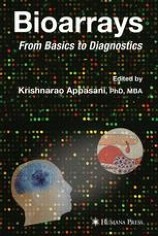
Bioarrays : From Basics to Diagnostics
Bioarrays: From Basics to Diagnostics provides an integrated and comprehensive collection of timely articles on the use of bioarray techniques in the fields of biotechnology and molecular medicine. The entire volume is broken into four sections – Bioarray Technology Platforms, Biomarkers and Clinical Genomics, Biomarker Identification Using Clinical Proteomics and Glycomics, and Emerging Technologies in Diagnostics – that create one well-integrated work. Particular emphasis is placed on DNA, protein, and carbohydrate biochips. The volume also looks extensively at oligonucleotides, cDNA, proteins, antibodies, and carbohydrate arrays.
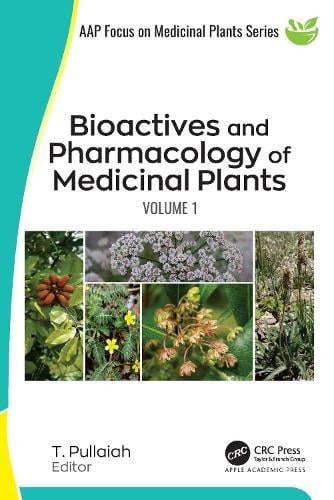
Bioactives and pharmacology of medicinal plants : Vol.1
Bioctives and Pharmacology of Medicinal Plants, concisely presents an abundance of important information on the bioactive and pharmacological properties of medicinal plants. It provides valuable comprehensive research and studies on bioactive phytocompounds of over 68 important medicinal plants with beneficial properties. For each species included in the volume, a brief introduction is given along with their bioactive compounds and chemical structures, followed by their chief pharmacological activities that include antiviral, antimicrobial, antioxidant, anti-cancer, anti-inflammatory, antidiabetic, hepatoprotective, nephroprotective, and cardioprotective activities. A review of the published literature on pharmacological activities on each species is included also, providing a thorough resource on each of the plants covered in the volume.
Bioactives and pharmacology of Legumes
A variety of bioactives and therapeutics from the legume family (Fabaceae or Leguminosae) are thoroughly detailed. For each species included in the volume, a brief introduction is given, the plant’s bioactive compounds are listed, and its chemical structures shown, followed by their pharmacological activities. Many of these plants have medicinal activities that include antiviral, antimicrobial, antioxidant, anticancer, anti-inflammatory, and antidiabetic, hepatoprotective, nephroprotective and cardioprotective. The biochemical characteristics of the 37 plants included, such as the type of starch, protein, and fibers, can be exploited as binders, excipients, thickeners, and dispersants in the formulation of various products in the pharmaceutical industry. The published literature on the pharmacological activities on each species is reviewed and presented in a concise and clear manner.
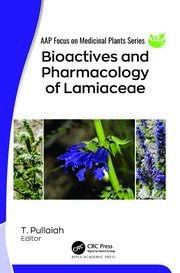
Bioactives and pharmacology of lamiaceae
Provides a wealth of information on plants in the Lamiaceae family, noted for their essential oils and bioactives and pharmacological properties. The chapters investigate a wide variety of species, providing for each an introduction, characteristics, properties, distribution, traditional uses, and current and potential pharmacological applications. Aiming to be a resource for the development of new drugs based on species within the Lamiaceae family, the volume discusses 26 species, including bungleweed (Ajuga), Malabar catmint (Anisomeles malabarica), beechwood (Gmelina arborea), Brazilian mint (Hyptis crenata), rosemary (Rosmarinus officinalis L.), holy basil (Ocimum tenuiflorum), and many more.
Bioactive Heterocyles I
Bioactive Heterocycles I is a continuation of critical accounts about heterocyclic compounds within the series Topics in Heterocyclic Chemistry. The present volume provides comprehensive reviews of the chemistry and bioactivity of selected groups of heterocycles and natural products. … Overall, this book covers in detail several classes of bioactive heterocyclic compounds including selected natural products. The focus is on the most recent advances, and the clarity of the presentation is very good. It should be of interest to individuals interested in the discovery and synthesis of bioactive small molecules, including research scientists in academia and industry.
Bioactive Heterocycles V
This volume contains 10 chapters. The contributions are from researchers famous in their respective fields and the chapters contain high quality reviews on topics related to the chemo-biological studies of several different heterocyclic groups. The first chapter from Saracoglu reviews the functionalization of indoles and the pyrroles via Michael additions, as these compounds have potential for their biological activities. In second chapter Men ́endez reviews the chemistry of the welwitindolinones. Topcu and Demirkiran, in the third chapter, describe the chemistry and biological studies of lignans from Taxus species, including their biosynthesis and recent strategies for the synthesis of lignans.
Bioactive Heterocycles IV
This volume contains nine more contributions from expert researchers of the?eld, providing readers with in depth and current research results regarding therespective topics. In the?rst chapter, Flemming et al. review the chemistry, biosynthesis, metabolism and biological activities of tetrahydrocannabinol and its deri- tives. Hansch and Verma contribute to the quantitative structure-activity re- tionship (QSAR) analysis of heterocyclic topoisomerase I and II inhibitors. These inhibitors, knowntoinhibit either enzyme, actasantitumoragentsand are currently used in chemotherapy and in clinicaltrials. In the third chapter, Khan reviews some aspects of molecular modeling studies on biologically active alkaloids.
Bioactive Heterocycles III
Bioactive Heterocycles III provides readers with a comprehensive overview of the most recent breakthroughs in the ?eld of heterocycles. This volume contains 8 chapters written by experts in their respective ?elds from all over the world. The chapters summarize years of extensive research in each area, and providein sight in the new themesofnaturalproduct research.Manyofthe contributors illustrate their laboratory experiences. It's obvious that readers will gain exciting and essential information fromthe volume. In the ?rst chapter, Kayser et al. describe the chemistry, biosynthesis and biological activities of artemisinin, one of the most promising antimalarial molecules, and its related natural peroxides.
Bioactive Heterocycles II
As part of the series Topics in Heterocyclic Chemistry, this volume titled Bio- tive Heterocycles II presents comprehensive and up-to-date reviews on selected topics regarding synthetic as well as naturally occurring bioactive heterocycles. The frst chapter, "High Pressure Synthesis of Heterocycles Related to Bio- tive Molecules" by Kiyoshi Matsumoto, presents a unique high-pressure s- thetic methodology in heterocyclic chemistry. Basic principles and fruitful examples for pericyclic reactions, such as Diels-Alder reactions, 1,3-dipolar reactions, and also for ionic reactions, such as S and addition reactions, are N discussed.
Bioactive Confirmation II
Specific binding of a ligand to a receptor is a key step in a variety of biol- ical processes, such as immune reactions, enzyme cascades, or intracellular transport processes. The ligand-receptor terminology implies that the rec- tor molecule is signi?cantly larger than the ligand, and the term "bioactive conformation" usually characterizes the conformation of a ligand when it is bound to a receptor. In a more general sense, bioactive conformation applies toanymoleculeinabiologicallyrelevantboundstateregardlessofsizecons- erations. Mostofthecontributions tothisbookaddressligandsthat aremuch smaller than their receptors. X-ray crystallography and high resolution NMR spectroscopy are the two main experimental techniques used to study bioactive conformations. The- fore, the twovolumes ofthisbookcover approachesthat use either ofthetwo techniques, or a combination thereof.
Big Data Recommender Systems ; Vol.2 : Application Paradigms
Combines experimental and theoretical research on big data recommender systems to help computer scientists develop new concepts and methodologies for complex applications. It includes original scientific contributions in the form of theoretical foundations, comparative analysis, surveys, case studies, techniques and tools. First designed to generate personalized recommendations to users in the 90s, recommender systems apply knowledge discovery techniques to users’ data to suggest information, products, and services that best match their preferences. In recent decades, we have seen an exponential increase in the volumes of data, which has introduced many new challenges. recommender systems. Volume 2 covers a broad range of application paradigms for recommender systems over 22 chapters

Beyond partial differential equations : On linear and Quasi-Linear abstract hyperbolic evolution equations
The present volume is self-contained and introduces to the treatment of linear and nonlinear (quasi-linear) abstract evolution equations by methods from the theory of strongly continuous semigroups.
Beyond knowledge : The legacy of competence : Meaningful computer-based learning environments
The edited and peer reviewed volume presents selected papers of the conference "Beyond knowlegde: the legacy of competence" It reflects the current state-of-the-art work of scholars worldwide within the area of learning and instruction with computers. Mainly, areas of computer-based learning environments supporting competence-focused knowledge acquisition but also foundational scientific work are addressed. More specific, contents cover cognitive processes in hypermedia and multimedia learning, social issues in computer-supported collaborative learning, motivation and emotion in Blended Learning and e-Learning.
Between dirt and discussion : Methods, methodology and interpretation in historical archaeology
The cases presented in this volume revisit old methods and previous scholarly approaches with new perspectives, along with incorporating the newest technologies available to understanding the past.
