



الصفحة 8
الصفحة 8

First course on fuzzy theory and applications
This basic textbook gives an easily accessible introduction to Fuzzy theory and its applications. It provides basic and concrete concepts of the field in a self-contained, condensed and understandable style. This "First Course on Fuzzy Theory and Applications" includes numerous examples, descriptive illustrations and figures of the basic concepts, as well as exercises at the end of each chapter. The author has long time experience in teaching on fuzzy theory and its applications and continuously developed and summarized his didactic lecture notes into this book. This book can be used in introductory graduate and undergraduate courses in Fuzziness and Soft Computing and is recommendable to students, scientists, engineers, or professionals in the field for self-study.

Field and service robotics : Results of the 6th international conference
This book presents the results of the sixth edition of Field and Service Robotics, FSR07, held in Chamonix, France, on 9th - 12th July 2007. The conference provided a forum for researchers, professionals and robot manufacturers to exchange up-to-date technical knowledge and experience. This book offers a collection of a broad range of topics including: Underwater Robots and Systems, Autonomous Navigation for Unmanned Aerial Vehicles, Simultaneous Localization and Mapping, Climbing Robotics, Sensor Fusion.

Evolutionary Multi-Criterion Optimization ; 3rd International Conference, EMO 2005, Guanajuato, Mexico, March 9-11, 2005, Proceedings
Constitutes the refereed proceedings of the Third International Conference on Evolutionary Multi-Criterion Optimization, EMO 2005, held in Guanajuato, Mexico, in March 2005.

Evolutionary Computation in Dynamic and Uncertain Environments
This book provides a compilation on the state-of-the-art and recent advances of evolutionary algorithms in dynamic and uncertain environments within a unified framework. The motivation for this book arises from the fact that some degree of uncertainty in characterizing any realistic engineering systems is inevitable. Representative methods for addressing major sources of uncertainties in evolutionary computation, including handle of noisy fitness functions, use of approximate fitness functions, search for robust solutions, and tracking moving optimums, are presented. "Evolutionary Computation in Dynamic and Uncertain Environments" is a valuable reference for scientists, researchers, professionals and students in the field of engineering and science, particularly in the areas of computational intelligence, natural computing and evolutionary computation.

Environmental and Health Risk Assessment and Management : Principles and Practices
The book covers the essential aspects of environmental and health law, environmental economics, applied statistical and probabilistic methods, fundamental notions of applied epidemiology and toxicology, as well as decision analysis, to provide an integrated overview of how risk assessment and management combine to produce sound societal outcomes. Risk-based methods play a pivotal role in identifying and ranking alternative, sustainable choices, while accounting for uncertainty and variability. Specifically, most reductions in risks require a balancing of the costs and benefits associated with the action to reduce exposure to a hazard and thus risk. This balancing necessarily involves linking exposure and response through causation. Fundamentally, in risk assessment and management, science and law intersect through legal and scientific causation to the point that the failure to provide a sound causal argument can make an otherwise beneficial law or regulation invalid.

Enterprise Risk Management : Modern Approaches to Balancing Risk and Reward
Demonstrates how Enterprise Risk Management creates value in strategic- and decision-making-processes. The author introduces modern approaches to balancing risk and reward based on many examples of medium-sized and large companies from different industries. Since traditional risk management in practice is often an independent stand-alone process with no impact on decision-making processes, it is unable to create value and ties up resources in the company unnecessarily. Herewith, he serves students as well as practitioners with modern approaches that promote a connection between ERM and corporate management. The author demonstrates in a didactically appropriate manner how companies can use ERM in a concrete way to achieve better risk-reward decisions under uncertainty. Furthermore, theoretical and psychological findings relevant to entrepreneurial decision-making situations are incorporated.

Economics of the Environment : Theory and Policy
Interprets nature and the environment as a scarce resource. It offers a theoretical study of the allocation problem and describes different policy approaches to the environmental problem. The entire spectrum of the allocation issue is studied: the use of the environment in a static context, international and trade aspects of environmental allocation, regional dimensions, global environmental media, environmental use over time and under uncertainty. The book incorporates a variety of economic approaches, including neoclassical analysis, the public-goods approach, benefit-cost analysis, property-rights ideas, economic policy and public-finance reasoning, international trade theory, regional science, optimization theory, and risk analysis. The different aspectsof environmental allocation are studied in the context of a single model that is used through the book.

Economic dynamics and information
This book analyzes the existence of equilibria in economies having a measured space of agents and a continuum of agents and commodities. Excessive homogeneity with respect to agent productivity leads to instability and non-uniqueness of a given stationary state and the indeterminacy of the corresponding stationary state equilibrium. Sufficient heterogeneity leads to global saddle-path stability, uniqueness of a given stationary state and the global uniqueness of the corresponding equilibrium.

Earthquakes, Tsunamis and Nuclear Risks : Prediction and Assessment Beyond the Fukushima Accident
This book covers seismic probabilistic risk assessment (S-PRA) and related studies which have become more important to increase the safety of nuclear facilities against earthquakes and tsunamis in the face of the many uncertainties after the Fukushima accident. The topics are (1) Active faults and active tectonics important for seismic hazard assessment of nuclear facilities,(2) Seismic source modeling and simulation and modeling techniques indispensable for strong ground motion prediction, and (3) PRA with external hazard and risk communication.
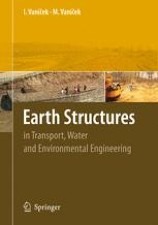
Earth Structures : In Transport, Water and Environmental Engineering
This book describes the principles of working with soil as a construction material, including two basic ways of treating it: geosynthetics and stabilization. The book discusses the design logic and ways to control Earth Structures, which differ significantly from other construction materials. Building with Earth involves greater uncertainty and risk, which means that there is a need for better design detailing and improvement in the quality of financial calculations. The general part of the book gives a detailed description of the principles of limit states according to Eurocode 7, after which geotechnical design is also described. Subsequent chapters concentrate on earth structures for transport, water, and environmental projects. The chapter on Earth Structures in transport engineering presents detailed coverage of limit states of stability and deformation. Earth Structures in water engineering prioritizes the limit state of internal erosion. Earth Structures in environmental engineering describes new designs, in which part of the structure is created from non-standard materials which are usually susceptible to internal collapse, double porosity, unsaturation, etc. It also focuses on protecting the surrounding environment from contamination.

Discrete-time Sliding Mode Control : A Multirate Output Feedback Approach
Sliding mode control is a simple and yet robust control technique, where the system states are made to confine to a selected subset. With the increasing use of computers and discrete-time samplers in controller implementation in the recent past, discrete-time systems and computer based control have become important topics. This monograph presents an output feedback sliding mode control philosophy which can be applied to almost all controllable and observable systems, while at the same time being simple enough as not to tax the computer too much. It is shown that the solution can be found in the synergy of the multirate output sampling concept and the concept of discrete-time sliding mode control.

Digital Human Modeling ; 1st International Conference, ICDHM 2007, Held as Part of HCI International 2007, Beijing, China, July 22-27, 2007, Proceedings
Theis book includes human aspects of design and use of computing systems.It covers the entire field of Human-Computer Interaction, addressing major - vances in knowledge and effective use of computers in a variety of application areas. It also contains thematic area of Digital Human Modeling, Shape and Movement Modeling and Anthropometry, Building and Applying Virtual Humans, Medical and Rehabilitation Applications, Industrial and Ergonomic Applications

Digital darwinism : Surviving the new age of business disruption
This book guides you through the unrelenting pace of change and uncertainty facing business leaders today. Currently in a hybrid world where digital and real-world experiences collide and are expected to seamlessly blend into one another, never has the need to be on top of your digital transformation been felt more strongly.
Differential Evolution Algorithm with Type-2 Fuzzy Logic for Dynamic Parameter Adaptation with Application to Intelligent Control
This book focuses on the fields of fuzzy logic, bio-inspired algorithm, especially the differential evolution algorithm and also considering the fuzzy control area. The main idea is that these two areas together can help solve various control problems and to find better results. In this book, the authors test the proposed method using five benchmark control problems. First, the water tank, temperature, mobile robot, and inverted pendulum controllers are considered. For these 4 problems, experimentation was carried out using a Type-1 fuzzy system and an Interval Type-2 system. The last control problem was the D.C. motor, for which the experiments were performed with Type-1, Interval Type-2, and Generalized Type-2 fuzzy systems. When we use fuzzy systems combined with the differential evolution algorithm, we can notice that the results obtained in each of the controllers are better and with increasing uncertainty, the results are even better. For this reason, the authors consider in this book the proposed method using fuzzy systems and the differential evolution algorithm to improve the fuzzy controllers’ behavior in complex control problems.

Dependability Modelling under Uncertainty : An Imprecise Probabilistic Approach
Mechatronic design processes have become shorter and more parallelized, induced by growing time-to-market pressure. Methods that enable quantitative analysis in early design stages are required, should dependability analyses aim to influence the design. Due to the limited amount of data in this phase, the level of uncertainty is high and explicit modeling of these uncertainties becomes necessary. This work introduces new uncertainty-preserving dependability methods for early design stages.

Demystifying Climate Models : A Users Guide to Earth System Models
This book demystifies the models we use to simulate present and future climates, allowing readers to better understand how to use climate model results. In order to predict the future trajectory of the Earth’s climate, climate-system simulation models are necessary. When and how do we trust climate model predictions? The book offers a framework for answering this question. It provides readers with a basic primer on climate and climate change, and offers non-technical explanations for how climate models are constructed, why they are uncertain, and what level of confidence we should place in them. It presents current results and the key uncertainties concerning them. Uncertainty is not a weakness but understanding uncertainty is a strength and a key part of using any model, including climate models.
Deep neural networks and data for automated driving : robustness, uncertainty quantification, and insights towards safety
Environment perception for highly automated driving heavily employs deep neural networks, facing many challenges. How much data do we need for training and testing? How to use synthetic data to save labeling costs for training? How do we increase robustness and decrease memory usage? For inevitably poor conditions: How do we know that the network is uncertain about its decisions? Can we understand a bit more about what actually happens inside neural networks? This leads to a very practical problem particularly for DNNs employed in automated driving: What are useful validation techniques and how about safety? This book unites the views from both academia and industry, where computer vision and machine learning meet environment perception for highly automated driving. Naturally, aspects of data, robustness, uncertainty quantification, and, last but not least, safety are at the core of it. This book is unique: In its first part, an extended survey of all the relevant aspects is provided. The second part contains the detailed technical elaboration of the various questions mentioned above.

Decision Making under Deep Uncertainty : From Theory to Practice
Focuses on both the theory and practice associated with the tools and approaches for decisionmaking in the face of deep uncertainty. It explores approaches and tools supporting the design of strategic plans under deep uncertainty, and their testing in the real world, including barriers and enablers for their use in practice. The book broadens traditional approaches and tools to include the analysis of actors and networks related to the problem at hand. It also shows how lessons learned in the application process can be used to improve the approaches and tools used in the design process. The book offers guidance in identifying and applying appropriate approaches and tools to design plans, as well as advice on implementing these plans in the real world. For decisionmakers and practitioners, the book includes realistic examples and practical guidelines that should help them understand what decisionmaking under deep uncertainty is and how it may be of assistance to them.
Dealing with Uncertainties : A Guide to Error Analysis
Dealing with Uncertainties proposes and explains a new approach for the analysis of uncertainties. Firstly, it is shown that uncertainties are the consequence of modern science rather than of measurements. Secondly, it stresses the importance of the deductive approach to uncertainties.

Database Theory – ICDT 2007 ; 11th International Conference, Barcelona, Spain, January 10-12, 2007, Proceedings
The papers are organized in topical sections on information integration and peer to peer, axiomatizations for XML, expressive power of query languages, incompleteness, inconsistency, and uncertainty, XML schemas and typechecking, stream processing and sequential query processing, ranking, XML update and query, as well as query containment.
