



الصفحة 8
الصفحة 8

Fun and Games ; 2nd International conference, Eindhoven, The Netherlands, October 20-21, 2008. Proceedings
This book constitutes the refereed proceedings of the Second International Conference on Fun and Games, held in Eindhoven, The Netherlands, in October 2008.The 17 revised full papers, presented together with 2 invited talks were carefully reviewed and selected from a total of 36 submissions. The papers encompass the study of computer games, game development and experiences by researchers from social sciences, computing, electrical engineering, design, etc. Main focus is given to topics such as tightly-coupled embodied control of movement-sensitive mobile devices, hypercomputation and cultural computing, emerging gaming paradigms.

From Specification to Embedded Systems Application
Application documents recent approaches and results presented at the International Embedded Systems Symposium (IESS 2005), which was held in August 2005 in Manaus (Brazil) and sponsored by International Federation for Information Processing (IFIP). The topics which have been chosen for this working conference are very timely: design methodology, modeling, specification, software synthesis, power management, formal verification, testing, network, communication systems, distributed control systems, resource management and special aspects in system design.

From Digital Twins to Digital Selves and Beyond : Engineering and Social Models for a Trans-humanist World
This book aims at deepening the understanding of the relation between cyber-physical systems (CPSs) as socio-technical systems and their digital representations with intertwined artificial intelligence (AI). The authors describe why it is crucial for digital selves to be able to develop emotional behavior and why a humanity-inspired AI is necessary so that humans and humanoids can coexist.
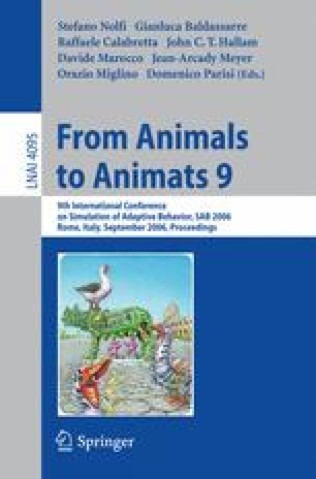
From Animals to Animats 9 ; 9th International Conference on Simulation of Adaptive Behavior, SAB 2006, Rome, Italy, September 25-29, 2006, Proceedings
This book constitutes the refereed proceedings of the 9th International Conference on Simulation of Adaptive Behavior, SAB 2006. The 35 revised full papers and 35 revised poster papers presented are organized in topical sections on the animat approach to adaptive behaviour, perception and motor control, action selection and behavioral sequences, navigation and internal world models, learning and adaptation, evolution, collective and social behaviours, applied adaptive behavior and more.
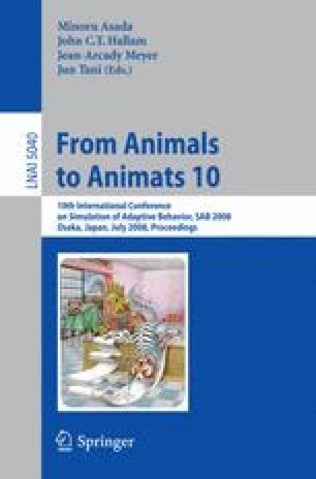
From Animals to Animats 10 ; 10th International Conference on Simulation of Adaptive Behavior, SAB 2008, Osaka, Japan, July 7-12, 2008. Proceedings
This book constitutes the refereed proceedings of the 10th International Conference on Simulation of Adaptive Behavior, SAB 2008, held in Osaka, Japan in July 2008.The 30 revised full papers and 21 revised poster papers presented were carefully reviewed and selected from 110 submissions. The papers are organized in topical sections on the animat approach to adaptive behaviour, evolution, navigation and internal world models, perception and control, learning and adaptation, cognition, emotion and behaviour, collective and social behaviours, adaptive behaviour in language and communication, and applied adaptive behaviour.

Founders at Work : Stories of Startups’ Early Days
Founders at Work: Stories of Startups' Early Days is a collection of interviews with founders of famous technology companies about what happened in the very earliest days. These people are celebrities now. What was it like when they were just a couple friends with an idea? Founders like Steve Wozniak (Apple), Caterina Fake (Flickr), Mitch Kapor (Lotus), Max Levchin (PayPal), and Sabeer Bhatia (Hotmail) tell you in their own words about their surprising and often very funny discoveries as they learned how to build a company.

Fire-fighter robot
Firefighting is an important but dangerous career that can potentially cause the loss of life, property damage and permanent disability to the victim. Robots are designed to find a fire, before it rages out of control, could one day work with fire fighters greatly reducing the risk of injury to victims. In this report we will focus on each phase of the project one by one and demonstrate them.

Field-Based Coordination for Pervasive Multiagent Systems
Software systems involve autonomous and distributed software components that have to execute and interact in open and dynamic environments, such as in pervasive, autonomous, and mobile applications. The requirements with respect to dynamics, openness, scalability, and decentralization call for new approaches to software design and development, capable of supporting spontaneous configuration, tolerating partial failures, or arranging adaptive reorganization of the whole system.

Field and Service Robotics ; Vol. 25 : Results of the 5th International Conference
Field robots are robots which operate in outdoor, complex, and dynamic environments. Service robots are those that work closely with humans, with particular applications involving indoor and structured environments. There are a wide range of topics presented in this issue on field and service robots including: Agricultural and Forestry Robotics, Mining and Exploration Robots, Robots for Construction, Security & Defence Robots, Cleaning Robots, Autonomous Underwater Vehicles and Autonomous Flying Robots.

Field and Service Robotics ; Vol. 24 : Recent Advances in Research and Applications
This unique collection is the post-conference proceedings of the 4th FSR in Lake Yamanaka, Japan at July 2003. This book edited by Shin’ichi Yuta, Hajime Asama, Sebastian Thrun, Erwin Prassler and Takashi Tsubouchi is rich by topics and authoritative contributors and presents the current developments and new directions in field and service robotics. The contents of these contributions represent a cross-section of the current state of robotics research from one particular aspect: field and service applications, and how they reflect on the theoretical basis of subsequent developments. Pursuing technologies aimed at realizing skilful, smart, reliable, robust field and service robots is the big challenge running throughout this focused collection.

Field and service robotics : Results of the 6th international conference
This book presents the results of the sixth edition of Field and Service Robotics, FSR07, held in Chamonix, France, on 9th - 12th July 2007. The conference provided a forum for researchers, professionals and robot manufacturers to exchange up-to-date technical knowledge and experience. This book offers a collection of a broad range of topics including: Underwater Robots and Systems, Autonomous Navigation for Unmanned Aerial Vehicles, Simultaneous Localization and Mapping, Climbing Robotics, Sensor Fusion.

FastSLAM : A Scalable Method for the Simultaneous Localization and Mapping Problem in Robotics
This monograph describes a new family of algorithms for the simultaneous localization and mapping problem in robotics (SLAM). SLAM addresses the problem of acquiring an environment map with a roving robot, while simultaneously localizing the robot relative to this map. This problem has received enormous attention in the robotics community in the past few years, reaching a peak of popularity on the occasion of the DARPA Grand Challenge in October 2005, which was won by the team headed by the authors. The FastSLAM family of algorithms applies particle filters to the SLAM Problem, which provides new insights into the data association problem that is paramount in SLAM. The FastSLAM-type algorithms have enabled robots to acquire maps of unprecedented size and accuracy, in a number of robot application domains and have been successfully applied in different dynamic environments, including the solution to the problem of people tracking.

Fast Motions in Biomechanics and Robotics : Optimization and Feedback Control
In the past decades, much progress has been made in the field of walking robots. The current state of technology makes it possible to create humanoid robots that nearly walk like a human being, climb stairs, or avoid small - stacles. However, the dream of a robot running as fast and as elegantly as a human is still far from becoming reality. Control of such fast motions is still a big technological issue in robotics, and the maximum running speed of contemporary robots is still much smaller than that of human track runners. The conventional control approach that most of these robots are based on does not seem to be suitable to increase the running speeds up to a biological level.

Expert Clouds and Applications ; Proceedings of ICOECA 2021
Features original papers from International Conference on Expert Clouds and Applications (ICOECA 2021), organized by GITAM School of Technology, Bangalore, India during February 18–19, 2021. It covers new research insights on artificial intelligence, big data, cloud computing, sustainability, and knowledge-based expert systems. The book discusses innovative research from all aspects including theoretical, practical, and experimental domains that pertain to the expert systems, sustainable clouds, and artificial intelligence technologies.

Experimental Robotics IX ; The 9th International Symposium on Experimental Robotics
This unique reference presents the latest advances across the various fields of robotics, with ideas that are not only conceived conceptually but also verified experimentally. It collects contributions on the current developments and new directions in the field of experimental robotics, which are based on the papers presented at the Ninth ISER held in Singapore.

Experimental Robotics : The 10th International Symposium on Experimental Robotics
The goal of ISER is to provide a forum for research in robotics that focuses on novelty of theoretical contributions validated by experimental results. The meetings are conceived to bring together, in a small group setting, researchers from around the world who are in the forefront of experimental robotics research.

Evolving Connectionist Systems : The Knowledge Engineering Approach
Evolving Connectionist Systems is aimed at all those interested in developing and using intelligent computational models and systems to solve challenging real world problems in computer science, engineering, bioinformatics and neuroinformatics. The book challenges scientists and practitioners with open questions about future creation of new information models inspired by Nature. This edition includes new methods for adaptive, knowledge-based learning, such as online incremental feature selection, spiking neural networks, transductive neuro-fuzzy inference, adaptive data and model integration, cellular automata and artificial life systems, particle swarm optimisation, ensembles of evolving systems, and quantum inspired neural networks. New applications to gene and protein interaction modelling, brain data analysis and brain model creation, computational neuro-genetic modelling, adaptive speech, image and multimodal recognition, language modelling, adaptive robotics, modelling dynamic financial and socio-economic systems, and ecological modelling, are covered. An important new feature of the book is the attempt to connect different structural and functional levels of a complex, intelligent system, looking for inspiration from functional relationships in natural systems, such as the genetic and the brain activity.

Evolvable systems : From biology to hardware ; 8th International Conference, ICES 2008, Prague, Czech Republic, September 21-24, 2008. Proceedings
This book constitutes the refereed proceedings of the 8th International Conference on Evolvable Systems, ICES 2008, held in Prague, Czech Republic, in September 2008.The 28 revised full papers and 14 revised poster papers presented were carefully reviewed and selected from 52 submissions. The papers are organized in topical sections on evolution of analog circuits, evolution of digital circuits, hardware-software codesign and platforms for adaptive systems, evolutionary robotics, development, real-world applications, evolutionary networking, evolvable artificial neural networks, and transistor-level circuit evolution.

Evolvable systems : From biology to hardware ; 6th International Conference, ICES 2005, Sitges, Spain, September 12-14, 2005, Proceedings
The flying machines proposed by Leonardo da Vinci in the fifteenth century, the se- reproducing automata theory proposed by John von Neumann in the middle of the twentieth century and the current possibility of designing electronic and mechanical systems using evolutionary principles are all examples of the efforts made by humans to explore the mechanisms present in biological systems that permit them to tackle complex tasks. These initiatives have recently given rise to the emergent field of b- inspired systems and evolvable hardware. The inaugural workshop, Towards Evolvable Hardware, took place in Lausanne in October 1995, followed by the successive events of the International Conference on Evolvable Systems: From Biology to Hardware, held in Tsukuba (Japan) in October 1996, in Lausanne (Switzerland) in September 1998, in Edinburgh (UK) in April 2000, in Tokyo (Japan) in October 2001, and in Trondheim (Norway) in March 2003. Following the success of these past events the sixth international conference was aimed at presenting the latest developments in the field, bringing together researchers who use biologically inspired concepts to implement real systems in artificial intelligence, artificial life, robotics, VLSI design, and related domains. The sixth conference consolidated this biennial event as a reference meeting for the community involved in bio-inspired systems research. All the papers received were reviewed by at least three independent reviewers, thus guaranteeing a high-quality bundle for ICES 2005.

Evolvable Machines : Theory & Practice
Methods for the artificial evolution of active components, such as programs and hardware, are rapidly developing branches of adaptive computation and adaptive engineering. "Evolvable Machines" reports innovative and significant progress in automatic and evolutionary methodology applied to machine design. This book presents theoretical as well as practical chapters concentrating on Evolvable Robots, Evolvable Hardware Synthesis, as well as Evolvable Design.
