



الصفحة 8
الصفحة 8

Nanotechnology and drug delivery : Principles and applications
Presents an overview of the rapidly developing field of nanotechnology applications in drug delivery systems and covers a variety of technologies and materials that help in achieving vast variation in the particle size needed in technology and drug delivery-based research. It discusses nanotechnology’s use in healthcare for the development of target-specific drug therapy and smart field systems and in the pharmaceutical industry to improve the quality, efficacy, and shelf life of medicines. Bringing together principles, theory, practice, and applications of nanotechnology.

Nanotechnology : Societal Implications ; I : Maximising Benefits for Humanity ; II : Individual Perspectives
This book includes a collection of essays by leading scientists, engineers, and social scientists reviewing the possible uses of these impending technical developments in various industrial, medical, and national security applications, and the corresponding ethical, legal, social, economic, and educational issues that they raise. The report outlines potential areas for research into societal implications of nanotechnology, as well as some preliminary suggestions for how potential positive impacts of nanotechnology can be maximized, while minimizing any possible negative impacts, real or imagined. This book also provides the beginning of a blueprint for how one should address second-order consequences of the new technology, either positive implications or potential risks.

Nanotechnology : Assessment and Perspectives
A new definition of Nanotechnology by the authors is used as an anchor for the various sections of the book. This leads to an integrated text reflecting the multidimensional challenges occurring around Nanotechnology. The most important results of the study are transferred into acting recommendations concerning scientific progress, industrial relevance, economic potential, educational needs, potential adverse health effects and philosophical aspects of Nanotechnology.

Nanostructured Materials by High-Pressure Severe Plastic Deformation
Recently, it was reported that nanostructured materials processed under high pressure by HPT and ECAP have an extraordinary combination of both high strength and high ductility, which are two desirable, but rarely co-existing properties. These findings indicate that high-pressure is a critical factor that can be employed to process nanostructured materials with superior mechanical, and possibly also physical, properties. It is the objective of this workshop to review our current knowledge, identify issues for future research, and discuss future directions on the processing and properties of nanostructured materials via SPD techniques, with a special emphasis on high-pressure effects.

Nanoscale Assembly : Chemical Techniques
Recent advances have pushed the limits of lithography firmly into the sub-100 nm domain, with smallest feature sizes around 10 nm. However, compared to living organisms, devices fabricated using nanolithography are not nearly as complex, as they are essentially 2D and contain only a limited number of chemical elements. For centuries, Nature has been a major inspiration for science. First of all to learn how Life functions at cellular level, but increasingly, as a blueprint for designing non-natural devices where the building blocks and their assembly are inspired by biological examples. The key tool in translating these examples into the domain of engineering, has been self-assembly or self-organization. This book gathers a spectrum researchers who have not only furthered our knowledge of self-assembly using small molecules, polymers and colloidal particles as building blocks, but who have also shown it to be a practical tool in the assembly of an astonishing variety of devices, ranging from molecular electronics to biosensors.

Nanophytomedicine : An emerging platform for drug delivery
Covers recent advances in experimental and theoretical studies on various properties of nanoparticles derived from plant sources. This book assesses the recent advancements and applications of plant-based nanoparticles and also highlights emerging concepts of biomimetics. Contains 24 chapters encompassing various therapeutic applications of phytochemicals derived from plants, ferns, seaweeds, and so on, mediated through nanotechnology and its allied approaches. A fervent attempt has been made to compile every significant advancement in the field of phytonanomedicine so as to accelerate its momentum in the pharmaceutical sector.

Nanopharmaceuticals in regenerative medicine
A collective and comprehensive volume of the latest innovations in nanoscience technology for practical use in clinical, biomedicine and diagnostic arena. The term nanotechnology pops up in every segment of modern-day life. The primary aim of this book is to deliver the precise information to students, educators, technologists and researchers. A conglomerate of scientists from various research fields contributed to the chapters, giving detailed descriptions on the most recent developments of nanotechnology in the area of disease management. This book will also be useful for industrial research and development partners, start-up entrepreneurs, government policy makers and other professionals who are interested in nanomedicines.
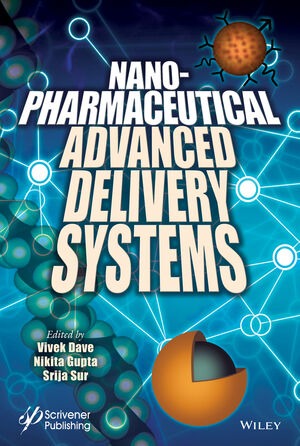
Nanopharmaceutical advanced delivery systems
Provides a single volume covering detailed descriptions about various delivery systems, their principles and how these are put in use for the treatment of multiple diseases. It is divided into four sections where the first section deals with the introduction and importance of novel drug delivery system. Deals with the most advanced drug delivery systems like microbubbles, dendrimers, lipid-based nanoparticles, nanofibers, microemulsions etc., describing the major principles and techniques of the preparations of the drug delivery systems. Elaborates on the treatments of diverse diseases like cancer, topical diseases, tuberculosis etc.

Nanomedicine : Innovations, applications, and breakthroughs in the quest for health and medicine's future
Revolutionizing healthcare, by providing innovative solutions to some of the most challenging issues in medicine. This book provides an in-depth overview of nanoscale materials and devices that are advancing diagnostics, therapeutics, and personalized care in medical field. It focuses on nanomedicine’s impact on vaccine efficacy as well as innovative diagnosis and therapy for various type of cancer while addressing concerns about safety and toxicity. It examines how nanotechnology is enhancing drug delivery by precisely targeting medicines to specific cells or tissues, thereby increasing treatment efficacy with reduced side effects. Explores how nanoparticles are advancing medical imaging for earlier and more accurate disease detection, and how nanosensors allow real-time biomarker monitoring for faster and more reliable diagnoses. Additionally, it explores nanomedicine's role in managing cardiovascular diseases, improving bone health through nano-extracellular vesicles, and regenerative medicine, including ongoing clinical trials and ethical considerations.
Nanomaterials in dental medicine
Presents varied clinical applications of nanomaterials in dentistry ranging from diagnostics to therapeutics. it discusses role of nanomaterials in clinical applications and future needs. Contributors are international luminaries in their respective research area. The topics covered in this book are role of nanomaterials in oral and dental diagnosis, dental disease prevention, pain free dentistry, dental implantology. It also discusses the therapeutic applications of nanoparticles in oral cancer therapy. This book will be a valuable reference for researchers, clinicians, students and professionals working in the areas of nanotechnology and health sciences. It will also be of interest to the students and researchers primarily working in the field of materials science, applied chemistry, applied physics, and biotechnology.

Nanomaterials in clinical therapeutics : Synthesis and applications
Nanotechnology-based applications is a rapidly growing field encompassing a diverse range of disciplines that impact our daily lives. Nanotechnology is being used to carry out large-scale reactions in practically every field of biotechnology and healthcare. The incredible progress being made in these applications is particularly true for the healthcare sector, where they are used in cancer detection and treatment, medical implants, tissue engineering, and so forth. Expansions in this discipline are expected to continue in the future, resulting in the creation of a variety of life-saving medical technology and treatment procedures.

Nanoformulations in Human Health: Challenges and Approaches
This book is an amalgamation of knowledge, experience, and expertise in various aspects of nanotechnology, by experts who are proficient in designing novel nanoformulations that are used in the treatment of various challenging and prevalent diseases. It is an exhaustive compilation of the multi-faceted arena of nanoformulations and the healthcare system that caters to the needs of academicians, scholars, researchers, etc. The most important aspect of the book covers various types of nanoformulations and their applications in the treatment of communicable and non-communicable diseases. Each chapter focuses on a particular nanoformulation as well as a disease including the pathophysiology of the disease, the current treatment modalities of diseases, the role of nanoformulation in treatment and other future aspects and directions for further work. Coverage includes neuropathic pain, colon targeting, nose-to-brain drug delivery, cancer, arthritis and tuberculosis.
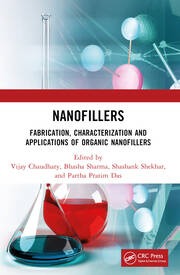
Nanofillers : Fabrication, characterization and applications of organic nanofillers
Explores the modifying effects of various nanofillers on mechanical and physical properties of polymer nanocomposites. Looking at the four basic aspects of processing, characterization, properties, and applications, it analyzes how their features can allow for innovative multifunction within industry. Covering design, production, and manufacture, this book focuses on meeting end-use requirements and the fabrication of materials. The importance of mindful design and the use of an appropriate synthesis method is the primary lens through which theory and practice are discussed. This volume looks at the various synthesis methods available for organic nanofillers and what characterizes them. Properties including mechanical, thermal, electrical, and tribological are thoroughly examined, along with the various computational techniques used to determine them. With important sustainable properties, nanofillers are essential to meeting the increasing demand for biodegradable and environmentally friendly materials. This book details the role nanofillers have to play in sustainability, alongside economic factors such as efficient manufacturing processes.

NanoBiotechnology : BioInspired Devices and Materials of the Future
NanoBioTechnology: BioInspired Devices and Materials of the Future is a groundbreaking text that will assist scientists and students in learning the fundamentals and cutting-edge nature of this new and emerging science. Focusing on materials and building blocks for nanotechnology, leading scientists from around the world share their knowledge and expertise in this authoritative volume. The volume is broken into five sections. The first section presents an overview of nanotechnology and describes the many aspects of the field. Section 2 details biological materials serving as nanotemplates for bottom-up fabrication. Section 3 covers the use of biological macromolecules for electron transfer and computation. Section 4 presents a brief overview of the extensive and rapidly growing field of nanomedicine. Finally, Section 5 details de-novo designed structures and the various approaches different scientific groups take with molecular level training and language

Nanobiosensors : From design to applications
Nanobiosensors - From Design to Applications covers several aspects of biosensors beginning from the basic concepts to advanced level research. It will help to bridge the gap between various aspects of biosensors development technology and applications. It covers biosensors related material in broad spectrum such as basic concepts, biosensors & their classification, biomarkers & their role in biosensors, nanostructures-based biosensors, applications of biosensors in human diseases, drug detection, toxins, and smart phone based biosensors.

Mysteries of English Grammar : A Guide to complexities of the English Language
Despite a history of hundreds of years of research analysing aspects of English grammar, there are still open problems which continue to baffle language researchers today. Such ‘grammar mysteries’ arise for a number of reasons: because the language is changing; because different speakers of the language adhere to distinct norms and thus introduce and maintain variation in the system; because there are differences between the grammar of spoken and written English.

Myosins : A Superfamily of Molecular Motors
Application of state-of-the-art cellular and molecular biological, structural biological, genetic, biochemical and biophysical techniques has provided and continues to provide critical information regarding the structure–function relationship; and the cellular roles of various myosins in organisms as diverse as protozoa, yeast, plants and higher animals. The association of myosins with diseases including neurological disorders, immu- deficiencies, cardiomyopathies, hearing and vision loss testify to the importance of understanding the biochemical properties and cellular roles of myosins. The 16 chapters in this volume summarize the tremendous progress made in studying members of the myosin superfamily in recent years and offer critical insight into what future research will yield.

Myocardial Ischemia : From Mechanisms to Therapeutic Potentials
This book is meant to bridge the gap between original literature and textbook reviews. It brings together investigators of various backgrounds who share their expertise in the biology of myocardial ischemia. Each chapter is a self-contained mini-review, but it will soon become apparent to the reader that there is also a common thread: Molecular and cellular cardiology has never been more exciting than now, but ever more exciting times are yet to come.

Myeloproliferative disorders
Contains a series of contributions from internationally renowned academics with special expertise in one or other diseases which collectively are grouped under the heading myeloproliferative disorders. This term includes Ph-positive chronic myeloid leukemia as well as the various Ph-negative variants.

Mycorrhiza : State of the Art, Genetics and Molecular Biology, Eco-Function, Biotechnology, Eco-Physiology, Structure and Systematics
This third updated and revised edition emphasises strongly on genetics and molecular biology. It contains new chapters, which are written by the leading experts in their respective field of knowledge and expertise.Mycorrhizas are symbioses between fungi and the roots of higher plants. As more than 90% of all known species of plants have the potential to form mycorrhizal associations, the productivity and species composition and the diversity of natural ecosystems are frequently dependent upon the presence and activity of mycorrhizas. The biotechnological application of mycorrhizas is expected to promote the production of food while maintaining ecologically and economically sustainable production systems.
