



الصفحة 8
الصفحة 8

Corporate fraud across the globe
It is expected that uncovered corporate fraud negatively affects the public reputation, and financial performance of fraudulent firms. However, what is of more importance for fraudulent firms is how to regain the trust of customers, investors, and other stakeholders, as this impacts the long-term sustainability of businesses. Operational strategies, including reform, provide an effective channel for a fraudulent firm’s business sustainability yet this notion remains unexplored in the literature.

Contemporary issues in sustainable finance : Exploring performance, impact measurement and financial inclusion
This book sheds light on contemporary challenges in sustainable finance, addressing two key perspectives: measurement and performance, and products and business models. In particular, the volume examines theoretically and empirically the relations between business models and non-financial impact, both environmental and social.

Contemporary Issues in Luxury Brand Management
Provides a comprehensive overview of the key themes surrounding luxury brand management and the core issues faced by luxury firms today. The luxury industry has undergone a series of dynamic changes in the past twenty years. Economic trends, digital transformation, and changing consumer habits are creating a new competitive landscape where traditional strategies will not necessarily provide continued growth and profitability. Approaching luxury from a realistic brand management perspective, this book works step-by-step through a typical luxury course structure, covering sustainability, heritage, emerging brands, digital marketing and analytics, curation, intellectual property, and start-ups.
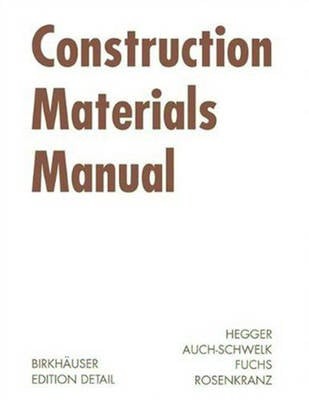
Construction Materials Manual
Until now, the few existing systematic texts on construction materials have primarily been directed at building engineers. An overview for architects, which also considers the importance of construction materials in the sensory perception of architecture—including tactile qualities, smell, color, and surface structure—has not been available. aims equally at the questions and perspectives of architects and building engineers, it will bring together all of the above-mentioned viewpoints. It addresses fundamental questions of sustainability, including life-span, environmental impact, and material cycles, while also presenting material innovations. All of the principal conventional and innovative construction materials are comprehensively documented, with attention to their production, manufacture, fabrication, treatment, surfaces, connections, and characteristics.
Conservation in the 21st century : Gorillas as a case study
this book is essential reading for primatologists, biologists, and conservationists searching for both a current assessment of the gorilla’s conservation status and, importantly, for ideas and tools that show promise of halting or reversing population declines and putting us on a path to achieving a stable, long-term co-existence of human and wildlife populations.

Concrete floors and slabs ; Proceedings of the International Seminar held at the University of Dundee, Scotland, UK on 5–6 September 2002
Concrete is a global material that underwrites commercial wellbeing and social development. There is no substitute that can be used on the same engineering scale and its sustainability, expolitation and further development are imperatives to creating and maintaing a healthy economy and environment worldwide. The pressure for change and improvement of performance is relentless and necessary. Concrete must keep evolving to satisfy the increasing demands of all its users.

Conceptualizing Environmental Citizenship for 21st Century Education
This book is about the development of a common understanding of environmental citizenship. It conceptualizes and frames environmental citizenship taking an educational perspective. Organized in four complementary parts, the book first explains the political, economic and societal dimensions of the concept.

Conceptual Landscapes : Fundamentals in the Beginning Design Process
Explores the dilemma faced in the early moments of design thinking through a gradient of work in landscape and environmental design media by both emerging and well-established designers and educators of landscape architecture. It questions where and, more importantly, how the process of design starts. Deconstructs the steps of conceptualizing design in order to reignite pedagogical discussions about timing and design fundamentals, and to reveal how the spark of an idea happens – from a range of unique perspectives. Through a careful arrangement of visual essays that integrate analog, digital, and mixed-media works and processes, the book highlights differences between diverse techniques and triggers debate between design, representation, technology, and creative culture in the field.

Computational Structural Concrete : Theory and Applications
Concrete is by far the most used building material due to its advantages: it is shapeable, cost-effective and available everywhere. Combined with reinforcement it provides an immense bandwidth of properties and may be customized for a huge range of purposes. Thus, concrete is the building material of the 20th century. To be the building material of the 21th century its sustainability has to move into focus. Reinforced concrete structures have to be designed expending less material whereby their load carrying potential has to be fully utilized.

Collaborative curriculum design for sustainable innovation and teacher learning
This book provides insight into what it takes to actively involve teachers in the curriculum design process. It examines different aspects of teacher involvement in collaborative curriculum design, with specific attention to its implications for sustainable curriculum innovation and teacher learning. Divided into six sections, the book starts out by introducing the notion of collaborative curriculum design and discusses its historical and theoretical foundations. It describes various approaches commonly adopted to actively involve teachers in the (co-)design of curriculum materials. Sections two and three provide examples of what key phases in the curriculum design process - such as needs analysis, design and development, and implementation - look like across various collaborative curriculum design projects. Section four reports on the impact of collaborative curriculum design on student learning, teacher practices, teacher professional growth, and institutional change. Building on the research evidence about the outcomes of collaborative curriculum design, section five focuses on sustainability, scaling-up and curriculum leadership issues, which are key to the continuation and further evolution of curriculum innovations. Future perspectives are addressed in section six with emphasis on the infrastructure of a sustainable curriculum innovation.

Co-Creativity and engaged scholarship : Transformative methods in social sustainability research
This book explores creative and collaborative research methods within the social sustainability sciences. The term co-creativity is used in reference to both individual methods and overarching research approaches that, through socially inclusive forms of action and reflection, stimulate alternative understandings of why and how things are, and how they could be. Supported by a wide-ranging series of in-depth—including chapters on militant research and guerrilla narrative, decolonial participative approaches, appreciate inquiry and care-ethics, deep-mapping, photo-voice, community-arts, digital participatory mapping, and living labs—the edited collection critically reviews the potential of creative, collaborative and transdisciplinary forms of research praxis to nurture just and transformative processes of change.

Coastal architectures and politics of tourism : Leisurescapes in the global sunbelt
Offers a critical and complicated picture of how leisure tourism connected the world after the World War II, transforming coastal lands, traditional societies, and national economies in new ways. Analyzes selected case studies of architectures and landscapes around the world, contextualizing them within economic geographies of national development, the geopolitics of the Cold War, the legacies of colonialism, and the international dynamics of decolonization. Postwar leisure tourism evokes a rich array of architectural spaces and altered coastal landscapes, which is explored in this collection through discussions of tourism developments in the Mediterranean littoral, such as Greece, Turkey, and southern France, as well as compelling analyses of Soviet bloc seaside resorts along the Black Sea and Baltic coasts, and in beachscapes and tourism architectures of western and eastern hemispheres, from Southern California to Sri Lanka, South Korea, and Egypt.

Mathematical Modeling of Concrete Mixture Proportioning
It puts together an understanding of the appropriate principles of ensuring performance and sustainability of concrete. Broadly subdivided into three parts, first part contains the fundamental aspects introducing the constituent materials, the concepts of concrete mixture designs and the mathematical formulations of the various parameters involved in these designs. The second part is dedicated to discussing approaches and recommendations of American, British and European bodies related to mathematical modelling. Lastly, it discusses perceptions and prescriptions towards both the performance assessment and insurance of the resulting concrete compositions.
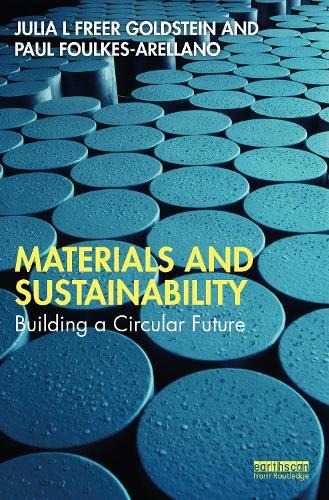
Materials & sustainability building a circular future
Examines sustainable manufacturing, from the extraction of materials to processing, use, and disposal, and argues that significant changes in all of the above are needed for the world to progress toward a more circular economy. Materials and processing methods are usually chosen with performance as the key metric.
Material Flow Management : Improving Cost Efficiency and Environmental Performance
The implementation of material flow management offers enterprises a high potential for realizing new economic competitive advantages. The eco-efficient optimization of material flows aims at reducing costs while simultaneously achieving long-term sustainability with regard to ecological and societal aspects. Knowledge of existing methods and the latest trends is a key prerequisite for successfully implementing, refining and disseminating material flow management approaches.
Marketing ; 16th ed.
Expanded coverage on social responsibility and sustainability topics such as privacy, social entrepreneurship, diversity, equity, inclusion, and environmental impact. The 16e continues its real-world focus with “Marketing Matters,” “Making Responsible Decisions,” “Insights about me,” “Applying Marketing Metrics,” “Integration of the Customer Journey” and “Building your Marketing Plan” features throughout. Key marketplace changes related to the pandemic such as curbside pick-up, touchless payment, and delivery have been incorporated.
Mapping Sustainability : Knowledge e-Networking and the Value Chain
Our underlying objectives are to contribute to the provision, mana- ment, and sharing of knowledge, and to enhance the value of knowledge and its uses by different constituencies in diverse contexts and at different stages of development. The central theme of this book, connecting its different parts, is about ways of transcending critical barriers to the effective uses of knowledge and e-networking. Of special relevance is the development of new approaches to the provision and transmission – from local sources to global networks and from global sources to local networks. In many ways, this is a book of theory and methods, as well as policy and performance.

Manufacturing Systems and Technologies for the New Frontier ; The 41st CIRP Conference on Manufacturing Systems May 26–28, 2008, Tokyo, Japan
Manufacturing systems and technology stand on a new frontier, facing up to the challenges posed by the ever-evolving requirements of global sustainability. Value-creation is taking its place alongside more traditional production-process priorities. Collected here are over a hundred papers concerned with all manner of new directions in manufacturing systems and given at the 41st CIRP Conference on Manufacturing Systems. The high-quality material presented in this volume includes reports of work from both scientific and engineering standpoints and several invited and keynote papers addressing the current cutting edge and likely future trends in manufacturing systems.
Managing Sustainability : Perspectives From Retailing and Services
Companies and policy makers are prioritizing environmental, social, and governance goals as part of their strategies. Academic research has started to focus on these issues, but many important matters require deeper investigation and reflection, especially in specific sectors. This book focuses on the sustainability issues within the retailing and services sectors.
Managing Socio-ecological Production Landscapes and Seascapes for Sustainable Communities in Asia : Mapping and Navigating Stakeholders, Policy and Action
This book presents up-to-date analyses of community-based approaches to sustainable resource management of SEPLS (socio-ecological production landscapes and seascapes) in areas where a harmonious relationship between the natural environment and the people who inhabit it is essential to ensure community and environmental well-being as well as to build resilience in the ecosystems that support this well-being.
