



الصفحة 8
الصفحة 8

Fadfada
Sharing personal problems and true feeling on social media has a lot of fears and is not likable nowadays, because of bullying, shaming, and making fun of the user by other users, Fadfada is a multi-platform social networking service, that aims to give the users the ability to share their problems or feeling via written newsfeed (posts) or videos (stories) that had an impact on their psychological health without revealing their true identity, by putting a mask on their faces and changing their voices after recording the story. In addition to extracting features from posts and stories to match users based on it.

Explainable AI with Python
This book provides a full presentation of the current concepts and available techniques to make “machine learning” systems more explainable. The approaches presented can be applied to almost all the current “machine learning” models: linear and logistic regression, deep learning neural networks, natural language processing and image recognition, among the others.

Evolving Connectionist Systems : The Knowledge Engineering Approach
Evolving Connectionist Systems is aimed at all those interested in developing and using intelligent computational models and systems to solve challenging real world problems in computer science, engineering, bioinformatics and neuroinformatics. The book challenges scientists and practitioners with open questions about future creation of new information models inspired by Nature. This edition includes new methods for adaptive, knowledge-based learning, such as online incremental feature selection, spiking neural networks, transductive neuro-fuzzy inference, adaptive data and model integration, cellular automata and artificial life systems, particle swarm optimisation, ensembles of evolving systems, and quantum inspired neural networks. New applications to gene and protein interaction modelling, brain data analysis and brain model creation, computational neuro-genetic modelling, adaptive speech, image and multimodal recognition, language modelling, adaptive robotics, modelling dynamic financial and socio-economic systems, and ecological modelling, are covered. An important new feature of the book is the attempt to connect different structural and functional levels of a complex, intelligent system, looking for inspiration from functional relationships in natural systems, such as the genetic and the brain activity.
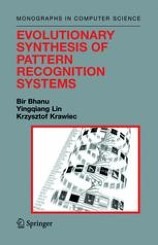
Evolutionary Synthesis of Pattern Recognition Systems
Evolutionary Synthesis of Pattern Recognition Systems presents novel effective approaches based on evolutionary computational techniques, such as genetic programming (GP), linear genetic programming (LGP), coevolutionary genetic programming (CGP) and genetic algorithms (GA) to automate the synthesis and analysis of object detection and recognition systems. The book’s concepts, principles, and methodologies will enable readers to automatically build robust and flexible systems—in a systematic manner—that can provide human-competitive performance and reduce the cost of designing and maintaining these systems. Its content covers all key aspects of object recognition: object detection, feature selection, feature discovery, object recognition, domain knowledge. Basic knowledge of programming and data structures, and some calculus, is presupposed.ing the book’s novel ideas
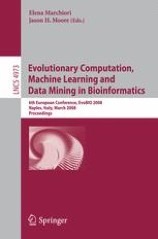
Evolutionary computation, machine learning and data mining in bioinformatics ; 6th European Conference, EvoBIO 2008, Naples, Italy, March 26-28, 2008. Proceedings
The feld of bioinformatics has two main objectives: the creation and main- nance of biological databases, and the discovery of knowledge from life sciences data in order to unravel the mysteries of biological function, leading to new drugs and therapies for human disease. Life sciences data come in the form of biological sequences, structures, pathways, or literature. One major aspect of discovering biological knowledge is to search, predict, or model specifc infortioninagivendatasetinorderto generate new in teresting knowledge.Computer science methods such as evolutionary computation, machine learning, and data mining all have a great deal to ofer the feld of bioinformatics.

Evaluation of Text and Speech Systems
Provides an overview of the state-of-the-art and best practice in several sub-fields of evaluation of text and speech systems and components. The evaluation aspects covered include speech and speaker recognition, speech synthesis, animated talking agents, part-of-speech tagging, parsing, and natural language software like machine translation, information retrieval, question answering, spoken dialogue systems, data resources, and annotation schemes. With its broad coverage and original contributions this book is unique in the field of evaluation of speech and language technology.

Environmental Security in Harbors and Coastal Areas : Management Using Comparative Risk Assessment and Multi-Criteria Decision Analysis
This book explores the challenges facing coastal areas during the next few decades and the difficult decisions needed to prevent a repeat of the past. Establishing, maintaining or enhancing a sense of environmental security in different coastal regions and improving the management of critical infrastructure will require (i) matching human demands with available environmental resources; (ii) recognition of environmental security threats and infrastructure vulnerabilities; and, (iii) identification of the range of available options for preventing and/or minimizing natural disasters, technological failures, and/or terror actions. This book emphasizes beliefs that the convergence of seemingly disparate viewpoints and often uncertain and limited information is possible only by using one or more available risk assessment methodologies and decision-making tools such as multi-criteria decision analysis (MCDA).

Enterprise Information Systems V
ICEIS focuses on real world applications and aims at bringing together researchers, engineers and practitioners interested in the advances and business applications of information systems. As in previous years, ICEIS’2003 held four simultaneous tracks covering different aspects of enterprise computing: Databases and Information Systems Integration, Artificial Intelligence and Decision Support Systems, Information Systems Analysis and Specification and Software Agents and Internet Computing. Although ICEIS’2003 received 546 paper submissions from over 50 countries, only 80 were accepted as full papers and presented in 30-minutes oral presentations. With an acceptance rate of 15%, these numbers demonstrate the intention of preserving a high quality forum for future editions of this conference. From the articles accepted as long papers for the conference, only 32 were selected for inclusion in this book Additional keynote lectures, tutorials and industrial sessions were also held during ICEIS’2003, and, for the first time this year, the 1st Doctoral Consortium on Enterprise Information Systems gave PhD students an opportunity to present their work to an international audience of experts in the field of information systems.

Enhanced Methods in Computer Security, Biometric and Artificial Intelligence Systems
"Methods of Artificial Intelligence and Intelligent Agents" contains 13 contributions analyzing such areas of AI as fuzzy set theory, predicate logic, neural networks, clustering, data mining and others. It also presents applications of AI as possible solutions for problems like firm bankruptcy, soil erosion, flight control and others. "Information Technology Security" covers three important areas of security engineering in information systems: software security, public key infrastructure and the design of new cryptographic protocols and algorithms. "Biometric Systems" comprises 11 contributions dealing with face picture analysis and recognition systems. This chapter focuses on known methods of biometric problem solution as well as the design of new models.

Energy minimization methods in computer vision and pattern recognition ; 6th International Conference, EMMCVPR 2007, Ezhou, China, August 27-29, 2007, Proceedings
Contains critical issues of representation, learning, and inference. Important new themes include pr- abilistic grammars, image parsing, and the use of datasets with ground-truth to act as benchmarks for evaluating algorithms and as a way to train learning algorithms. Other themes include the development of efficient inference algorithms using advanced techniques from statistics, computer science, and applied mathematics. This book makes no distinction between oral and poster papers. It also contiants sections on al- rithms, applications, image parsing, image processing, motion, shape, and thr- dimensional processing.

Energy minimization methods in computer vision and pattern recognition ; 5th International Workshop, EMMCVPR 2005, St. Augustine, FL, USA, November 9-11, 2005, Proceedings
Constitutes the refereed proceedings of the 5th International Workshop on Energy Minimization Methods in Computer Vision and Pattern Recognition, EMMCVPR 2005, in St Augustine, FL, USA, in November 2005. This book consists of 24 papers and 18 poster papers organized in topical sections on different approaches.
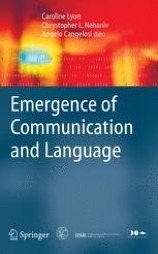
Emergence of Communication and Language
This volume brings together studies from diverse disciplines, showing how they can inform and stimulate each other. It includes work in linguistics, psychology, neuroscience, anthropology and computer science. New empirical work is reported on both human and animal communication, using some novel techniques that have only recently become viable. A principal theme is the importance of studies involving artificial agents, their contribution to the body of knowledge on the emergence of communication and language, and the role of simulations in exploring some of the most significant issues. A number of different synthetic systems are described, demonstrating how communication can emerge in natural and artificial organisms. Theories on the origins of language are supported by computational and robotic experiments. Worldwide contributors to this volume include some of the most influential figures in the field, delivering essential reading for researchers and graduates in the area, as well as providing fascinating insights for a wider readership.

Embedded image processing on the TMS320C6000™ DSP : Examples in code composer studio™ and MATLAB
the author also explains the uses and rationale behind a plethora of technologies, most notably several industry-standard and essential TI developer technologies, including the Code Composer Studio™ IDE. Highlights include numerous debugged MATLAB and C/C++ Visual Studio prototype applications and efficient C implementations of real-world algorithms tested on both the C6416 DSK and C6701 EVM development platforms

Ecological Informatics : Scope, Techniques and Applications
Ecological Informatics promotes interdisciplinary research between ecology and computer science on elucidation of principles of information processing in ecosystems, ecological sustainability by informed decision making, and bio-inspired computation. The 2nd edition of the book consolidates the scope, concepts, and techniques of this newly emerging discipline by a new preface and additional chapters on cellular automata, qualitative reasoning, hybrid evolutionary algorithms and artificial neural networks. It illustrates numerous applications of Ecological Informatics for aquatic and terrestrial ecosystems, image recognition at micro- and macro-scale as well as computer hardware design.

Earthquake alert with smartwatch = تنبيه الزلازل باستخدام الساعة الذكية
After the recent events and earthquakes that affected the region, resulting in the deaths of many individuals due to the lack of timely emergency response, the idea for this project emerged Earthquake Alert with Smartwatch. Initially, our application gathers information about the user, such as age, family members, and any existing medical conditions. In the event of an earthquake, the application sends an alert to the user. It receives earthquake information, such as ‘magnitude, time, location…’ from United States Geological Survey “USGS” through an API. If the user is within the geographical area affected by the earthquake, the application will assist the Smartwatch in calculating vital signs such as ‘heart rate and blood pressure’. Additionally, there is another artificial intelligence model that receives the user's audio recordings and converts them into written texts. All this information, along with the user's geographical location, will be sent to the nearest emergency point for the purpose of aiding those individuals trapped under the rubble.

Early Aspects: Current Challenges and Future Directions ; 10th International Workshop, Vancouver, Canada, March 13, 2007, Revised Selected Papers
Traditionally, aspect-oriented software development (AOSD) has focused on the implementation phase of the software lifecycle: aspects are identified and captured mainly in code. Therefore, most current AOSD approaches place the burden for aspect identification and management on the programmer working at low levels of abstraction. However, aspects are often present well before the implementation phase, such as in domain models, requirements and software architecture. Identification and capture of these early aspects ensure that aspects related to the problem domain (as opposed to merely the implementation) will be appropriately captured, reasoned about and available. This offers improved opportunities for early recognition and negotiation of trade-offs and allows forward and backward aspect traceability. This makes requirements, architecture, and implementation more seamless, and allows a more systematic application of aspects.

DSP for In-Vehicle and Mobile Systems
DSP for In-Vehicle and Mobile Systems is focused on digital signal processing strategies for improving information access, command and control, and communications for in-vehicle environments. It is expected that the next generation of human-to-vehicle interfaces will incorporate speech, video/image, and wireless communication modalities to provide more comfortable and safer driving ambiance

Document Analysis Systems VII ; 7th International Workshop, DAS 2006, Nelson, New Zealand, February 13-15, 2006, Proceedings
This book constitutes the refereed proceedings of the 7th International Conference on Document Analysis Systems, DAS 2006, held in Nelson, New Zealand, in February 2006.

DNA Binders and Related Subjects
advances in technology and the application of new methods to outstanding problems have played a major part in the development of ideas about drug-nucleic acid recognition. The field has undergone an explosive diversification as wider and wider problems became accessible to study using the new ideas and techniques. This volume reflects that diversification by offering accounts of selected areas that illustrate recent advances in the study of ligand–nucleic acid binding over disparate areas of the subject. There are chapters dealing specifically with the invention and application of new methodology, and a particularly thoughtful essay on the interpretation of X-ray diffraction data which may not be as straightforward as is often imagined. Other chapters illustrate the diversity and complexity of drug-DNA binding from several perspectives, referring to particular groups of related compounds or the potential attractions of the less-preferred DNA major groove as a target for nucleotide sequence recognition by ligands.

Discrete geometry for computer imagery ; Vol. 3429 ; 12th International Conference, DGCI 2005, Poitiers, France, April 11-13, 2005, Proceedings
This book constitutes the refereed proceedings of the 12th International Conference on Discrete Geometry for Computer Imagery, DGCI 2005, held in Poitiers, France in April 2005. The 36 revised full papers presented together with an invited paper were carefully reviewed and selected from 53 submissions. The papers are organized in topical sections on applications, discrete hierarchical geometry, discrete tomography, discrete topology, object properties, reconstruction and recognition, uncertain geometry, and visualization.
