



الصفحة 8
الصفحة 8

Models in Software Engineering ; Workshops and Symposia at MoDELS 2006, Genoa, Italy, October 1-6, 2006, Reports and Revised Selected Papers
This book constitutes the thoroughly refereed post-proceedings of 11 international workshops held as satellite events of the 9th International Conference on Model Driven Engineering Languages and Systems, MoDELS 2006, in Genoa, Italy, in October 2006 (see LNCS 4199). The 32 revised full papers were carefully selected for inclusion in the book.

Models for Discrete Longitudinal Data
This book provides a comprehensive treatment on modeling approaches for non-Gaussian repeated measures, possibly subject to incompleteness. The authors consider a variety of extensions, such as models for multivariate longitudinal measurements, random-effects models with serial correlation, and mixed models with non-Gaussian random effects. They sketch the general principles for how to deal with the commonly encountered issue of incomplete longitudinal data. The authors critique frequently used methods and propose flexible and broadly valid methods instead, and conclude with key concepts of sensitivity analysis. The book shows how the different approaches can be implemented within the SAS software package. The text is organized so the reader can skip the software-oriented chapters and sections without breaking the logical flow.

Models for computer aided tolerancing in design and manufacturing ; Selected conference papers from the 9th CIRP International Seminar on Computer-aided tolerancing, held at Arizona State University, Tempe, Arizona, USA, 10-12 April, 2005
Computer Aided Tolerancing (CAT) is an important topic in any field of design and production where parts move relative to one another and/or are assembled together. Geometric variations from specified dimensions and form always occur when parts are manufactured. Improvements in production systems can cause the amounts of the variations to become smaller, but their presence does not disappear. To shorten the time from concept to market of a product, it has been increasingly important to take clearances and the tolerancing of manufacturing variations into consideration right from the beginning, at the stage of design. Hence, geometric models are defined that represent both the complete array of geometric variations possible during manufacture and also the influence of geometry on the function of individual parts and on assemblies of them.
Modellistica numerica per problemi differenziali = Numerical modeling for differential problems
This text introduces the basic concepts for the numerical modeling of partial differential problems. We consider the classic elliptic, parabolic and hyperbolic linear equations, but also other equations, such as those of diffusion and transport, of Navier-Stokes, and the conservation laws, and we provide numerous physical examples underlying these equations. Then we analyze numerical resolution methods based on finite elements, finite differences, finite volumes, spectral methods and domain decomposition methods. In particular, the algorithmic and computer implementation aspects are discussed and various easy-to-use programs are provided.
Modellistica Numerica per Problemi Differenziali = Numerical Modeling for Differential Problems
This text introduces the fundamental concepts for the numerical modeling of partial differential problems. We consider the classic linear elliptic, parabolic and hyperbolic equations, but also other equations, such as those of diffusion and transport, of Navier-Stokes, and the conservation laws. Numerous physical examples underlying these equations are provided, their main mathematical properties are studied, then numerical resolution methods based on finite elements, finite differences, finite volumes and spectral methods are proposed and analyzed. In particular, the algorithmic and computer implementation aspects are discussed and some easy-to-use programs in C ++ language are provided. The text does not presuppose an advanced mathematical knowledge of partial differential equations: the strictly indispensable concepts in this regard are reported in the Appendix. The volume is therefore suitable for students of scientific degree courses (Engineering, Mathematics, Physics, Chemistry, Information Sciences) and recommended for researchers from the academic and extra-academic world who want to approach this interesting branch of applied mathematics.

Modelling, State Observation and Diagnosis of Quantised Systems
The book concerns quantised systems which emerge from continuous-variable systems by quantising the values of all signals. It is shown how this leads to an abstract system description by means of a stochastic automaton. Based on stochastic automata, new methods for the solution to state observation and fault diagnostic problems are derived. The methods are extended to networks of stochastic automata, allowing component-oriented modelling and, thus, to deal with complex systems. The practical applicability and usefulness of the approach is shown at several examples.

Modelling, Monitoring and Diagnostic Techniques for Fluid Power Systems
Modelling, Monitoring and Diagnostic Techniques for Fluid Power Systems covers the background theory of fluid power and indicates the range of concepts necessary for a modern approach to condition monitoring and fault diagnosis in a readable and understandable fashion. The theory is constantly leavened by 15 years' worth of practical measurements by the author, working in association with major fluid power companies, and real industrial case studies – hot-strip-mill monitoring in conjunction with Corus p.l.c. being just one example. Comprising four parts, it provides: • an introduction to component behaviour. • a guide to the modelling methods employed for circuit analysis. • methods for doing condition monitoring. • common faults and breakdowns.

Modelling, Analysis and Optimization of Biosystems
Mathematical models in biology and medicine cannot be based on natural laws as it is the case with physics and chemistry. This is due to the fact that biological and medical processes are concerned with living organisms. Mathematical models, however, can be used as a language by which certain aspects of biological or medical processes can be expressed. In general, several mathematical models can be designed in order to describe a biological or medical process and there is no unique criterion which model gives the best description. This book presents several of these models and shows applications of them to different biological and medical problems. The book shows that operations research expertise is necessary in respect to modeling, analysis and optimization of biosystems.

Modelling the dispersion of radionuclides in the marine environment : An introduction
This book is a practical guide to the subject of numerical modelling of radioactivity dispersion in the marine environment. Thus, the techniques and numerical procedures required are explained in detail, with the aim of enabling the reader to build a real mathematical model. The book covers basic concepts and techniques, such as solving the advection-diffusion equation in a simple 1D form, as well as the most recent developments (full 3D models for non-conservative radionuclides including chemical reactions and speciation). A chapter is dedicated to the basic hydrodynamic modelling that is always required to simulate the dispersion of tracers in the sea; Eulerian and Lagrangian modelling techniques are also described. A chapter describes sensitivity and uncertainty analysis, the final stage in modelling works. A review on some published radionuclide dispersion models is also included.

Modelling of Powder Die Compaction
In particular, the book presents a number of case studies that have been developed to test compaction models. Full details of the data required for input to compaction models of these case studies is given, together with a survey of the techniques used to generate the data. Details are also given of methods to produce and assess components for validation of die compaction models. The inclusion of information on case studies then provides a reference for the testing and validation of compaction models.

Modelling in Mechanical Engineering and Mechatronics : Towards Autonomous Intelligent Software Models
Modelling in Mechanical Engineering and Mechatronics presents a model-centred approach focusing on distributed development and use of autonomous intelligent software models, particularly the efficiency of the models, and their interaction and integration into distributed autonomous intelligent systems. In order to systematise the available knowledge, a domain ontology is presented; a subset of which is used to create a modelling theory based on knowledge and experience in the areas of software engineering, mechanical engineering and mechatronics. This holistic view of modelling explains the purpose and the essence of modelling, as well as the benefits that are to be expected. It discusses the relations to other branches of engineering and science and as a result, it demonstrates strategies, methods and tools for unleashing the full power of modelling.

Modelling Distributed Systems
Process algebras are languages for the description of elementary parallel systems and are used to study the behavioural properties of distributed systems, but they often lack the ability to handle data. This textbook guides students through algebraic specification and verification of distributed systems, and some of the most prominent formal verification techniques.
Modelling Autonomic Communications Environments ; 3rd IEEE International Workshop, MACE 2008, Samos Island, Greece, September 22-26, 2008. Proceedings
Research and development of autonomics have come a long way, and we are delighted to present the proceedings of the 3rd IEEE International Workshop on Modelling Autonomic Communications Environments (MACE 2008).Asin the last two years, this workshopwasheld aspart of Manweek, the International Week on Management of Networks and Services, which took place on the lovely Island of Samos in Greece .MACE started as anexperimentin2006,andcreatedasmallcommunitythat nowfnds it self attracted backeachyearby afeeling ofexcitement-thatthere is something new going on. Certainly, MACE is not as shiny or practiced as other well-known conferences and workshops, but we consider this a feature of the workshopitself.

Modelling and Simulation : Exploring Dynamic System Behaviour
Modelling and Simulation: Exploring Dynamic System Behaviour provides the reader with a balanced and integrated presentation of the modelling and simulation activity for both Discrete Event Dynamic Systems (DEDS) and Continuous Time Dynamic Systems (CTDS). This book presents the fundamentals necessary to understand the many important facets of the modeling and simulation methodology.
Modelling and Reasoning with Vague Concepts
This volume outlines a formal representation framework for modelling and reasoning with vague concepts in Artificial Intelligence. The new calculus has many applications, especially in automated reasoning, learning, data analysis and information fusion. This book gives a rigorous introduction to label semantics theory, illustrated with many examples, and suggests clear operational interpretations of the proposed measures. It also provides a detailed description of how the theory can be applied in data analysis and information fusion based on a range of benchmark problems.
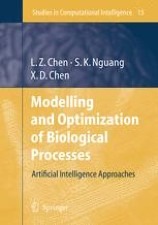
Modelling and Optimization of Biotechnological Processes : Artificial Intelligence Approaches
The book begins with a historical introduction to the field of bioprocess control based on artificial intelligence approaches, followed by two chapters covering the optimization of fed-batch culture using genetic algorithms. Online biomass soft-sensors are constructed in Chapter 4 using recurrent neural networks. The bioprocess is then modelled in Chapter 5 by cascading two soft-sensor neural networks. Optimization and validation of the final product are detailed in Chapters 6 and 7. The general conclusions are drawn in Chapter 8.

Modelling and Identification with Rational Orthogonal Basis Functions
Models of dynamical systems are of great importance in almost all fields of science and engineering and specifically in control, signal processing and information science.

Modelling and Control of Dynamical Systems : Numerical Implementation in a Behavioral Framework
This book reviews known topics of the Behavioral Approach and offers new theoretic results with the advantage of including control algorithms implemented numerically in the computer. In addition, issues of numerical analysis are also included. The programs and algorithms are MATLAB based.

Modelli Dinamici Discreti = Discrete Dynamic Models
Discrete mathematical modeling is one of the driving factors in modern mathematics research, and has played a role of synthesis between different disciplines, becoming a tool for qualitative and quantitative analysis in applied sciences. This volume provides an introduction to the analysis of discrete dynamic systems, following a modeling approach. An examination of a wide range of examples, models, and motivations drawn from Biology, Demography, Engineering and Economics, is followed by the presentation of the tools for the study of linear and non-linear scalar dynamical systems, with particular attention to stability analysis. The linear difference equations are studied in detail and an elementary introduction to the Z and DFT transforms is provided. One chapter is devoted to the study of bifurcations and chaotic dynamics. One-step vector dynamical systems and the applications of Markov chains are the subject of three chapters.

Modélisation et statistique spatiales = Spatial modeling and statistics
Spatial statistics are undergoing significant development due to their use in many fields: earth sciences, environment and climatology, epidemiology, econometrics, image analysis, etc. This book presents the main spatial models used as well as their statistics for the three types of data: geostatistics (observation on a continuous domain), data on a discrete network, point data. The objective is to present in a concise but mathematically complete way the most classical models (second order and variogram; software model and Gibbs-Markov field; point processes) as well as their simulation by MCMC algorithm. Then comes the presentation of statistical tools useful for their study.
