



الصفحة 8
الصفحة 8

Interphases and Mesophases in Polymer Crystallization I
Polyethylene forms a two-dimensional hexagonal phase, stable at 3 GPa depending on molecular length, which in recent years has been claimed to intervene in crystallization prior to the formation of the usual orthorhombic phase even at atmospheric pressure. This claim is evaluated and shown to be without substance. There is very little evidence that the theoretical possibility of thin lamellae being more stable in the hexagonal phase than the orthorhombic at atmospheric pressure, if the former has sufficiently low fold surface free energy, does occur in practice. But the existence of single crystals of the orthorhombic phase unambiguously shows that they did not have a hexagonal precursor; that would have made them threefold twins. The overwhelming mass of evidence is that orthorhombic and hexagonal phases crystallize independently in accordance with the phase diagram and kinetic competition during growth, as has been understood since the hexagonal phase was discovered.

Internal friction in metallic materials : A handbook
This book is a unique collection of experimental data in the field of internal friction, anelastic relaxation, and damping properties of metallic materials. It reviews virtually all anelastic relaxation phenomena ever published, and also most of the internal friction effects based on other types of dissipation of mechanical (elastic) energy. Furthermore, the reader is also supplied with explanations of the basic physical mechanisms of internal friction, a summary of typical effects for different groups of metals, and more than 2000 references to original papers.

Intermolecular Forces and Clusters II
This slim volume, contains papers written by leading researchers of intermolecular forces and clusters in honor of Anthony Stone. Taken together, the articles provide an accurate snapshot of current work on selected aspects of intermolecular forces and clusters that are primarily, but not exclusively, theoretical, Scientists and students interested in pursuing research on intermolecular forces and/or clusters would benefit

Intermolecular Forces and Clusters I
the present volume is a collection of reviews, here intended to describe the present state-of-the-art in the construction and use of intermolecular force fields. In particular, this is Part I of a two-part collection dedicated to Anthony J. Stone, a pioneer in both high-level ab initio quantum chemistry and the theory and practice of intermolecular forces. ...

Interfacial Processes and Molecular Aggregation of Surfactants
Given the enormous interest in surface phenomena in areas ranging from materials science to applications in life science, this volume is a very timely addition to the literature. Emphasis is on surfactants mediating interfacial and molecular aggregation phenomena, and the following topics are reviewed in particular: dissolution rates, equilibrium adsorption, mixing rules, and spreading on a solid surface of surfactants, as well as the role of surfactants in mediating a range of processes, such as the fabrication of various nanomaterials.

Interfacial Nanochemistry : Molecular Science and Engineering at Liquid-Liquid Interfaces
The presence of liquid-liquid interface means that real liquids are far from ideal liquids that must be miscible with any kinds of liquids and have no interface. Thus it can be said that the non-ideality of liquids might generate the liquid-liquid interface indeed and that biological systems might be generated from the non-ideal interface. The liquid-liquid interface has been, therefore, studied as a model of biological membrane. From pairing two-phases of gas, liquid and solid, nine different pairs can be obtained, which include three homo-pairs of gas-gas, liquid-liquid and solid-solid pairs. The gas-gas interface, however, is practically no use under the ordinary conditions. Among the interfaces produced by the pairing, the liquid-liquid interface is most slippery and difficult to be studied experimentally in comparison with the gas-liquid and solid-liquid interfaces, as the liquid-liquid interface is flexible, thin and buried between bulk liquid phases. Therefore, in order to study the liquid-liquid interface, the invention of innovative measurement methods has a primary importance.

Intellectual Property in the Food Technology Industry : Protecting Your Innovation
Considering the effort and funding devoted to a company's success, understanding Intellectual Property rights patents, trade secrets, trademarks, and licensing is essential. Establishing appropriate internal policies from the outset can prevent companies from learning a costly and painful lesson in the courtroom. With Intellectual Property in the Food Technology Industry, currently the only book of its kind focusing specifically on the food industry, one will learn what to consider throughout the various creative phases of a product's lifespan from initial research and development initiatives through post-production.

Integrated Reaction and Separation Operations : Modelling and experimental validation
The book presents the latest developments in simulation of integrated processes as well as new methods of process synthesis and process control. It shows details of experimental approaches for model validation, determining of model parameters and measurement techniques. The combination of sophisticated modelling, optimisation methods and experimental results has not ben published up to now. The book gives deep insights into the overall evaluation of integrated processes as well as development of methods for a systematic design and optimisation of integrated reaction and separation processes. Potentials for process integration and the technical as well as economic limitations have been identified. The book covers several case studies of reactive distillation, reactive extraction, reactive gas-adsorption and chromatographic reactors which have been investigated from the modelling and experimental point of view. Based on validated models process simulation was used to optimize these processes. Following the concept of integrated process design approaches have been developed for model predictive control and process optimisation during production. Another new and very important focus of the book is systematic synthesis of integrated processes.

Integrated Chemical Microsensor Systems in CMOS Technology
This book, "Integrated Chemical Microsensor Systems in CMOS Technology", provides a comprehensive treatment of the highly interdisciplinary field of CMOS chemical microsensor systems. It is targeted at students, scientists and engineers who are interested in gaining an introduction to the field of chemical sensing since all the necessary fundamental knowledge is included. However, as it provides detailed information on all important issues related to the realization of chemical microsensors in CMOS technology, it also addresses experts well familiar with the field.

Integral waterproofing of concrete structures : Advanced protection technologies of concrete by pore blocking and lining
This book first establishes a background about concrete structures and porosity linked with concrete hydration, then goes on to consider concrete durability problems from the perspective of water penetration including damages from freeze-thaw cycles, alkali silica reactions, and chloride ion penetration. The mechanisms, applications, performances, and limitations of waterproofing technologies including coatings and integral systems are compared. The book also showcases all application methods of crystallization waterproofing materials, including material spray on cured concrete and on fresh concrete, and their addition to concrete mix designs as enhancers or admixtures.

Integral Foam Molding of Light Metals : Technology, Foam Physics and Foam Simulation
This book shows in three parts the technology, the fundamentals and the simulation models for the Integral Foam Molding of Light Metals Part I: “Technology” shows for the first time that foaming of metals is possible by applying molding techniques very similar to polymer integral foam molding. Part II: “Physics” is devoted to the physics of foaming with special emphasis on the very short time scale which is characteristic for integral foam molding. Part III: “Numerical Simulation” presents a new lattice Boltzmann approach for the treatment of free surfaces is developed and applied on foam evolution problems. For the first time, the numerical simulation of foam evolution starting from nucleation until decay is accessible.

Inorganic Scintillators for Detector Systems : Physical Principles and Crystal Engineering
The development of new scintillators as components of modern detector systems is increasingly defined by the end user's needs. This book provides an introduction to this emerging topic at the interface of physics and materials sciences, with emphasis on bulk inorganic scintillators. After surveying the end user's needs in a vast range of applications, ranging from astrophysics to industrial R & D, the authors move on to review scintillating mechanisms and the properties of the most important materials used. A chapter on crystal engineering and examples of recent developments in the field of high-energy physics and medical imaging introduce the reader to the practical aspects. This book will benefit researchers and scientists working in academic and industrial R & D related to the development of scintillators.

Inorganic Reactions in Water
Organized to facilitate reference to the reagents involved, this book describes the reactions of the elements and their mostly simpler compounds, primarily inorganic ones and primarily in water. It emphasizes the similarities and differences in actual chemical behavior, as opposed to electronic structures and theories, although not exclusively.Inorganic Reactions in Water again makes available some of the more comprehensive coverage of descriptive aqueous chemistry found in older sources, but now corrected and interpreted with the added insights of the last seven decades. It also provides new information, including reactions of the recently discovered elements.

Inorganic Polymeric Nanocomposites and Membranes
This series presents critical reviews of the present and future trends in polymer and biopolymer science including chemistry, physical chemistry, physics and materials science. It is addressed to all scientists at universities and in industry who wish to keep abreast of advances in the topics covered.This Book reviews different methods of synthesis of polysilalkylene or silarylene siloxanes that are sometimes called "hybrid" silicones. This special type of silicone has been developed to avoid the drawback of the depolymerization of classical polysiloxanes in certain conditions and to obtain elastomers with enhanced thermal and fuel resistance properties.

Inorganic and Organometallic Polymers
This book has its origins in courses taught by the author to various und- graduate and graduate students at the Indian Institute of Technology, K- pur, India. The diversity of inorganic chemistry and its impact on polymer chemistry has been profound. This subject matter has grown considerably in the last decade and the need to present it in a coherent manner to young minds is a pedagogic challenge. The aim of this book is to present to the students an introduction to the developments in Inorganic and - ganometallic polymers. This book is divided into eight chapters. Chapter 1 provides a general overview on the challenges of Inorganic polymer synthesis. This is f- lowed by a survey of organic polymers and also includes some basic f- tures of polymers. Chapters 3-8 deal with prominent families of inorganic and organometallic polymers. Although the target group of this book is the undergraduate and graduate students of chemistry, chemical engineering and materials science it is also hoped that chemists and related scientists in industry would find this book useful.

Inorganic and Organometallic Macromolecules : Design and Applications
Polymers containing metals and metal-like atoms are essential materials for the extended opportunities and demands of the 21st century. This book describes the synthesis of some of these polymers and their potential application in many fields such as materials, biomedicine, engineering, communications, and ceramics.

Innovative Superhard Materials and Sustainable Coatings for Advanced Manufacturing ; Proceedings of the NATO Advanced Research Workshop on Innovative Superhard Materials and Sustainable Coating, Kiev, Ukraine,12 - 15 May 2004.
Modern industry imposes ever increasing requirements upon tools and tool materials as to the provision for performance under the conditions of high cutting speeds and dynamic loads as well as under intensive thermal and chemical interactions with workpiece materials. The industry demands a higher productivity in combination with the accuracy of geometry and dimensions of workpieces and quality of working surfaces of the machined pieces. These requirements are best met by the tool superhard materials (diamond and diamond-like cubic boron nitride). Ceramics based on silicon carbide, aluminum and boron oxides as well as on titanium, silicon and aluminum nitrides offer promise as tool materials. Tungsten-containing cemented carbides are still considered as suitable tool materials. Hi- hardness and high strength composites based on the above materials fit all the requirements imposed by machining jobs when manufacturing elements of machinery, in particular those operating under the extreme conditions of high temperatures and loads.

Innovative bioceramics in translational medicine II : Surgical applications
Highlights the latest advances in innovative bioceramics applied in the highly interdisciplinary area referred to as “translational medicine”. This volume predominantly written by surgeons in the fields of craniomaxillofacial, orthopedics, and spinal surgery, examines the translation of innovative bioceramics and bioceramics-based composite from the laboratory to a personalized surgical environment for the repair of damaged and diseased bone tissues.
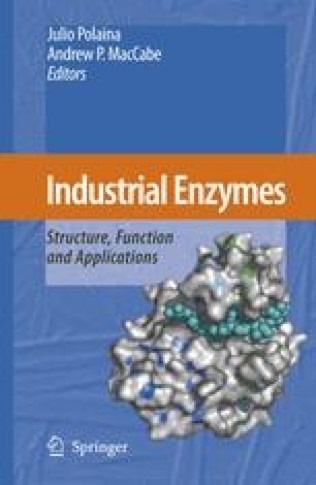
Industrial enzymes : Structure, function and applications
Man's use of enzymes dates back to the earliest times of civilization. Important human activities such as the production of certain types of foods and beverages, and the tanning of hides and skins to produce leather for garments, serendipitously took advantage of enzyme activities. Important advances in our understanding of the nature of enzymes and their action were made in the late 19th and early 20th centuries, seeding the explosive expansion from the 1950s and 60s onward to the present billion dollar enzyme industry. Recent developments in the fields of genetic engineering and protein chemistry are bringing ever more powerful means of analysis to bear on the study of enzyme structure and function that will undoubtedly lead to the rational modification of enzymes to match specific requirements as well as the design of new enzymes with novel properties.

In situ NMR Methods in Catalysis
In Situ NMR Methods in Catalysis is part of the Springer series Topics in Current Chemistry. The book contains five chapters and a helpful author and subject index. Chapter by chapter, the individual contributions are well written and structured . The book presents an excellent resource for the reader who is interested in a delivery of topics related to homogenous catalysis, some of which can be investigated by NMR.This will be a must-have work for scientists and practitioners in any field related to modern chemical research. It will also be highly useful for many workers in industry who are required to keep up-to-date with the latest news in chemistry and applied chemistry. So much is covered here in critical review, from the present position of developing research to future trends.
