



الصفحة 8
الصفحة 8

Advanced Planning in Fresh Food Industries: Integrating Shelf Life into Production Planning
Production planning in fresh food industries is a challenging task. Although modern Advanced Planning and Scheduling (APS) systems could provide significant support, APS implementation numbers in these industries remain low. Therefore, based on an in-depth analysis of three sample fresh food industries (dairy, fresh and processed meat), the author evaluates what APS systems should offer in order to effectively support production planning and how the leading systems currently handle the most distinguishing characteristic of fresh food industries, the short product shelf life. Starting from the identified weaknesses, customized software solutions for each of the sample industries are proposed that allow to optimize the production of fresh foods with respect to shelf life.

Advanced artificial intelligence models and its applications
The field of artificial intelligence (AI) has undergone enormous expansion since its inception in the mid-20th century, as demonstrated by its application across an array of engineering and scientific challenges. Particularly in the last decade, AI has witnessed a significant breakthrough with the advent of deep learning, which has facilitated the employment of various AI models across a multitude of domains. This reprint features ten papers accepted for publication in the Special Issue titled "Advanced Artificial Intelligence Models and Their Applications," published in the MDPI Mathematics journal. These papers explore numerous facets of advanced artificial intelligence models and their applications, covering areas such as cybersecurity, image classification, logistics optimization, automatic music generation, human capital investment, writer recognition, remote sensing image indexing, target tracking, and more.
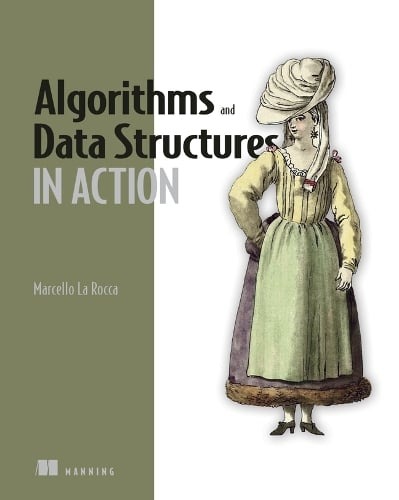
Advanced Algorithms and Data Structures
introduces a collection of algorithms for complex programming challenges in data analysis, machine learning, and graph computing. You’ll discover cutting-edge approaches to a variety of tricky scenarios. You’ll even learn to design your own data structures for projects that require a custom solution. What's inside Build on basic data structures you already know Profile your algorithms to speed up application Store and query strings efficiently Distribute clustering algorithms with MapReduce Solve logistics problems using graphs and optimization algorithms

A proposed model for predicting financial Loss of private conventional and Islamic banks in Syria
This study aimed to find a model consisting of a set of financial ratios in which each ratio has its own weight that indicate its importance to predict probability of financial loss of conventional and Islamic banks in Syria. The early prediction warns the concerned parties that they can intervene and take corrective actions before the collapses of bank. To achieve this ratios of conventional and Islamic Syrian banks were analyzed using Binary logistic regression from the period of 2011-2020 The statistical results show that the logistic regression model is accurate to predict the probability of a financial loss in conventional banks about 82.2%, 81.3%, 80.1%, 78% before 90 days ,180 days, 270 days, one year respectively. We can generally use five variables (Non-performing debt, return on equity, size, growth rate and financing portfolio ratio) in bank's financial loss prediction, but for Islamic banks, no significant values were shown so we can’t find logistic regression model is accurate for Islamic banks.
