



الصفحة 8
الصفحة 8

Natural building techniques : A guide to ecological methods and materials
Natural materials are increasingly being valued for their use in a wide range of techniques and solutions, not just for building cabins in the countryside, but also for housing, schools and city structures. As the need to respond to climate change becomes a serious requirement for all building projects, so too does our understanding of how these bio-based and renewable materials can help to reduce carbon emissions. With convincing evidence that natural materials work as well as, if not better than, conventional materials, this helpful guide offers an outline of many of the materials, products and methods of construction that are available, equipping readers with confidence to create healthy, ecological homes.

Nanotechnology : Societal Implications ; I : Maximising Benefits for Humanity ; II : Individual Perspectives
This book includes a collection of essays by leading scientists, engineers, and social scientists reviewing the possible uses of these impending technical developments in various industrial, medical, and national security applications, and the corresponding ethical, legal, social, economic, and educational issues that they raise. The report outlines potential areas for research into societal implications of nanotechnology, as well as some preliminary suggestions for how potential positive impacts of nanotechnology can be maximized, while minimizing any possible negative impacts, real or imagined. This book also provides the beginning of a blueprint for how one should address second-order consequences of the new technology, either positive implications or potential risks.

Nanoscience : Nanotechnologies and Nanophysics
Nanotechnologies and nanosciences are a fast-developing field of research, which sit at the point of convergence of several disciplines (physics, chemistry, biology, mechanics, etc.). This practically-oriented overview is designed to provide students and researchers with essential information on both the tools of manufacture and specific features of the nanometric scale, as well as applications within the most active fields (electronics, magnetism, information storage, biology).

Nanoscale Transistors : Device Physics, Modeling and Simulation
The book is a useful reference for senior-level or graduate-level courses on nanoelectronics, modeling and simulation. Chapter 1 reviews some basic concepts, and Chapter 2 summarizes the essentials of traditional semiconductor devices, digital circuits, and systems. This material provides a baseline against which new devices can be assessed. Chapters 3 and 4 present a non-traditional view of the MOSFET using concepts that are valid at nanoscale. Chapter 5 applies the same concepts to nanotube FET as an example of how to extend the concepts to revolutionary nanotransistors. Chapter 6 explores the limits of devices by discussing conduction in single molecules.

Nanoparticles in Biomedical Imaging : Emerging Technologies and Applications
Fundamental Biomedical Technologies features titles in multidisciplinary, technology-driven areas, providing the foundations for breakthrough advances in medicine and biology. The term technology refers, in a vigorously unrestrictive sense, to a broad array of engineering disciplines, the sciences of computation and informatics, mathematical models exploiting and advancing methods of mathematical physics, and the development of novel, experimental discovery devices. Titles in this series are designed and selected to provide high-level visionary input for specialists, while presenting overviews of emerging fields for those in related areas. Volumes in this series aim to provide technologists with the material to gain competent entry into biomedical research and biomedical researchers to understand and embrace novel technological foundations and tools.

Nanomaterials in clinical therapeutics : Synthesis and applications
Nanotechnology-based applications is a rapidly growing field encompassing a diverse range of disciplines that impact our daily lives. Nanotechnology is being used to carry out large-scale reactions in practically every field of biotechnology and healthcare. The incredible progress being made in these applications is particularly true for the healthcare sector, where they are used in cancer detection and treatment, medical implants, tissue engineering, and so forth. Expansions in this discipline are expected to continue in the future, resulting in the creation of a variety of life-saving medical technology and treatment procedures.

Nanomaterials and nanotechnology in medicine
The use of nanotechnology and nanomaterials more generally is an emerging field that has generated a lot of interest in the last few years. To this point, there have been few books that deal with the recent advances in nanomaterials or nanocomposites in the medical discipline. Intended as a one-stop reference, Nanomaterials and Nanotechnology in Medicine provides the reader with the most-up-to-date and comprehensive exploration of the field of nanomedicine. The scope of the topic is huge, with nano applications in every medical specialization—from diagnostics to pharmaceuticals, from biological therapies to surgical devices, and from regenerative therapies to gene therapy. As such, this volume provides the most comprehensive coverage of this intriguing field of study.

Nanoformulations in Human Health: Challenges and Approaches
This book is an amalgamation of knowledge, experience, and expertise in various aspects of nanotechnology, by experts who are proficient in designing novel nanoformulations that are used in the treatment of various challenging and prevalent diseases. It is an exhaustive compilation of the multi-faceted arena of nanoformulations and the healthcare system that caters to the needs of academicians, scholars, researchers, etc. The most important aspect of the book covers various types of nanoformulations and their applications in the treatment of communicable and non-communicable diseases. Each chapter focuses on a particular nanoformulation as well as a disease including the pathophysiology of the disease, the current treatment modalities of diseases, the role of nanoformulation in treatment and other future aspects and directions for further work. Coverage includes neuropathic pain, colon targeting, nose-to-brain drug delivery, cancer, arthritis and tuberculosis.

Nanocrystals : Synthesis, Properties and Applications
Nanocrystals and Their Mesoscopic Organization is an up-to-date monograph on an important aspect of nanoscience and technology. It opens with an elegant introduction including a brief historical account. Emphasis is then given to diverse synthetic methods, both chemical and physical, in addition to modern hybrid methods. The orientation shifts gradually to properties of nanocrystals that evolve with size; detailed discussions are to be found on mesoscalar assemblies in different dimensions, special cases of core-shell and magic nuclearity nanocrystals. The authors also address applications of nanocrystals, carefully separating out potential applications and those that have already emerged, and cite around 900 references from the literature, most from the last decade. Tables providing information at a glance and schematic diagrams at relevant places, make the monograph appealing to read.

Nanobiotechnology of Biomimetic Membranes
Nanobiotechnology of Biomimetic Membranes focuses on biomimetic membranes. The application of nanotechnology principles and methodology to problems in biotechnology provides an exciting new discipline that will generate a revolution of novel applications, across many disciplines. This valuable new title offers an international perspective on the development of biotechnology applications.

Nano physical pharmaceutics
Nanomedicine is an emerging and rapidly evolving field, which could significantly help in early disease diagnosis, therapeutic improvement, novel therapeutic modality development, and medical expenditure reduction. The challenge remains, however, that the specially designed and carefully synthesized nanomedicines function poorly in animal verification despite great performance in vitro. A deeper understanding of the physicochemical properties of nanomedicine is the key. This book applies physical theories and models to determine the parameters for controlling the physicochemical properties of nanomedicines, including micelles, liposomes, and inorganic nanoparticles. Qualitative and quantitative relationships are established to provide guidance for nanomedicine design, characterization, and analysis. The text also compiles cutting-edge research in nanomedicine from the interdisciplinary team of the Department of Nanomedicine at Naval Medical University, China, which is currently establishing the characteristic discipline called Nano Physical Pharmaceutics. Edited by Wei Li, a prominent nanotechnology researcher, this book will appeal to anyone involved in nanotechnology, medicine, macromolecular science, biology, chemistry, and especially those with an interest in drug delivery or cancer therapy.

Naive Lie Theory
In this new textbook, acclaimed author John Stillwell presents a lucid introduction to Lie theory suitable for junior and senior level undergraduates. In order to achieve this, he focuses on the so-called "classical groups'' that capture the symmetries of real, complex, and quaternion spaces. These symmetry groups may be represented by matrices, which allows them to be studied by elementary methods from calculus and linear algebra.

Mutual Funds For Dummies
With straightforward advice and plenty of specific fund recommendations, Eric Tyson helps you avoid fund-investing pitfalls and maximize your returns. This new edition covers the latest investment trends and philosophies, including factor investing, ESG investing, and online investing.

Mutagenic Impurities : Strategies for Identification and Control
In Mutagenic Impurities: Strategies for Identification and Control, distinguished chemist Andrew Teasdale delivers a thorough examination of mutagenic impurities and their impact on the pharmaceutical industry. The book incorporates the adoption of the ICH M7 guideline and focuses on mutagenic impurities from both a toxicological and analytical perspective.

Musical Haptics
This Open Access book offers an original interdisciplinary overview of the role of haptic feedback in musical interaction. Divided into two parts, part I examines the tactile aspects of music performance and perception, discussing how they affect user experience and performance in terms of usability, functionality and perceived quality of musical instruments. Part II presents engineering, computational, and design approaches and guidelines that have been applied to render and exploit haptic feedback in digital musical interfaces.Musical Haptics introduces an emerging field that brings together engineering, human-computer interaction, applied psychology, musical aesthetics, and music performance.

Museum Digitisations and Emerging Curatorial Agencies Online : Vikings in the Digital Age
This book explores the multiple forms of curatorial agencies that develop when museum collection digitisations, narratives and new research findings circulate online. Focusing on Viking Age objects, it tracks the effects of antagonistic debates on discussion forums and the consequences of search engines, personalisation, and machine learning on American-based online platforms. Furthermore, it considers eco-systemic processes comprising computation, rare-earth minerals, electrical currents and data centres and cables as novel forms of curatorial actions.
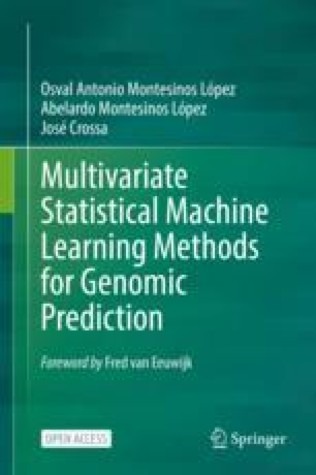
Multivariate Statistical Machine Learning Methods for Genomic Prediction
This book brings together the latest genome base prediction models currently being used by statisticians, breeders and data scientists. It provides an accessible way to understand the theory behind each statistical learning tool, the required pre-processing, the basics of model building, how to train statistical learning methods, the basic R scripts needed to implement each statistical learning tool, and the output of each tool. To do so, for each tool the book provides background theory, some elements of the R statistical software for its implementation, the conceptual underpinnings, and at least two illustrative examples with data from real-world genomic selection experiments.

Multi-Sensor Data Fusion : An Introduction
This textbook provides a comprehensive introduction to the theories and techniques of multi-sensor data fusion. It is aimed at advanced undergraduate and first-year graduate students in electrical engineering and computer science, as well as researchers and professional engineers. The book is intended to be self-contained. No previous knowledge of multi-sensor data fusion is assumed, although some familiarity with the basic tools of linear algebra, calculus and simple probability theory is recommended.

Multiscale Problems in the Life Sciences : From Microscopic to Macroscopic
The aim of this volume that presents Lectures given at a joint CIME and Banach Center Summer School, is to offer a broad presentation of a class of updated methods providing a mathematical framework for the development of a hierarchy of models of complex systems in the natural sciences, with a special attention to Biology and Medicine. Mastering complexity implies sharing different tools requiring much higher level of communication between different mathematical and scientific schools, for solving classes of problems of the same nature. Today more than ever, one of the most important challenges derives from the need to bridge parts of a system evolving at different time and space scales, especially with respect to computational affordability. As a result the content has a rather general character; the main role is played by stochastic processes, positive semigroups, asymptotic analysis, kinetic theory, continuum theory and game theory.

Multiscale Optimization Methods and Applications
One general strategy for dealing with a large or difficult problem is to partition it into smaller ones, which are hopefully much easier to solve, and then work backwards towards the solution of original problem, using a solution from a previous level as a starting guess at the next level.The topics of the chapters selected for this volume are focused on the development of new solution methodologies, including general multilevel solution techniques, for tackling difficult, large-scale optimization problems that arise in science and industry. Applications presented in the book include but are not limited to the circuit placement problem in VLSI design, a wireless sensor location problem, optimal dosages in the treatment of cancer by radiation therapy, and facility location.
