



الصفحة 8
الصفحة 8

Modern Econometric Analysis : Surveys on Recent Developments
The importance of empirical economics and econometric methods has greatly in creased during the last 20 years due to the availability of better data and the improved performance of computers. In an information-driven society such as ours we need quickly to obtain complete and convincing statistical results. This is only possible if the appropriate econometric methods are applied. Traditional econometric analysis concentrates on classical methods which are far from suitable for handling actual economic problems.

Modern asset allocation for wealth management
This book provides a complete taxonomy of modern methods for constructing investment portfolios. It goes beyond the simplest models and heuristics that are commonly used today and brings advances that are otherwise buried in Ph.D.-level mathematics to the financial advisor community. It covers all aspects of creating client portfolios, including choosing asset classes to invest in, selecting securities within asset classes, client risk preference assessment, portfolio construction, and portfolio rebalancing.

Models of Mechanics
This is a textbook on models and modeling in mechanics. It introduces a new unifying approach to applied mechanics: through the concept of the open scheme, a step-by-step approach to modeling evolves. The unifying approach enables a very large scope on relatively few pages: the book treats theories of mass points and rigid bodies, continuum models of solids and fluids, as well as traditional engineering mechanics of beams, cables, pipe flow and wave propagation.

Models for computer aided tolerancing in design and manufacturing ; Selected conference papers from the 9th CIRP International Seminar on Computer-aided tolerancing, held at Arizona State University, Tempe, Arizona, USA, 10-12 April, 2005
Computer Aided Tolerancing (CAT) is an important topic in any field of design and production where parts move relative to one another and/or are assembled together. Geometric variations from specified dimensions and form always occur when parts are manufactured. Improvements in production systems can cause the amounts of the variations to become smaller, but their presence does not disappear. To shorten the time from concept to market of a product, it has been increasingly important to take clearances and the tolerancing of manufacturing variations into consideration right from the beginning, at the stage of design. Hence, geometric models are defined that represent both the complete array of geometric variations possible during manufacture and also the influence of geometry on the function of individual parts and on assemblies of them.
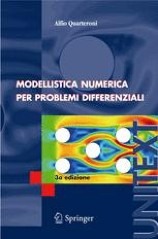
Modellistica Numerica per Problemi Differenziali = Numerical Modeling for Differential Problems
This text introduces the fundamental concepts for the numerical modeling of partial differential problems. We consider the classic linear elliptic, parabolic and hyperbolic equations, but also other equations, such as those of diffusion and transport, of Navier-Stokes, and the conservation laws. Numerous physical examples underlying these equations are provided, their main mathematical properties are studied, then numerical resolution methods based on finite elements, finite differences, finite volumes and spectral methods are proposed and analyzed. In particular, the algorithmic and computer implementation aspects are discussed and some easy-to-use programs in C ++ language are provided. The text does not presuppose an advanced mathematical knowledge of partial differential equations: the strictly indispensable concepts in this regard are reported in the Appendix. The volume is therefore suitable for students of scientific degree courses (Engineering, Mathematics, Physics, Chemistry, Information Sciences) and recommended for researchers from the academic and extra-academic world who want to approach this interesting branch of applied mathematics.

Modelling our Changing World
This book focuses on the concepts, tools and techniques needed to successfully model ever-changing time-series data. It emphasizes the need for general models to account for the complexities of the modern world and how these can be applied to a range of issues facing Earth, from modelling volcanic eruptions, carbon dioxide emissions and global temperatures, to modelling unemployment rates, wage inflation and population growth.

Modelling Critical and Catastrophic Phenomena in Geoscience : A Statistical Physics Approach
This book presents a broad survey of models for critical and catastrophic phenomena in the geosciences, with strong emphasis on earthquakes. It assumes the perspective of statistical physics, which provides the theoretical frame for dealing with complex systems in general. This volume addresses graduate students wishing to specialize in the field and researchers working or interested in the field having a background in the physics, geosciences or applied mathematics.
Modelling and Reasoning with Vague Concepts
This volume outlines a formal representation framework for modelling and reasoning with vague concepts in Artificial Intelligence. The new calculus has many applications, especially in automated reasoning, learning, data analysis and information fusion. This book gives a rigorous introduction to label semantics theory, illustrated with many examples, and suggests clear operational interpretations of the proposed measures. It also provides a detailed description of how the theory can be applied in data analysis and information fusion based on a range of benchmark problems.

Modelli Dinamici Discreti = Discrete Dynamic Models
Discrete mathematical modeling is one of the driving factors in modern mathematics research, and has played a role of synthesis between different disciplines, becoming a tool for qualitative and quantitative analysis in applied sciences. This volume provides an introduction to the analysis of discrete dynamic systems, following a modeling approach. An examination of a wide range of examples, models, and motivations drawn from Biology, Demography, Engineering and Economics, is followed by the presentation of the tools for the study of linear and non-linear scalar dynamical systems, with particular attention to stability analysis. The linear difference equations are studied in detail and an elementary introduction to the Z and DFT transforms is provided. One chapter is devoted to the study of bifurcations and chaotic dynamics. One-step vector dynamical systems and the applications of Markov chains are the subject of three chapters.

Modeling of Biological Materials
This interdisciplinary collection of surveys highlights the central role played by the mathematical modeling of mechanical properties having an effect on the biology, chemistry, and physics of living matter. One of the main goals of the book is to present—in a single, self-contained resource—topics that are widely scattered across the literature in a variety of journals having mutually nonintersecting communities of readers, such as applied mathematicians, engineers, biologists, and physicians. Readers coming from diverse backgrounds are provided with basic modeling ideas and tools to address important problems in the medical and health sciences. Presented are appropriate models as well as their implementation through numerical and computer simulations, which may lead to potential technological innovations useful in medicine.

Modeling in membranes and membrane-based processes
This book explores almost every major aspect of modeling and the techniques applied in membrane separation studies and applications. This includes first principle-based models, thermodynamics models, computational fluid dynamics simulations, molecular dynamics simulations, and artificial intelligence-based modeling for membrane separation processes. These models have been discussed in light of various applications ranging from desalination to gas separation.

Modeling Financial Time Series with S-PLUS®
This book represents an integration of theory, methods, and examples using the S-PLUS statistical modeling language and the S+FinMetrics module to facilitate the practice of financial econometrics. This is the first book to show the power of S-PLUS for the analysis of time series data.It covers S+FinMetrics 2.0 and includes new chapters on copulas, nonlinear regime switching models, continuous-time financial models, generalized method of moments, semi-nonparametric conditional density models, and the efficient method of moments.

Modeling Excitable Tissue : The EMI Framework
This volume presents a novel computational framework for understanding how collections of excitable cells work. The key approach in the text is to model excitable tissue by representing the individual cells constituting the tissue. This is in stark contrast to the common approach where homogenization is used to develop models where the cells are not explicitly present. The approach allows for very detailed analysis of small collections of excitable cells, but computational challenges limit the applicability in the presence of large collections of cells.

Modeling Data Irregularities and Structural Complexities in Data Envelopment Analysis
DEA is computational at its core and this book by Zhu and Cook deals with the micro aspects of handling and modeling data issues in modeling DEA problems. DEA's use has grown with its capability of dealing with complex "service industry" and the "public service domain" types of problems that require modeling both qualitative and quantitative data. It is a handbook treatment dealing with specific data problems including the following: (1) imprecise data, (2) inaccurate data, (3) missing data, (4) qualitative data, (5) outliers, (6) undesirable outputs, (7) quality data, (8) statistical analysis, (9) software and other data aspects of modeling complex DEA problems. In addition, the book demonstrates how to visualize DEA results when the data is more than 3-dimensional, and how to identify efficiency units quickly and accurately.

Modeling Complex Living Systems : A Kinetic Theory and Stochastic Game Approach
Using tools from mathematical kinetic theory and stochastic game theory, this work deals with the modeling of large complex systems in the applied sciences, particularly those comprised of several interacting individuals whose dynamics follow rules determined by some organized, or even "intelligent" ability. Traditionally, methods of mathematical kinetic theory have been applied to model the evolution of large systems of interacting classical or quantum particles. This book, on the other hand, examines the modeling of living systems as opposed to inert systems.

Modeling Chemical Systems using Cellular Automata
The book will be of great value in undergraduate courses in chemistry, physics, biology, applied mathematics, and bioinformatics, and as a supplement for laboratory courses in introductory chemistry, organic chemistry, physical chemistry, medicinal chemistry, chemical engineering and other courses dealing with statistical and dynamic systems. It allows the exploration of a wide range of dynamic phenomena, many of which are not normally accessible within conventional laboratory settings due to limitations of time, cost, and experimental equipment. The book is both a textbook on applied Cellular Automata and a lab manual for chemistry (physics, engineering) courses with lab activity. It would supplement other lab work and be an additonal book the students would use in the course.
Modeling and using context ; 6th International and interdisciplinary Conference, CONTEXT 2007, Roskilde, Denmark, August 20-24, 2007, Proceedings
This volume contains the papers presented at CONTEXT 2007, the Sixth International and Interdisciplinary Conference on Modeling and Using Context. We believe that the papers of this volume represent a snapshot of current work and contribute to both theoretical and applied aspects of research.

Modeling and Simulation in Scilab
Scilab is a free open-source software package for scientific computation. It includes hundreds of general purpose and specialized functions for numerical computation, organized in libraries called toolboxes, which cover such areas as simulation, optimization, systems and control, and signal processing. One important Scilab toolbox is Scicos. Scicos provides a block diagram graphical editor for the construction and simulation of dynamical systems. The objective of this book is to provide a tutorial for the use of Scilab/Scicos with a special emphasis on modeling and simulation tools. The book is divided into two parts. The first part concerns Scilab and includes a tutorial covering the language features, the data structures and specialized functions for doing graphics, importing, exporting data and interfacing external routines. It also covers in detail Scilab numerical solvers for ordinary differential equations and differential-algebraic equations. Even though the emphasis is placed on modeling and simulation applications, this part provides a global view of Scilab. The second part is dedicated to modeling and simulation of dynamical systems in Scicos. This type of modeling tool is widely used in industry because it provides a means for constructing modular and reusable models. This part contains a detailed description of the editor and its usage, which is illustrated through numerous examples.
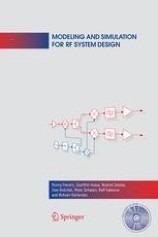
Modeling and Simulation for RF System Design
The focus of Modeling and Simulation for RF System Design lies on RF specific modeling and simulation methods and the consideration of system and circuit level descriptions. It contains application-oriented training material for RF designers which combines the presentation of a mixed-signal design flow.

Modeling and Analysis of Transient Processes in Open Resonant Structures : New Methods and Techniques
The principal goal of the book is to describe new accurate and robust algorithms for open resonant structures with substantially increased efficiency. The book presents a systematic approach to the study of electromagnetic waves scattering which can be introduced in undergraduate/postgraduate education in theoretical and applied radiophysics and different advanced engineering courses on antenna and wave-guide technology.
