



الصفحة 8
الصفحة 8

Imaging Pelvic Floor Disorders
This volume builds on the success of the first edition of Imaging Pelvic Floor Disorders and is aimed at those practitioners with an interest in the imaging, diagnosis and treatment of pelvic floor dysfunction. Concise textual information from acknowledged experts is complemented by high-quality diagrams and images to provide a thorough update of this rapidly evolving field. Introductory chapters fully elucidate the anatomical basis underlying disorders of the pelvic floor. State of the art imaging techniques and their application in pelvic floor dysfunction are then discussed in detail. Additions since the first edition include consideration of the effect of aging and new chapters on perineal ultrasound, functional MRI and MRI of the levator muscles.

Imaging of Orthopedic Sports Injuries ; 2nd ed.
This book, now in a revised and updated second edition, provides a review of imaging abnormalities in orthopedic sports injuries. The first part of the book includes background information on relevant basic science and general imaging principles in sports traumatology, while the second part discusses the topography of various sports injuries. Each chapter highlights the merits of different imaging techniques, focusing on a specific clinical problem. The third part then examines natural history and monitoring. Several new chapters have been added, including a chapter on postoperative joint imaging in the sports patient as well as image-guided interventions in sports injuries.

Imaging in Oncology
Imaging in Oncology consists of scholarly reviews that describe the role of imaging in oncology for diagnosis, follow-up and image guided interventions. Experts in various fields of radiology have contributed to this book.

Imaging for Detection and Identification
The dynamic interaction between world-renowned scientists from the usually disparate communities of pure mathematicians and applied sci- tists which occurred at our seven previous ASI’s continued at this meeting. The fusion of basic ideas in mathematics, radar, sonar, biology, and ch- istry with ongoing improvements in hardware and computation offers the promise of much more sophisticated and accurate detection and identi?cation capabilities than currently exist. Coupled with the dramatic rise in the need for surveillance in innumerable aspects of our daily lives, brought about by hostile acts deemed unimaginable only a few short years ago, the time is ripe for image processing scientists in these usually diverse ?elds to join together in a concerted effort to combat the new brands of terrorism. This ASI was one important initial step.

Imaging Cellular and Molecular Biological Functions
Imaging cellular and molecular biological function’ provides a unique selection of essays by leading experts, aiming at scientist and student alike who are interested in all aspects of modern imaging, from its application and up-scaling to its development. Indeed the philosophy of this volume is to provide student, researcher, PI, professional or provost the means to enter this applications field with confidence, and to construct the means to answer their own specific questions.

Images, Representations and Heritage : Moving beyond Modern Approaches to Archaeology
Recent archaeological theory has show that images of the past have carried a particularly strong resonance within modern social groups. This volume explores the immeasurable impact that the phenomenon of archaeology has had on the representation of the past in the modern world. Modern society’s ‘archaeological imagination’ conceives of archaeology as a producer of images of the past which become representations of modern group identities. If archaeology is utilized by public groups to construct and represent identities, then what are archaeologists to do with that public? The very fact that the public is interested in the past and in archaeological research is an opportunity for archaeology to engage that public.

Image-Guided Interventions : Technology and Applications
Responding to the growing demand for minimally invasive procedures, Image-Guided Interventions: Technology and Applications provides a cohesive overview of the current technological advances in image-guided surgery, and their applications in the clinical environment.

Image-Guided IMRT
Intensity-modulated radiation therapy (IMRT), one of the most important developments in radiation oncology in the past 25 years, involves technology to deliver radiation to tumors in the right location, quantity and time. Unavoidable irradiation of surrounding normal tissues is distributed so as to preserve their function. The achievements and future directions in the field are grouped in the three sections of the book, each suitable for supporting a teaching course.
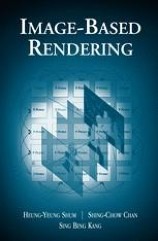
Image-Based Rendering
Image-based rendering (IBR) refers to a collection of techniques and representations that allows 3D scenes and objects to be visualized in a realistic way without full 3D model reconstruction. The potential for photorealistic visualization has tremendous appeal, especially for applications such as video games, virtual travel, and E-commerce, which stand to greatly benefit from this technology.

Image recognition : progress, trends and challenges
Focuses on research trends in image processing and recognition and corresponding developments. Among them, the book focuses on recent research, especially in the field of advanced human-computer interaction and intelligent computing. Given the existing interaction and recognition of the station, some novel topics are proposed, including how to establish a cognitive model in human-computer interaction and how to express and transfer human knowledge into human-machine image recognition. In an interactive implementation, how to implement user experience through image recognition during machine interaction

Image Processing Using Pulse-Coupled Neural Networks
This is the first book to explain and demonstrate the tremendous ability of Pulse-Coupled Neural Networks (PCNNs) when applied to the field of image processing. PCNNs and their derivatives are biologically inspired models that are powerful tools for extracting texture, segments, and edges from images.

Image Processing in Radiology : Current Applications
Few fields have witnessed such impressive advances as image processing in radiology. The progress achieved has revolutionized diagnosis and greatly facilitated treatment selection and accurate planning of procedures. This book provides a comprehensive and up-to-date description of how to use 2D and 3D processing tools in clinical radiology.

Image processing based on partial differential equations ; Proceedings of the International Conference on PDE-Based Image Processing and Related Inverse Problems, CMA, Oslo, August 8-12, 2005
The book contains twenty-two original scienti?c research articles that address the state-of-the-art in using partial di?erential equations for image and signal processing. The articles arose from presentations given at the inter- tional conference on PDE-Based Image Processing and Related Inverse Pr- lems, held at the Centre of Mathematics for Applications, University of Oslo, Norway, August 8-12, 2005.

Image Processing : Dealing with Texture ; 2nd ed.
Updates the classic work on texture analysis theory and methods without abandoning the foundational essentials of this landmark work. Like the first, the new edition offers an analysis of texture in digital images that are essential to a diverse range of applications such as: robotics, defense, medicine and the geo-sciences. Designed to easily locate information on specific problems, the text is structured around a series of helpful questions and answers. Updated to include the most recent developments in the field, many chapters have been completely revised including: Fractals and Multifractals, Image Statistics, Texture Repair, Local Phase Features, Dual Tree Complex Wavelet Transform, Ridgelets and Curvelets and Deep Texture Features. The book takes a two-level mathematical approach: light math is covered in the main level of the book, with harder math identified in separate boxes.

Image and video retrieval ; Vol. 3568 ; 4th International conference, CIVR 2005, Singapore, July 20-22, 2005, Proceedings
It was our great pleasure to host the 4th International Conference on Image and Video Retrieval (CIVR) at the National University of Singapore on 20–22 July 2005. CIVR aims to provide an international forum for the discussion of research challenges and exchange of ideas among researchers and practitioners in image/video retrieval technologies. It addresses innovative research in the broad ?eld of image and video retrieval. A unique feature of this conference is the high level of participation by researchers from both academia and industry. Another unique feature of CIVR this year was in its format – it o?ered both the traditional oral presentation sessions, as well as the short presentation cum poster sessions. The latter provided an informal alternative forum for animated discussions and exchanges of ideas among the participants.After a rigorous review process, 20 papers were accepted for oral presentations, and 42 papers were accepted for poster presentations. In addition to the accepted submitted papers, the program also included 4 invited papers, 1 keynote industrial paper, and 4 invited industrial papers. Altogether, we o?ered a diverse and interesting program, addressing the current interests and future trends in this area.

Image and video retrieval ; Vol. 4071 ; 5th Internatinoal Conference, CIVR 2006, Tempe, AZ, USA, July 13-15, 2006, Proceedings
This volume contains the proceeding of the 5th International Conference on - age and Video Retrieval (CIVR), July 13–15, 2006, Arizona State University, Tempe, AZ, USA: http://www. civr2006. org. Image and video retrieval cont- ues to be one of the most exciting and fast-growing research areas in the ?eld of multimedia technology. However, opportunities for exchanging ideas between researchers and users of image and video retrieval systems are still limited.

Image and video processing and recognition based on artificial intelligence (Vol. II)
Focuses on challenging issues in the field of AI-based image and video processing and recognition, including the topics of AI-based image processing, understanding, recognition, compression, and reconstruction; AI-based video processing, understanding, recognition, compression, and reconstruction; computer vision based on AI; AI-based biometrics; AI-based object detection and tracking; approaches that combine AI techniques and conventional methods for image and video processing and recognition; explainable AI (XAI) for image and video processing and recognition; generative adversarial network (GAN)-based image and video processing and recognition; and approaches that combine AI techniques and blockchain methods for image and video processing and recognition.

Image and video encryption : From digital rights management to secured personal communication
Image and Video Encryption provides a unified overview of techniques for encryption of images and video data. This ranges from commercial applications like DVD or DVB to more research oriented topics and recently published material. This volume introduces different techniques from unified viewpoint, then evaluates these techniques with respect to their respective properties (e.g., security, speed.....). Encryption of visual data is an important topic in the area of mutimedia security, applications range from digital rights management (DVD, DVB) ) to secure personal communications. Within this topic area, we face several aims which contradict each other. What we thrive on is good compression, fast compression, high security, fast encryption, bitstream compliance, little power consumption and little memory requirements. The authors experimentally compare different approaches proposed in the literature and include an extensive bibliography of corresponding published material. Image and Video Encryption is designed for a professional audience composed of researchers and practitioners in industry. The book is also suitable for graduate-level students in computer science and electrical engineering.

Image and Signal Processing ; 3rd International Conference, ICISP 2008. Cherbourg-Octeville, France, July 1 - 3, 2008. Proceedings
This book constitutes the refereed proceedings of the Third International Conference on Image and Signal Processing, ICISP 2008, held in Cherbourg-Octeville, France, in July 2008.The 48 revised full papers and 22 revised poster papers presented were carefully reviewed and selected from 193 submissions. The papers are organized in topical sections on image filtering, image segmentation, computer vision, feature extraction, pattern recognition, graph-based representations, motion detection and estimation, new interfaces, document processing, and signal processing.

Image Analysis, Sediments and Paleoenvironments
This seventh volume of the DPER series examines imaging techniques for sedimentologists, paleolimnologists, paleoceanographers and microscopists working on issues related to paleoenvironmental reconstruction. It will help the researcher or graduate student to understand every step involved in the imaging process, from image acquisition to measurements.nbsp; Procedures are described to ensure that the right protocols and methodology are selected to solve a particular issue, and to evaluate the validity of scientific results. Case studies illustrate the wide range of information that can be obtained from many kinds of sediments (marine, lacustrine and aeolian) and different types of samples (cores, embedded blocks, microscopic slides) using different regions of the electromagnetic spectrum (visible, UV, IR, X-ray). The volume provides comprehensive protocols, guidelines, and recommendations for the use of low cost image analysis techniques, to facilitate intercomparisons of measurements.
