



الصفحة 8
الصفحة 8

Computer-Aided Design of User Interfaces V ; Proceedings of the 6th International Conference on Computer-Aided Design of User Interfaces CADUI '06 (6-8 June 2006, Bucharest, Romania)
Today, the development life cycle of 3D User Interfaces (UIs) mostly remains an art more than a principled-based approach. Several methods [1,3,7,8,9,10,11,15,17,18,19] have been introduced to decompose this life cycle into steps and sub-steps, but these methods rarely provide the design knowledge that should be typically used for achieving each step. In addition, the development life cycle is more focusing directly on the programming - sues than on the design and analysis phases. This is sometimes reinforced by the fact that available tools for 3D UIs are toolkits, interface builders, r- dering engines, etc. When there is such a development life cycle defined, it is typically structured into the following set of activities: 1. The conceptual phase is characterized by the identification of the content and interaction requests. The meta-author discusses with the interface designer to take advantage of the current interaction technology. The int- face designer receives information about the content. The result of this phase is the production of UI schemes (e. g. , written sentences, visual schemes on paper) for defining classes of interactive experiences (e. g. , class Guided tour). Conceptual schemes are produced both for the final users and the authors. The meta-author has a deep knowledge of the c- tent domain and didactic skills too. He/she communicates with the final user too, in order to focus on didactic aspects of interaction. 2.

Computational Plasticity
The different chapters of this book present recent progress and future research directions in the field of computational plasticity. A common line of many contributions is that a stronger interaction between the phenomenological and micromechanical modelling of plasticity behaviour is apparent and the use of inverse identification techniques is also more prominent. The development of adaptive strategies for plasticity problems continues to be a challenging goal, while it is interesting to note the permanence of element modelling as a research issue. Industrial forming processes, geomechanics, steel and concrete structures form the core of the applications of the different numerical methods presented in the book.

Computational Forensic ; 2nd International Workshop, IWCF 2008, Washington, DC, USA, August 7-8, 2008. Proceedings
This book constitutes the refereed proceedings of the Second International Workshop, IWCF 2008, held in Washington, DC, USA, August 2008. The papers are organized in topical sections on trends and challenges; scanner, printer, and prints; human identification; shoeprints; linguistics;decision making and search; speech analysis; signatures and handwriting.

Computational drug discovery and design
Provides new and updated methods and techniques for identification of drug target, binding sites prediction, high- throughput virtual screening, lead discovery and optimization, conformational sampling, prediction of pharmacokinetic properties using computer-based methodologies. Chapters also focus on the application of the latest artificial intelligence technologies for computer aided drug discovery.

Cluster Analysis for Data Mining and System Identification
Presents new approaches to data mining and system identification, and new techniques and tools are presented for the clustering, classification, regression and visualization of complex datasets.

Marine Organic Matter : Biomarkers, Isotopes and DNA
The oceans contain a great biodiversity of marine organisms. They include a rich variety of unusual genes and biochemistries and hence a diverse array of organic compounds ranging from colourful carotenoids and chlorophylls to lipids with structures ranging from the simple to the complex. This volume brings together ten chapters on the occurrence and identification of the lipid biomarkers and of pigments in marine waters. It describes how they can be used in conjunction with stable isotopes and molecular biology to ascertain the sources and fate of organic matter (both natural and pollutant) in the sea and underlying sediments. The authors are each experts in their field and the chapters provide both an overview of the state-of-the-art and knowledge gaps together with abundant detail to satisfy the needs of specialists and non-specialists alike.

Marine Biotechnology II
This volume of Advances in Biochemical Engineering/Biotechnology illustrates several topics in line with the following broad objectives: thinking of marine biotechnology as the controlled production and use of marine organisms and molecules for useful purposes, firstly by exploring aspects of marine biodiversity and exploitation of biomass, then considering the identification, production and processing of marine products.

Marine Biotechnology I
Oceans, which occupy up to two thirds of the surface of our planet, were not really approached from scientific point of view until the second half of the 19th century and even the 20th with regard to microbial and unicellular life. Today, the importance of marine biodiversity has been fully recognized. It is, indeed, one of the aspects which, over the two past decades, have made a major contribution to our knowledge and vision of the living planetThis volume of Advances in Biochemical Engineering/Biotechnology illustrates several topics in line with the following broad objectives: thinking ofmarine biotechnology as the controlled production and use of marine organisms and molecules for useful purposes, firstly by exploring aspects of marine biodiversity and exploitation of biomass, then considering the identification, production and processing of marine products.

Marijuana and the Cannabinoids
Although primarily used today as one of the most prevalent illicit leisure drugs, the use of Cannabis sativa L., commonly referred to as marijuana, for medicinal purposes has been reported for more than 5000 years. Marijuana use has been shown to create numerous health problems, and, consequently, the expanding use beyond medical purposes into recreational use (abuse) resulted in control of the drug through international treaties. Much research has been carried out over the past few decades following the identification of the chemical structure of THC.The purpose of Marijuana and the Cannabinoids is to present in a single volume the comprehensive knowledge and experience of renowned researchers and scientists. Each chapter is written independently by an expert in his/her field of endeavor, ranging from the botany, the constituents, the chemistry and pharmacokinetics, the effects and consequences of illicit use on the human body, to the therapeutic potential of the cannabinoids.

Management of Intentional and Accidental Water Pollution
The goals of the workshop included a discussion of the state of the science in identification of new research and approaches for water pollution events and communication of the management of water pollution and sustainability of water resources. Critical to management of accidental and intentional pollution events is the assessment of the risk, an understanding of the hazards and lessons learned from events which may lead to preventative management and control strategies. Public health protection will ultimately be improved by the ability to develop management frameworks which are flexible and adaptable to the specific region, country or watershed problems and concerns and allow for prioritization in the decision making. The integration of scientific information regarding the types of hazards the environmental fate of the chemical/biological, exposure pathways and human and ecosystem impacts may be implemented from both a qualitative or descriptive approach or using a more classical quantitative risk assessment paradigm. Thus the frameworks for assessing the risk and managing the risk may be seen as preventive, early warning and responsive.

Maintenance of brick and stone masonry structures
Deals with all the tasks related to brick and stone masonry structures, from the initial identification of defects and their diagnosis to their treatment and monitoring of its cost-effectiveness.
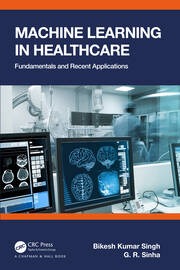
Machine learning in healthcare : Fundamentals and recent applications
Discusses how to build various ML algorithms and how they can be applied to improve healthcare systems. Healthcare applications of AI are innumerable: medical data analysis, early detection and diagnosis of disease, providing objective-based evidence to reduce human errors, curtailing inter- and intra-observer errors, risk identification and interventions for healthcare management, real-time health monitoring, assisting clinicians and patients for selecting appropriate medications, and evaluating drug responses. Extensive demonstrations and discussion on the various principles of machine learning and its application in healthcare is provided, along with solved examples and exercises.

Logical aspects of computational linguistics ; 4th International Conference, LACL 2001, Le Croisic, France, June 27-29, 2001, Proceedings
Structural Equations in Language Learning.- On the Distinction between Model-Theoretic and Generative-Enumerative Syntactic Frameworks.- Contributed Papers.- A Formal Definition of Bottom-Up Embedded Push-Down Automata and Their Tabulation Technique.- An Algebraic Approach to French Sentence Structure.- Deductive Parsing of Visual Languages.- Lambek Grammars Based on Pregroups.- An Algebraic Analysis of Clitic Pronouns in Italian.- Consistent Identification in the Limit of Any of the Classes k-Valued Is NP-hard.- Polarized Non-projective Dependency Grammars.- On Mixing Deduction and Substitution in Lambek Categorial Grammars.- A Framework for the Hyperintensional Semantics of Natural Language with Two Implementations.- A Characterization of Minimalist Languages.- of Speech Tagging from a Logical Point of View.- Transforming Linear Context-Free Rewriting Systems into Minimalist Grammars.- Recognizing Head Movement.- Combinators for Paraconsistent Attitudes.- Combining Syntax and Pragmatic Knowledge for the Understanding of Spontaneous Spoken Sentences.- Atomicity of Some Categorially Polyvalent Modifiers.

Lifetime Spectroscopy : A Method of Defect Characterization in Silicon for Photovoltaic Applications
Lifetime spectroscopy is one of the most sensitive diagnostic tools for the identification and analysis of impurities in semiconductors. Since it is based on the recombination process, it provides insight into precisely those defects that are relevant to semiconductor devices such as solar cells. This book introduces a transparent modeling procedure that allows a detailed theoretical evaluation of the spectroscopic potential of the different lifetime spectroscopic techniques. The various theoretical predictions are verified experimentally with the context of a comprehensive study on different metal impurities. The quality and consistency of the spectroscopic results, as explained here, confirms the excellent performance of lifetime spectroscopy.

Legal Programming : Designing Legally Compliant RFID and Software Agent Architectures for Retail Processes and Beyond
LEGAL PROGRAMMING: Designing Legally Compliant RFID and Software Agent Architectures for Retail Processes and Beyond provides a process-oriented discussion of the legal concerns presented by agent-based technologies, processes and programming. It offers a general outline of the potential legal difficulties that could arise in relation to them, focusing on the programming of negotiation and contracting processes in a privacy, consumer and commercial context. The authors will elucidate how it is possible to create form of legal framework and design methodology for transaction agents, applicable in any environment and not just in a specific proprietary framework, that provides the right level of compliance and trust. Key elements considered include the design and programming of legally compliant methods, the determination of rights in respect of objects and variables, and ontologies and programming frameworks for agent interactions. Examples are used to illustrate the points made and provide a practical perspective.

Lasers in the Conservation of Artworks ; LACONA V Proceedings, Osnabrück, Germany, Sept. 15-18, 2003
Since 1995, when Costas Fotakis first brought together restorers and scientists to discuss the potential of lasers in art conservation, the field has grown enormously in importance, and today restorers and laser scientists work together to develop new applications. This book presents the more than six dozen research papers prepared for LACONA V (Lasers in Art Conservation), held in Osnabrueck/Germany in September 2003. The fifth congress once again gathers restorers, art historians, museum staff, laser scientists and laser manufacturers. The topics include, among others: laser cleaning of artworks (case studies and side effects), removal of former conservation layers, fundamentals of laser-artwork interaction, online monitoring and process control, laser diagnostics, spectroscopy for monitoring and identification, networks and co-operation projects.

Landslides : Risk Analysis and Sustainable Disaster Management
Based on contributions to the first General Assembly of the International Consortium on Landslides, this reference and status report emphasizes the mechanisms of different types of landslides, landslide risk analysis, and sustainable disaster management. It comprises the achievements of the ICL over the past three years, since the Kyoto assembly. It consists of three parts: research results of the International Programme on Landslides (IPL); contributions on landslide risk analysis; and articles on sustainable disaster management. The contributions reflect a wide range of topics and concerns, randing from field studies, identification of objects of cultural heritage at landslide risk, as well as landslide countermeasures.

L’insuffisance rénale aiguë = Acute renal failure
The aim of this book is to make current data from the experimental and clinical literature accessible to readers. More than a thousand articles are published each year on the theme and the authors aim to synthesize this information. These data relate in particular to the identification of early markers of renal dysfunction without which screening, recognition of the main pathophysiological determinants and prevention remain uncertain. This book focuses attention on clinical situations characterized by the renal impact of the main dysfunctions of vital functions, the prognosis of which is worsened by the occurrence of this renal failure. The following will be treated in particular: the renal consequences of oxidative stress, the renal consequences of respiratory dysfunction, cardiac dysfunction, hepatic dysfunction, alterations in hemostasis, septic shock and hemorrhagic shock. Finally, the physiopathological data from experimental models are gradually finding their echo in the clinical field, opening up therapeutic avenues whose recent evaluations will be analyzed.

Knowledge Discovery in Life Science Literature ; International Workshop, KDLL 2006, Singapore, April 9, 2006, Proceedings
Constitutes the refereed proceedings of the International Workshop on Knowledge Discovery in Life Science Literature, KDLL 2006, held in conjunction with the 10th Pacific-Asia Conference on Knowledge Discovery and Data Mining (PAKDD 2006). The 12 revised full papers presented together with two invited talks were carefully reviewed and selected for inclusion in the book. The papers cover all topics of knowledge discovery in life science data.

Kaposi Sarcoma Herpesvirus : New Perspectives
Since the identificationof two sequences fromKSHV,wehave learnedmuch about this pathogen as reflected in this book. As it turned out, KSHV itself encodes for a number of cytokines, and induces cellular cytokine secretion, contributing to tumour growth. Moreover, KSHV vFLIP targets the IKKNFκB axis to encourage the inflammatory microenvironment observed by Gallo and his colleagues. KSHV continues to elucidate both mechanisms of viral oncogenesis, and cellular and immune pathways involved in non-viral driven neoplasia.
