



الصفحة 8
الصفحة 8

Education for All and Multigrade Teaching : Challenges and Opportunities
This book is based on original research on challenges and opportunities in Colombia, England, Ghana, Malawi, Nepal, Sri Lanka, Sudan, Peru, Turks and Caicos and Vietnam. Its purpose is to raise awareness among educational policymakers and practitioners worldwide of the realities of multigrade classes in the context of Education for All, and to explore the implications for teachers, teacher educators, curriculum developers and educational planners.

Education and Social Justice
The book explores the problematic relationship between education, social justice and the State, against the background of comparative education research. Social justice is an attempt to answer the following question: How can we contribute to the creation of a more equitable, respectful, and just society for everyone? The creation of a more equitable, respectful, and just society for everyone is a dream for all empowering and egalitarian pedagogues. But it will remain a mere hollow rhetoric, or magic words, unless we debate more vigorously social inequality in the global culture. The book critiques the existing status quo of stratified school systems, and the unequal disctribution of cultural capital and value added schooling.

Educating Students to Improve the World
This book addresses how to help students find purpose in a rapidly changing world. In a probing and visionary analysis of the field of global education Fernando Reimers explains how to lead the transformation of schools and school systems in order to more effectively prepare students to address today’s’ most urgent challenges and to invent a better future.

Educating in the Arts : The Asian Experience: Twenty-Four Essays
Written by leaders in a wide range of creative fields and from all corners of the Asian region, this collection of essays presents arts and education programs which reflect traditional and contemporary practices. The volume brings together researchers, practitioners, educators, children and young people with shared interests in the arts and activities that cross disciplinary divisions and aims to encourage the use of the arts in developing international understanding, celebrating cultural diversity, building cultural bridges and creating cross-cultural dialogue throughout the Asian region.

Ecosystem-Based Management, Ecosystem Services and Aquatic Biodiversity : Theory, Tools and Applications
Aquatic ecosystems are rich in biodiversity and home to a diverse array of species and habitats, providing a wide variety of benefits to human beings. Many of these valuable ecosystems are at risk of being irreversibly damaged by human activities and pressures, including pollution, contamination, invasive species, overfishing and climate change. Such pressures threaten the sustainability of these ecosystems, their provision of ecosystem services and ultimately human well-being.

Ecosystem Organization of a Complex Landscape : Long-Term Research in the Bornhöved Lake District, Germany
Presents the major findings of a 12-year ecological study of the Bornhöved Lake District, situated some 30 km south of Kiel. Historically speaking, the present research scheme, like comparable long-term ecosystem studies at Göttingen, Bayreuth, München, and Berchtesgaden, has been conceived as the core of a comprehensive ecological surveillance system for Germany (Ellenberg et al. 1978). Comprising three interrelated components, namely an ecological monitoring network, comparative ecosystem research, and an environmental specimen bank, this system is intended to promote both ecological science and planning and policy. In this connection the geo- and bioscientifically based ecosystem research aims at understanding the structure and functions of systems, the natural equilibrium and stress tolerance of singular components and the entire system against changes and disturbances from within and from outside, and the relationships between diversity, productivity, and stability. Thus, ecosystem research forms the indispensable basis for the rational analysis of the comprehensive data sets made available by ecological monitoring networks and for the adequate selection of plant, animal, and soil specimens for environmental specimen banking purposes.

Economics, Sustainability, and Natural Resources: Economics of Sustainable Forest Management
The economics of sustainability is much more complex than the neoclassical (Newtonian) economic approach to economic efficiency. Forest resources provide the ideal starting point for the economic analysis of sustainability. This book provides a systematic critique of neoclassical economic approaches and their limitations with respect to sustainability. Leading economists from different streams of economics discuss key economic aspects of sustainability and sustainable forest management including complexity, ethical issues, consumer choice theory, intergenerational equity, non-convexities, and multiple equilibria. This is the book which integrates different streams of economics – complexity theory, behavioral economics, post-Keynesian consumer choice theory, social choice theory, and non-convexities – and suggests the main features of Post-Newtonian economics.

Economics of the Environment : Theory and Policy
The labor of nature is paid, not because she does much, but because she does little. In proportion as she becomes niggardly in her gifts, she exacts a greater price for her work. Where she is munificently bene- cent, she always works gratis.“ David Ricardo* This book interprets nature and the environment as a scarce resource. Whereas in the past people lived in a paradise of environmental superabundance, at p- sent environmental goods and services are no longer in ample supply. The en- ronment fulfills many functions for the economy: it serves as a public-c- sumption good, as a provider of natural resources, and as receptacle of waste. These different functions compete with each other. Releasing more pollutants into the environment reduces environmental quality, and a better environm- tal quality implies that the environment’s use as a receptacle of waste has to be restrained. Consequently, environmental disruption and environmental use are by nature allocation problems. This is the basic message of this book.

Economics of the Environment : Theory and Policy
Interprets nature and the environment as a scarce resource. It offers a theoretical study of the allocation problem and describes different policy approaches to the environmental problem. The entire spectrum of the allocation issue is studied: the use of the environment in a static context, international and trade aspects of environmental allocation, regional dimensions, global environmental media, environmental use over time and under uncertainty. The book incorporates a variety of economic approaches, including neoclassical analysis, the public-goods approach, benefit-cost analysis, property-rights ideas, economic policy and public-finance reasoning, international trade theory, regional science, optimization theory, and risk analysis. The different aspectsof environmental allocation are studied in the context of a single model that is used through the book.

Ecology of Riparian Forests in Japan : Disturbance, Life History, and Regeneration
It presents the dynamics and mechanisms that govern the coexistence of riparian tree species, tree demography, the response to water stress of trees, and the conservation of endangered species, and focuses on natural disturbances, life-history strategies, and the ecophysiology of trees. Because many riparian landscapes have been degraded and are disappearing at an alarming rate, the regeneration of the remaining riparian ecosystems is urgent. With contributions by more than 20 experts in diverse fields, this book offers useful information for the conservation, restoration, and rehabilitation of riparian ecosystems that remain in world streams and rivers.

Ecology of Baltic Coastal Waters
The Baltic Sea is one of the most investigated water bodies in the world. For decades, the many highly industrialised nations around the Baltic have financed basic and applied investigations, as well as the building and development of research stations and vessels. After World War II, research in the Baltic Proper was intensified and investi- tions became much more international. The main goals of such investigations were analysis of the eutrophication and pollution of the Baltic Sea, and development of mitigating strategies (e.g. the HELCOM-Program). In contrast, research into the coastal zones was carried out mainly under national sovereignty by individual governments due to differing political regimes. Consequently, there was a lack of international collaboration and publications regarding these regions. This changed following the collapse of the former socialist governments. Nevertheless, research activities in the coastal regions still lag behind those in the Baltic Proper. A general description is further hampered by the great variety of coastal water ecosystems. The aim of this book is to overcome this lack by presenting the important Baltic coastal zones in the form of “ecological case studies”. In this way the book rep- sents an important supplement to literature concerning the Baltic Proper.
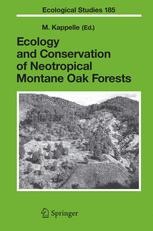
Ecology and Conservation of Neotropical Montane Oak Forests
Covers the range of natural and managed oak forests in the highlands of tropical America. Providing an understanding of ecological patterns and processes that determine the structure and functioning of these forests, this volume aims to serve as a basis for sustainable forest management and biodiversity conservation.
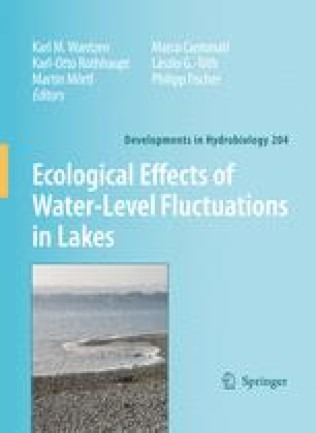
Ecological Effects of Water-Level Fluctuations in Lakes
It presents selected papers on the ecological effects of WLF in lakes, resulting from a workshop at the University of Konstanz in winter 2005. Issues addressed here include the extent of WLF, and analyses of their effects on different groups of biota from microorganisms to vertebrates. Applied issues include recommendations for the hydrological management of regulated lakes to reduce negative impacts, and a conceptual framework is delivered by an extension of the floodpulse concept for lakes. Current impacts on water use, including increasing demands on drinking and irrigation water, hydropower etc., and climate change effects on WLF make this book an essential resource for aquatic ecologists, engineers, and decision-makers dealing with the management of lake ecosystems and their catchments.

Ecological and Genetic Implications of Aquaculture Activities
Aquaculture is a rapidly growing industry and aquaculture practices can directly interact with and depend upon the surrounding environment. Therefore, the effects of all types of aquaculture on living natural resources and ecosystems are of significant and increasing national and international interest. In Ecological and Genetic Implications of Aquaculture Activities, numerous nationally and internationally prominent aquaculture researchers contribute 27 chapters that comprise overviews of aquaculture effects on the environment, discussions of genetic considerations, thorough documentation of aquaculture effects and their solutions specific to countries, and approaches toward environmentally sustainable aquaculture. Together, these chapters comprise a comprehensive synthesis of many ecological and genetic problems implicated in the practice of aquaculture and of many proven, attempted, or postulated solutions to those problems. Many chapters can serve as benchmark documentations of specific aquaculture effects on biodiversity at different levels.

Eco-design of buildings and infrastructure : developments in the period 2016–2020
Reviews the second five-year sequence of the Chair, first presenting methodological advances in eco-design: life cycle assessment and quantification of uncertainties; local environmental impacts of transport and biodiversity. The interdisciplinary partnership, also associating the human sciences, shows its interest in taking into account the human factor in the modelling of urban systems. This modelling is based on several numerical simulation tools, presented in the third part.

DNA Binders and Related Subjects
advances in technology and the application of new methods to outstanding problems have played a major part in the development of ideas about drug-nucleic acid recognition. The field has undergone an explosive diversification as wider and wider problems became accessible to study using the new ideas and techniques. This volume reflects that diversification by offering accounts of selected areas that illustrate recent advances in the study of ligand–nucleic acid binding over disparate areas of the subject. There are chapters dealing specifically with the invention and application of new methodology, and a particularly thoughtful essay on the interpretation of X-ray diffraction data which may not be as straightforward as is often imagined. Other chapters illustrate the diversity and complexity of drug-DNA binding from several perspectives, referring to particular groups of related compounds or the potential attractions of the less-preferred DNA major groove as a target for nucleotide sequence recognition by ligands.

Diversity Training for Classroom Teaching : A Manual for Students and Educators
This book encourages readers to generate their own construction of effective multicultural education and learn how to adapt it across various student populations and educational problems. At the same time, learning activities encourage readers to respect and seek to understand the experiences and worldviews of different people and how these diverse realities influence what is meant by multicultural education

Diversity and Inclusion in Global Higher Education : Lessons from Across Asia
This book offers pioneering insights and practical methods for promoting diversity and inclusion in higher education classrooms and curricula. It highlights the growing importance of international education programs in Asia and the value of understanding student diversity in a changing, evermore interconnected world

Diversity and Evolution of Butterfly Wing Patterns : An Integrative Approach
is book facilitates an integrative understanding of the development, genetics and evolution of butterfly wing patterns. To develop a deep and realistic understanding of the diversity and evolution of butterfly wing patterns, it is essential and necessary to approach the problem from various kinds of key research fields such as “evo-devo,” “eco-devo,” ”developmental genetics,” “ecology and adaptation,” “food plants,” and “theoretical modeling.”

Distributed applications and interoperable systems ; Vol. 3543 ; 5th IFIP WG 6.1 International conference, DAIS 2005, Athens, Greece, June 15-17, 2005, Proceedings
ThisvolumecontainstheproceedingsoftheIFIPWG6. 1InternationalWorking Conference on Distributed Applications and Interoperable Systems V held in Athens, Greece, on June 15–17, 2005. The conference program presented the state of the art in research concerning distributed and interoperable systems. The emergence of 4th-generation c- munication systems, the evolution of Internet technologies, the convergence of telecom and datacom, wireless and ?xed communication systems and appli- tions pave the path for ubiquitous service and application provision. Innovative solutions are required for the development, implementation and operation of distributed applications in complex IT environments full of diversity and h- erogeneity. Today, the emerging wide spectrum of distributed systems.
