



الصفحة 8
الصفحة 8

Data Center Handbook : Plan, Design, Build, and Operations of a Smart Data Center ; 2nd ed.
Explains the fundamentals, advanced technologies, and best practices used in planning, designing, building and operating a mission-critical, energy-efficient, sustainable data center. This handbook, in its second edition, covers anatomy, ecosystem and taxonomy of data centers that enable the Internet of Things and artificial intelligent ecosystems and encompass the following: Data center overview and strategic planning Data center technologies Data center design and construction Data center operations technologies

Current Developments in Bioerosion
The book opens with papers on the evolutionary significance of bioerosion, and subsequently ventures out to explore the remarkable diversity of bioerosive biota. From microboring bacteria to grazing echinoids, the studies use a variety of techniques ranging from field observations to sophisticated micro-computed tomography to investigate the ecological and environmental role of these organisms, including symbiotic interactions and alteration of non-carbonate substrates.

Crypto-Finance, Law and Regulation : Governing an Emerging Ecosystem
Explores the emergence of a decentralised and disintermediated crypto-market and investigates the way in which it can transform the financial markets. It examines three components of the financial market – technology, finance, and the law – and shows how their interrelationship dictates the structure of a crypto-market. It focuses on regulators’ enforcement policies and their jurisdiction over crypto-finance operators and participants. The book also discusses the latest developments in crypto-finance, and the advantages and disadvantages of crypto-currency as an alternative payment product. It also investigates how such a decentralised crypto-finance system can provide access to finance, promote a shared economy, and allow access to justice.

Corporate and Investment Banking : Preparing for a Career in Sales, Trading, and Research in Global Markets
Provides unique information to prepare graduates and newly hired corporate and investment banking professionals for a career in the global markets environment of large universal and international investment banks. It shows the interrelationship between the three specific business functions of sales, trading, and research, as well as the interaction with corporate and institutional clients. The book fills a gap in the available literature by linking financial market theory to the practical aspects of day-to-day operations on a trading floor and offers a taxonomy of the current banking business, providing an in-depth analysis of the main market participants in the global markets ecosystem. Engaging the reader with case studies, anecdotes, and industry color, the book addresses the risks and opportunities of the global markets business in today’s global financial markets both from a theoretical and from a practitioner’s perspective and focuses on the most important fixed-income financial instruments from a pricing, risk-management, and client-marketing perspective.

Conservation Biology : Foundations, Concepts, Applications
Fred Van Dyke’s new textbook, Conservation Biology: Foundations, Concepts, Applications, 2nd Edition represents a major new text for anyone interested in conservation. Drawing on his experience as a conservation biologist, college teacher, and successful textbook author, Van Dyke’s organizational clarity and readable style make this book an invaluable resource for students in conservation around the globe.Presenting key information and well-selected examples, this student-friendly volume carefully integrates the science of conservation biology with its implications for ethics, law, policy and economics. In addition to rigorous examination of the scientific theory supporting conservation biology and its applications, this unique book includes a number of features which set it apart from others. These include its chapters on aquatic conservation, landscape ecology, and ecosystem management, and its direct explanation and invitation to students on how to enter the work of conservation as a professional and personal vocation.

Conceptual Ecology and Invasion Biology : Reciprocal Approaches to Nature
In this edited volume, global experts in ecology and evolutionary biology explore how theories in ecology elucidate the invasion processes while also examining how specific invasions informs ecological theory. This reciprocal benefit is highlighted in a number of scales of organization: population, community and biogeographic, while employing example invaders in all major groups of organisms and from a number of regions around the globe. The chapters in this volume utilize many of the cutting edge observational, experimental, analytical and computational methods used in modern ecology. Through merging conceptual ecology and invasion biology we can obtain a better understanding of the invasion process while also developing a better understanding of how ecological systems function.

Colloidal Transport in Porous Media
Colloids are known to be the often neglected phase for the transport of pollutants in aquatic ecosystems. The book covers the basics of abiotic colloid characterization, of biocolloids and biofilms, the resulting transport phenomena and their engineering aspects. The subject is presented from an international group of leading specialists devoted to colloidal sciences. The contributions include theoretical considerations, results from model experiments as well as field studies. The information given will serve students and scientists interested in the analytical, chemical, microbiological, geological and hydrological aspects of material transport in aquatic systems and soils.

Cold-Water Corals and Ecosystems
Following the exciting exploration of hot vent and cold seep ecosystems, the rediscovery of cold-water coral ecosystems with high-technology instrumentation is currently another hot topic in multidisciplinary marine research. Conventionally, coral reefs are regarded as restricted to warm and well-illuminated tropical seas, not associated with cold and dark waters of higher latitudes. However, ongoing scientific missions have shed light on the global significance of this overlooked ecosystem. Cold-water coral ecosystems are involved in the formation of large seabed structures such as reefs and giant carbonate mounds, and they represent unexploited paleo-environmental archives of earth history. Like their tropical cousins, cold-water coral ecosystems harbour rich species diversity. Despite the great water depths, commercial interests overlap more and more with the coral occurrences. Human activities already impinge directly on cold-water coral reefs causing severe damage to this vulnerable ecosystem. In this volume, the current key institutions involved in cold-water coral research have contributed 62 state-of-the-art articles from geology and oceanography to biology and conservation.

Cognitive Wireless Networks : Concepts, Methodologies and Visions Inspiring the Age of Enlightenment of Wireless Communications
Cognition, a continuous process involving sensing, reasoning, understanding and reacting, can be applied to wireless networks in order to adapt the system to the highly dynamic wireless ecosystem. The ultimate goals are to enhance the efficiency in the use of radio resources as well as to improve both link and network performance. This book presents a detailed overview of a rapidly emerging topic in modern communications: cognitive wireless networks. The key aspects of cognitive and cooperative principles in wireless networks are discussed in this book. Furthermore, Cognitive Wireless Networks advocates the concept of breaking up the cellular communication architecture by introducing cooperative strategies among wireless devices. Cognitive wireless networking is the key to success in handling the upcoming dynamic network configurations and exploiting this cross-over to the fullest extent.

Coastal dunes : Ecology and conservation
Brings together coastal dune specialists from tropical and temperate latitudes, which together cover a wide set of topics, including: geomorphology, community dynamics, ecophysiology, biotic interactions and environmental problems and conservation. A major product of this book is a set of recommendations for future research, identifying relevant topics where detailed knowledge is still lacking. It also identifies management tools that will promote and maintain the rich diversity of the dune environments in the context of continuing coastal development.

Cloud Computing, Smart Grid and Innovative Frontiers in Telecommunications ; 9th EAI International Conference, CloudComp 2019, and 4th EAI International Conference, SmartGIFT 2019, Beijing, China, December 4-5, 2019, and December 21-22, 2019
Constitutes the refereed proceedings of the 9thInternational Conference on Cloud Computing, CloudComp 2019, and the 4th International Conference on Smart Grid and Innovative Frontiers in Telecommunications, SmartGIFT 2019, both held in Beijing, China, in December 2019. The55 full papers of both conferences were selected from 113 submissions. CloudComp 2019 presents recent advances and experiences in clouds, cloud computing and related ecosystems and business support. The papers are grouped thematically in tracks on cloud architecture and scheduling; cloud-based data analytics; cloud applications; and cloud security and privacy. SmartGIFT 2019 focus on all aspects of smart grids and telecommunications, broadly understood as the renewable generation and distributed energy resources integration, computational intelligence applications, information and communication technologies.

Cloud Computing Solutions : Architecture, Data Storage, Implementation, and Security
Includes all the cloud-related technologies in a single platform, so that researchers, academicians, postgraduate students, and those in the industry can easily understand the cloud-based ecosystems. Discusses the evolution of cloud computing through grid computing and cluster computing. It will help researchers and practitioners to understand grid and distributed computing cloud infrastructure, virtual machines, virtualization, live migration, scheduling techniques, auditing concept, security and privacy, business models, and case studies through the state-of-the-art cloud computing countermeasures. The topics treated in the book include:The evolution of cloud computing from grid computing, cluster computing, and distributed systems / Covers cloud computing and virtualization environments / Discusses live migration, database, auditing, and applications as part of the materials related to cloud computing / Provides concepts of cloud storage, cloud strategy planning, and management, cloud security, and privacy issues / Explains complex concepts clearly and covers information for advanced users and beginners.
Mathematical Modelling for Sustainable Development
Mathematics needs Sustainable Development. When science was gradually reinvented in European medieval societies, it was legitimised as contributing to the disclosure of God’s divine creation. The conflicts that emerged became well known as a result of the clash between Galileo and the Church. Science found a new legitimacy through recognition that it was a powerful force against superstition. In the Enlightenment the argument was pushed forward by attributing Progress to the advancement of science: science could produce a better world by promoting rationality. In our modern society, science has become intimately linked to technology. Science for its own sake unfortunately rarely has positive outcomes in terms of research grant applications. Meanwhile, science and technology, and the progress they are supposed to produce, meet with wide scale scepticism. We all know of the current global problems: climate change, resource depletion, a thinning ozone layer, space debris, declining biodiversity, malnutrition, dying ecosystems, global inequity, and the risk of unprecedented nuclear wars
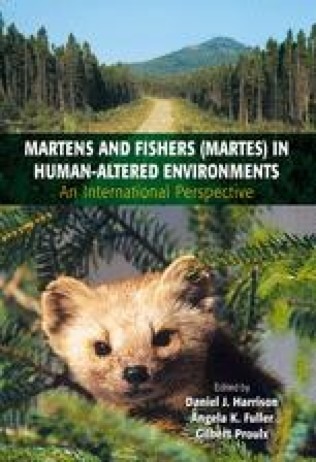
Martens and Fishers (Martes) in human-altered environments : An international perspective
Examines the conditions where humans and martens are compatible and incompatible, and promotes land use practices that allow Martes to be representatively distributed and viable. All Martes have been documented to use forested habitats and 6 species (excluding the stone marten) are generally considered to require complex mid- to late-successional forests throughout much of their geographic ranges. All species in the genus require complex horizontal and vertical structure to provide escape cover protection from predators, habitat for their prey, access to food resources, and protection from the elements. Martens and the fisher have high metabolic rates, have large spatial requirements, have high surface area to volume ratios for animals that often inhabit high latitudes, and often require among the largest home range areas per unit body weight of any group of mammals. Resulting from these unique life history characteristics, this genus is particularly sensitive to human influences on their habitats, including habitat loss, stand-scale simplification of forest structure via some forms of logging, and landscape-scale effects of habitat fragmentation. Given their strong associations with structural complexity in forests, martens and the fisher are often considered as useful barometers of forest health and have been used as ecological indicators, flagship, and umbrella species in different parts of the world. Thus, efforts to successfully conserve and manage martens and fishers are associated with the ecological fates of other forest dependent species and can greatly influence ecosystem integrity within forests that are increasingly shared among wildlife and humans.We have made great strides in our fundamental understanding of how animals with these unique life history traits perceive and utilize habitats, respond to habitat change, and how their populations function and perform under different forms of human management and mismanagement.

Maritime Spatial Planning : past, present, future
This book is the first comprehensive overview of maritime spatial planning. Situated at the intersection between theory and practice, the volume draws together several strands of interdisciplinary research, reflecting on the history of MSP as well as examining current practice and looking towards the future. The authors and contributors examine MSP from disciplines as diverse as geography, urban planning, political science, natural science, sociology and education; reflecting the growing critical engagement with MSP in many academic fields. This innovative and pioneering volume will be of interest and value to students and scholars of maritime spatial planning, as well as planners and practitioners.
Marine carbon biogeochemistry : A primer for earth system scientists
This book discusses biogeochemical processes relevant to carbon and aims to provide with insight into the functioning of marine ecosystems. A carbon centric approach has been adopted, but other elements are included where relevant or needed. The book focuses on concepts and quantitative understanding of primary production, organic matter mineralization and sediment biogeochemistry. The impact of biogeochemical processes on inorganic carbon dynamics and organic matter transformation are also discussed.
Marine Biodiversity : Patterns and Processes, Assessment, Threats, Management and Conservation
Understanding the functioning of Marine Ecosystems is the first step to measure and predict the influence of Man, and to find solutions for the enormous array of problems we face today. This volume is organised according to the four subthemes of the symposium and to issues commonly perceived as relevant by scientists concerned with the study, protection and management of Marine Biodiversity: patterns and processes, assessment, threats and management and conservation.
Mangroves and Halophytes : Restoration and Utilisation
Focusing on Venezuela and Mexico, this edited volume from the International Society of Halophyte Utilisation (ISHU) explores the environmental issues facing South and Central America's coastal ecosystems, and discusses the uses of mangrove species and other halophytes in addressing issues of both coastal pollution and upland soil salinisation. The book draws on expertise from Europe and South America to present a series of case studies that detail Venezuela’s saline ecosystems and examine the economic potential of mangrove restoration and halophyte production. It includes cutting-edge research into the establishment of new mangrove stands which could serve as prototypes for the sustainable use of halophytes, including Chenopodium quinoa and Tamarix aphylla. Moreover, the detailed examples from Venezuela and other Caribbean countries provide useful models for comparison with halophyte utilisation in other parts of the world – especially the Mediterranean region, where much of the earlier research of the ISHU had been conducted.
Managing Socio-ecological Production Landscapes and Seascapes for Sustainable Communities in Asia : Mapping and Navigating Stakeholders, Policy and Action
This book presents up-to-date analyses of community-based approaches to sustainable resource management of SEPLS (socio-ecological production landscapes and seascapes) in areas where a harmonious relationship between the natural environment and the people who inhabit it is essential to ensure community and environmental well-being as well as to build resilience in the ecosystems that support this well-being.
Managing Forest Ecosystems : The Challenge of Climate Change
With climate change now charging up the political agenda, there are three issues commonly making the headlines: carbon budgets, renewable energy, and the anticipated impacts of climate change. Equally important, though currently less well covered, is the issue how these effects might be mitigated. Given the significant role that forests play in the climate system – as sources, sinks, and through carbon trading – this book discusses the current scientific evidence on the relationships between climate, forest resources and forest management practices around the world. Drawing on expertise from forest scientists from several continents, the book presents both in depth analysis of the current knowledge, and a series of case studies which assess the biological and the economic impacts of climate change. It includes sections on forest responses to climate change, monitoring and modeling changes, economic and management implications, and carbon sequestration under specific management systems.
