



الصفحة 8
الصفحة 8

Electrochemical processes and corrosion in reinforced concrete
Some reinforced concrete structures prematurely corrode as they age, with significant financial implications, but it is not immediately clear why some are more durable than others. This book looks at the various mechanisms for corrosion and how what seemed to be a relatively simple matter has become more complex the further it is understood due to the properties of concrete, steel and the way reinforced concrete structures are constructed. The significance of electrochemical processes is identified with recent research using new technology discussed.

Elasto-plastic damage behaviour of concrete elements
Shows how the mechanical phenomena of familiar concrete structures can be expressed using mathematical models and provides a solid basic understanding of the nonlinear behaviour of concrete structures. It applies elasto-plastic theory to damage mechanics and the modelling of cracks in concrete. Sets out the reality of damage mechanics in concrete Connects standard theory with good design and construction practice

Economic Loss Caused by Genetically Modified Organisms : Liability and Redress for the Adventitious Presence of GMOs in Non-GM Crops
The cultivation of genetically modified (GM) crops in the EU may lead to cases, in which traditional agricultural products contain detectable traces of GMOs. On the one hand, such admixture may result from inadequate application of segregation measures by farmers. On the other hand, as agriculture is an open process that does not allow the complete isolation of individual fields, a certain degree of admixture between neighbouring crops is unavoidable in practice. The presence of GMOs in traditional products may lead to their devaluation, which would entail an economic damage to the producer of

Ecological and Health Effects of Building Materials
Deals with the present adverse effects of using precarious building materials on the ecology and human health. Also, the detailed discussions on the novel and greener construction materials and their utilization as an alternative to the conventional harmful existing methods and materials are also presented in the subsequent chapters. This book helps to fill the research gaps in the existing prior-art knowledge in the field of sustainable construction and green building materials and methods giving due importance to ecology and health, specifically to the fields of sustainable structural engineering, sustainable geotechnical engineering, sustainable road engineering, etc.

Eco-efficient materials for reducing cooling needs in buildings and construction : Design, properties and applications
Provides a comprehensive review on building envelope materials and technologies for reducing cooling needs in buildings. The book offers in-depth analysis of the performance of new innovative materials and technologies used in pavements, facade and roofing materials, PCMs and chromogenic smart materials. Includes practical case study examples of their applications in building and construction. The book is an essential reference resource for researchers, architects and civil engineers, city planners, product developers, manufacturers, and other professionals working in eco-efficient cooling materials and sustainable and zero-energy building design.

Eco-design of buildings and infrastructure : developments in the period 2016–2020
Reviews the second five-year sequence of the Chair, first presenting methodological advances in eco-design: life cycle assessment and quantification of uncertainties; local environmental impacts of transport and biodiversity. The interdisciplinary partnership, also associating the human sciences, shows its interest in taking into account the human factor in the modelling of urban systems. This modelling is based on several numerical simulation tools, presented in the third part.

Eco-and ground bio-engineering : The use of vegetation to improve slope stability ; Proceedings of the 1st International Conference on Eco-Engineering 13-17 September 2004
In an era where climate change, natural catastrophes and land degradation are major issues, the conservation of soil and vegetation in mountainous or sloping regions has become an international priority. How to avoid substrate mass movement through landslides and erosion using sustainable and ecologically sound techniques is rapidly becoming a scientific domain where knowledge from many different fields is required. These proceedings bring together papers from geotechnical and civil engineers, biologists, ecologists and foresters, who discuss current problems in slope stability research, and how to address those problems using ground bio- and eco-engineering techniques.

Earthquake Source Asymmetry, Structural Media and Rotation Effects
This is the first book on rotational effects in earthquakes, a revolutionary concept in seismology. Existing models do no yet explain the significant rotational and twisting motions that occur during an earthquake and cause the failure of structures. This breakthrough monograph thoroughly investigates rotational waves, basing considerations on modern observations of strong rotational ground motions and detection of seismic rotational waves. To describe the propagation of such waves the authors consider structured elastic media that allow for rotational motions and rotational deformations of the ground, sometimes stronger than translational deformations. The rotation and twist effects are investigated and described and their consequences for designing tall buildings and other important structures are presented. The book will change the way the world views earthquakes and will interest scientists and researchers in the fields of Geophysics, Geology and Civil Engineering.

Earthquake disaster simulation of civil infrastructures : From tall buildings to urban areas
Covers a range of numerical modeling approaches, higher performance computation methods, and high fidelity visualization techniques for earthquake disaster simulation of tall buildings and urban areas. It also demonstrates successful engineering applications of the proposed methodologies to typical landmark projects (e.g., Shanghai Tower and CITIC Tower, two of the world's tallest buildings; Beijing CBD and San Francisco Bay Area).
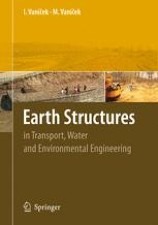
Earth Structures : In Transport, Water and Environmental Engineering
This book describes the principles of working with soil as a construction material, including two basic ways of treating it: geosynthetics and stabilization. The book discusses the design logic and ways to control Earth Structures, which differ significantly from other construction materials. Building with Earth involves greater uncertainty and risk, which means that there is a need for better design detailing and improvement in the quality of financial calculations. The general part of the book gives a detailed description of the principles of limit states according to Eurocode 7, after which geotechnical design is also described. Subsequent chapters concentrate on earth structures for transport, water, and environmental projects. The chapter on Earth Structures in transport engineering presents detailed coverage of limit states of stability and deformation. Earth Structures in water engineering prioritizes the limit state of internal erosion. Earth Structures in environmental engineering describes new designs, in which part of the structure is created from non-standard materials which are usually susceptible to internal collapse, double porosity, unsaturation, etc. It also focuses on protecting the surrounding environment from contamination.

Earth reinforcement and soil structures
Provides a comprehensive explanation and illustration of earth reinforcement and soil structures, from the viewpoint of practising engineers involved in design and construction. This edition has been updated to reflect the latest changes in theory, materials and practice.

Dynamics of Railway Bridges
Provides a comprehensive survey of the dynamic stresses in railway bridges under moving vehicles and summarizes important theoretical and experimental results which has been obtained from various research programs dealing with European railway bridges.

Dynamics of Freezing-Thawing Soil around Subway Shield Tunnels
Addresses development laws for axial strain and excess pore water pressure in silty clay around subway shield tunnels before and after freezing-thawing when subjected to subway loading, as well as the effect of freezing-thawing on the dynamic parameters of silty clay, including the dynamic modulus and damping ratio, introducing readers to the design and construction of bypasses in subway tunnels with the artificial freezing method. On this basis, it then studies the microstructures of silty clay before and after freezing-thawing cyclic loading by means of scanning electron microscope tests and mercury intrusion porosimetry tests. Lastly, the book presents a numerical simulation of the dynamics of silty clay around subway tunnels before and after thawing.

Dynamics : An introduction for civil and structural engineers
Provides civil and structural engineers with introductory information on all the main principles and important aspects of the subject.

Drones and the Creative Industry : Innovative Strategies for European SMEs
Presents innovative strategies in the use of civil drones in the cultural and creative industry. Specially aimed at small and medium-sized enterprises (SMEs), the book offers valuable insights from the fields of marketing, engineering, arts and management. With contributions from experts representing varied interests throughout the creative industry, including academic researchers, software developers and engineers, it analyzes the needs of the creative industry when using civil drones both outdoors and indoors. The book also provides timely recommendations to the industry, as well as guidance for academics and policymakers.
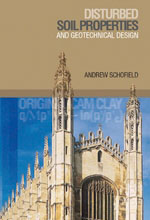
Disturbed soil properties and geotechnical design
Describes the developments leading to the Original Cam Clay model, focusing on fundamentals of the shearing of soil. The aim is to lay the groundwork of understanding that should form the basis of geotechnical design, guiding engineers towards the class of behaviour to be expected under different combinations of effective stress and water content.

Digital Towns : Accelerating and Measuring the Digital Transformation of Rural Societies and Economies
This book explores the digital transformation of small and rural towns, in particular, how to measure the evolution and development of digital towns. In addition to access to resources, competition from urban and global markets, and population trends, rural communities present lesser access and use of digital technologies and have lower digital competencies and skills than their urban counterparts. Consequently, they experience less beneficial outcomes from increased digitalisation than urban areas. This book defines what a digital town is and explores digitalisation from the perspective of the four basic economic sectors in towns - individuals and households, businesses, the public sector, and civil society - and three types of enabling infrastructure - digital connectivity, education, and governance.

Digital Technologies in Construction Engineering : Selected Papers
Includes the latest advances, innovations, and applications in the field of construction engineering, as presented by researchers and engineers at the Digital Technologies in Construction Engineering conference, held in Belgorod, Russia, on June 8-9, 2021. It covers highly diverse topics, including industrial and civil construction, building materials; environmental engineering and protection; sustainability; structure safety and special construction structures. The contributions, which were selected by means of a rigorous international peer-review process, highlight numerous exciting ideas that will spur novel research directions and foster multidisciplinary collaborations.

Development of geopolymer from pond ash-thermal power plant waste : Novel constructional materials for civil engineers
Demonstrates how to utilize fly ash/pond ash (waste materials from thermal power plants) to produce a novel material called 'Geopolymer' (GP). Red mud, slags, etc., are mixed with fly ash to produce GP with enhanced strength. As shown in a few European countries, GP can replace cement, and some permanent structures constructed with GP are now appearing in a few advanced countries. GP, and geopolymer concrete, is considered suitable for the construction of roads, buildings, etc., and will eventually, fully or partially, replace cement.

Deterministic Numerical Modeling of Soil Structure Interaction
In order to describe soil–structure interaction in various situations (nonlinear, static, dynamic, hydro-mechanical couplings), this book gives an overview of the main modeling methods developed in geotechnical engineering. The chapters are centered around: the finite element method (FEM), the finite difference method (FDM), and the discrete element method (DEM). Deterministic Numerical Modeling of Soil–Structure Interaction allows the reader to explore the classical and well-known FEM and FDM, using interface and contact elements available for coupled hydro-mechanical problems.
