



الصفحة 8
الصفحة 8

Interior Spaces : Space, Light, Materials
Space, light and material: from the meditative ambiance of a chapel or synagogue to the colourful, organic forms of fashion boutiques, the design of an interior space - composed of lighting, the surfaces, textures and colours of materials, finishing and features - creates atmosphere and lends specific character. The growing willingness on the part of designers in recent years to experiment with colours, materials and spatial concepts is demonstrated in the range and diversity of international examples presented in this, the third volume in the series "In Detail". All plans and drawings of interiors and furnishings have been carefully researched and drawn by the staff of DETAIL.

Interior Graphic Standards
Designed and organized to give students the specific information they require, this is an essential reference for anyone studying architectural interiors. Provides essential specification and detailing information for working inside the structural shell, covering interior partitions and floor systems, updated lighting practices, furnishings, equipment, and wall, floor, and ceiling finishes.

Interior design visual presentation : A guide to graphics, models and presentation methods ; 5th ed.
A newly updated and comprehensive guide to all aspects of visual design From doing a quick sketch to producing a fully rendered model, the ability to create visual representations of designs is a critical skill for every designer. Interior Design Visual Presentation, Fifth Edition offers thorough coverage of interior design communication used throughout the design process, complete with a broad range of real-world examples.

Interior design masters
Contains 300 biographical entries of people who have significantly impacted design. They are the people, historical and contemporary, that students and practitioners should know. Coverage starts in the late-Renaissance, with a focus on the twentieth and twenty-first centuries. The book has five sections, with the entries alphabetical in each, so it can serve as a history text book and a reference guide. Theseventeeth- andeighteenth-century section covers figures from Thomas Chippendale to Horace Walpole. Thenineteenth-century section includes William Morris and Candace Wheeler. The earlytwentieth-century section presents modernisms design heroes, including Marcel Breuer, Eileen Gray, and Gilbert Rohde. The post-World War II designers range from Madeleine Castaing to Raymond Loewy. The final contemporary section includes Ron Arad and the Bouroullec brothers. These are the canonical figures who belong to any design history.

Interior Design Illustrated
Introduces complex design concepts in a visually stunning format; from defining the space and using the elements of design, to planning building systems and incorporating sustainable materials, this volume embodies the idea that beauty and function are not separate entities, but two parts of a whole. This new fourth edition has been updated to reflect the latest building codes and design practices, with discussion of new materials related to acoustics, lighting, and sustainable furnishings. Renewed attention to sustainability includes new information on energy conservation, design for longevity and adaptive reuse of existing buildings, as well as an updated discussion on LED lighting, workplace design, use of color, and computer modeling software to provide a well-rounded view of how interior design firms are working today. This classic text brings the elements and principles of design to life, giving students the practical skills they need to transition from idea to concept. Understand the latest building codes and how to integrate them into your design Explore new advances in materials, lighting, and wireless technology Design from a perspective of sustainability, longevity, and energy efficiency Delve into BIM, including software for modeling lighting, acoustics, and more

Interior design for small dwellings
Addresses the onrush of interest in smaller homes and the possibility that small dwellings might be the answer to housing needs and sustainability. The book explores key principles essential to residing and designing small interiors with emphasis on client involvement and implementation of participatory, inclusive design as advocated by the Council for Interior Design Accreditation.

Interior Design Concept : Critical Practices, Processes and Explorations in Interior Architecture and Design
Combines a comprehensive introduction to design concept, with a reflective examination upon the various ways it can be understood, harnessed, and implemented. Within interior architecture and design, the power of conceptual thinking to fuel creativity, innovation, and collaboration is evident in the use of design concept. Broadly accepted as an essential component in the design process, design concept is a notoriously elusive topic which has, until now, received little critical attention. This book offers a reevaluation of current academic ideas about design methodologies and the nature of inspiration, alongside brand-new data from an international research study to help clarify what creativity really means in the modern world.

Interior Design : Conceptual Basis
Seven concepts of planning, circulation, 3D, construction, materials, colour and lighting, which covers the entire spectrum of a designer's activity. Analysing design concepts from the view of the range of possibilities that the designer can examine and eventually decide by choice and conclusive belief the appropriate course of action to take in forming that particular concept, the formation and implementation of these concepts is taken in this book to aid the designer in his/her professional task of completing a design proposal to the client. The purpose of this book is to prepare designers to focus on each concept independently as much as possible, whilst acknowledging relative connections without unwarranted influences unfairly dictating a conceptual bias, and is about that part of the design process called conceptual analysis. It is assumed that the site, location, building and orientation, as well as the client's brief of activities and needs have been digested and analysed to provide the data upon which the design process can begin.

Interior design : A professional guide
This is a benchmark book which encourages interior designers to raise their professional status and offers their clients an insight into the complex profession of modern interior design.

Interconnect-Centric Design for Advanced SoC and NoC
In Interconnect-centric Design for Advanced SoC and NoC, we have tried to create a comprehensive understanding about on-chip interconnect characteristics, design methodologies, layered views on different abstraction levels and finally about applying the interconnect-centric design in system-on-chip design.

Interactive TV : A shared experience ; 5th European Conference, EuroITV 2007, Amsterdam, the Netherlands, May 24-25, 2007, Proceedings
This book constitutes the refereed proceedings of the 5th European Conference on Interactive Television, EuroITV 2007, held in Amsterdam, The Netherlands, May 2007. The papers are organized in topical sections on social TV systems, user studies, the future of TV, social TV evaluation, personalization, and mobile TV.

Interactive technologies and sociotechnical systems; 12th International Conference, VSMM 2006, Xi'an, China, October 18-20, 2006, Proceedings
This book constitutes the refereed proceedings of the 13th International Conference on Interactive Technologies and Sociotechnical Systems, VSMM 2006, held in Xi'an, China in October 2006. The 59 revised full papers presented together with one keynote paper were carefully reviewed and selected from more than 180 submissions.

Interactive storytelling ; 1st Joint International Conference on interactive digital storytelling, ICIDS 2008 Erfurt, Germany, November 26-29, 2008 Proceedings
This book constitutes the refereed proceedings of the First Joint International Conference on Interactive Digital Storytelling, ICIDS 2008, held in Erfurt, Germany, in November 2008.The 19 revised full papers, 5 revised short papers, and 5 poster papers presented together with 3 invited lectures and 8 demo papers were carefully reviewed and selected from 62 submission. The papers are organized in topical sections on future perspectives on interactive digital storytelling, interactive storytelling applications, virtual characters and agents, user experience and dramatic immersion, architectures for story generation, models for drama management and interacting with stories, as well as authoring and creation of interactive narrative.

Intelligent Virtual Agents ; Vol.3661 : 5th International Working Conference, IVA 2005, Kos, Greece, September 12-14, 2005, Proceedings
The origin of the Intelligent Virtual Agents conference dates from a successful workshop on Intelligent Virtual Environments held in Brighton at the 13th European Conference on Artificial Intelligence (ECAI'98). This workshop was followed by a second one held in Salford in Manchester in 1999. Subsequent events took place in Madrid, Spain in 2001 and Irsee, Germany in 2003 and attracted participants from both sides of the Atlantic as well as Asia. th This volume contains the proceedings of the 5 International Working Conference on Intelligent Virtual Agents, IVA 2005, held on Kos Island, Greece, September 12–14, 2005, which highlighted once again the importance and vigor of the research field. A half-day workshop under the title “Socially Competent IVA’s: We are not alone in this (virtual) world!” also took place as part of this event. IVA 2005 received 69 submissions from Europe, North and South America, Africa and Asia. The papers published here are the 26 full papers and 14 short papers presented at the conference, as well as one-page descriptions of the 15 posters and the descriptions of the featured invited talks by Prof. Justine Cassell, of Northwestern University and Prof. Kerstin Dautenhahn, of the University of Hertfordshire. We would like to thank a number of people that have contributed to the success of this conference. First of all, we thank the authors for their high-quality work and their willingness to share their ideas.

Intelligent Virtual Agents ; 8th International Conference, IVA 2008, Tokyo, Japan, September 1-3, 2008. Proceedings
This book constitutes the refereed proceedings of the 8th International Workshop on Intelligent Virtual Agents, IVA 2008, held in Tokyo, Japan, in September 2008.The 18 revised full papers and 28 revised short papers presented together 42 poster papers were carefully reviewed and selected from 99 submissions. The papers are organized in topical sections on motion and empathy; narrative and augmented reality; conversation and negotiation; nonverbal behavior; models of culture and personality; markup and representation languages; architectures for robotic agents; cognitive architectures; agents for healthcare and training; and agents in games, museums and virtual worlds.

Intelligent Virtual Agents ; 7th International Working Conference, IVA 2007, Paris, France, September 17-19, 2007, Proceedings
The 19 revised full papers and 12 revised short papers presented together with five invited talks and the abstracts of 32 poster papers are organized in topical sections on rendering and analysis, culture and identity, behavior models, feedback models, dialogues, applications, evaluation, gaze models and emotions.

Intelligent Techniques and Tools for Novel System Architectures
Provides a source wherein academics, researchers and practitioners may derive high-quality, original and state-of-the-art papers describing theoretical aspects, systems architectures, analysis and design tools and techniques, and implementation experiences in intelligent systems where information and knowledge management should be mainly characterised as a net-centric infrastructure riding on the fifth wave of "distributed intelligence".
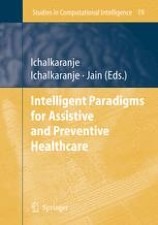
Intelligent Paradigms for Assistive and Preventive Healthcare
Intelligent paradigms play a tremendous role in the field of Assistive and Preventive Healthcare (APH). This book presents some of the latest research in the field of APH by most prestigious researchers. The contributions include: Ubiquitous computing in APH Multimedia medical informatics in APH Virtual reality in APH Digital Talking books Electronic Locomotion Aids for the Blind Multimedia Communication System for the Blind Information Technology for Deaf People Gait Training System for Computer-Aided Rehabilitation
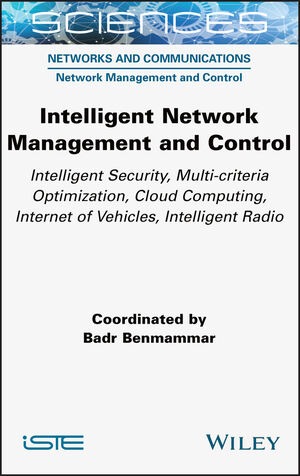
Intelligent Network Management and Control : Intelligent Security, Multi-criteria Optimization, Cloud Computing, Internet of Vehicles, Intelligent Radio
The management and control of networks can no longer be envisaged without the introduction of artificial intelligence at all stages. Deals with topical issues related mainly to intelligent security of computer networks, deployment of security services in SDN (software-defined networking), optimization of networks using artificial intelligence techniques and multi-criteria optimization methods for selecting networks in a heterogeneous environment. Focuses on selecting cloud computing services, intelligent unloading of calculations in the context of mobile cloud computing, intelligent resource management in a smart grid-cloud system for better energy efficiency, new architectures for the Internet of Vehicles (IoV), the application of artificial intelligence in cognitive radio networks and intelligent radio input to meet the on-road communication needs of autonomous vehicles.

Intelligent Distributed Computing, Systems and Applications ; Proceedings of the 2nd International Symposium on Intelligent Distributed Computing – IDC 2008, Catania, Italy, 2008
Addresses many topics related to intelligent and distributed computing, systems and applications, including: adaptivity and learning; agents and multi-agent systems; argumentation; auctions; case-based reasoning; collaborative systems; data structures; distributed algorithms; formal modeling and verification; genetic and immune algorithms; grid computing; information extraction, annotation and integration; network and security protocols; mobile and ubiquitous computing; ontologies and metadata; P2P computing; planning; recommender systems; rules; semantic Web; services and processes; trust and social computing; virtual organizations; wireless networks; XML technologies.
