



الصفحة 79
الصفحة 79
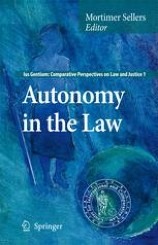
Autonomy : In the Law
Autonomy in the Law considers one of the most important benefits of the rule of law. Juxtaposing European and American conceptions of autonomy in the law of families, capital punishment and, criminal trials reveals the common values that justify all legal systems. Law protects the autonomy of individuals and associations by defending the boundaries of their own self-rule. This book illuminates the fundamental purpose of law by examining how European and American lawyers, judges and citizens do and should apply legal autonomy to the practical circumstances of litigation, legislation and the law.

Automorphic Forms and Lie Superalgebras
Most known examples of Lie superalgebras with a related automorphic form such as the Fake Monster Lie algebra whose reflection group is given by the Leech lattice arise from (super)string theory and can be derived from lattice vertex algebras. The No-Ghost Theorem from dual resonance theory and a conjecture of Berger-Li-Sarnak on the eigenvalues of the hyperbolic Laplacian provide strong evidence that they are of rank at most 26.The aim of this book is to give the reader the tools to understand the ongoing classification and construction project of this class of Lie superalgebras and is ideal for a graduate course.
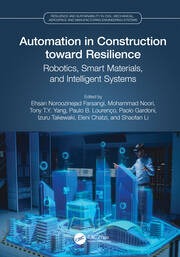
Automation in construction toward resilience : Robotics, smart materials and intelligent systems
Presents all aspects of automation in construction pertaining to the use of information technologies in design, engineering, construction technologies, and maintenance and management of constructed facilities. The broad scope encompasses all stages of the construction life cycle from initial planning and design, through the construction of the facility, its operation, and maintenance, to the eventual dismantling and recycling of buildings and engineering structures

Automata, languages and programming ; Vol. 4052 : 33rd International Colloquium, ICALP 2006, Venice, Italy, July 10-14, 2006, Proceedings, Part II
a series of annual conferences of the European Association for Theoretical Computer Science (EATCS) which frsttookplacein 1972.Thisyear,. ICALP 2006 consisted of four invited lectures and the contributed papers. This volume of the proceedings contains all contributed papers presented at the conference in Track A, together with the paper by the invited speaker Noga Alon , A companion volume contains all contributed papers presented inTrack Band TrackCtogetherwiththepapersbytheinvited speakers Cynthia Dwork (Microsoft Research, USA) and Prakash Panangaden (Mc Gill University, Canada). The programhad an additional invited lecture by Simon Peyton Jones (Microsoft Research, UK), which does not appear in the proceedings.
Automata, languages and programming ; Vol. 4051 : 33rd International Colloquium, ICALP 2006, Venice, Italy, July 10-14, 2006, Proceedings, Part I
ICALP is a series of annual conferences of the European Association for Theoretical Computer Science (EATCS) which frsttookplacein1972 .Thisyear, ICALP 2006 consisted of four invited lectures and the contributed papers. This volume of the proceedings contains all contributed papers presented at the conference in Track A, together with the paper by the invited speaker Noga Alon (Tel Aviv University, Israel). A companion volume contains all contributed paper spresentedinTrackBandTrackCtogetherwiththepapersbytheinvited speakers Cynthia Dwork (Microsoft Research, USA) and Prakash Panangaden (Mc Gill University, Canada).
Automata, languages and programming ; 35th International Colloquium, ICALP 2008, Reykjavik, Iceland, July 7-11, 2008, Proceedings, Part II
The two-volume set LNCS 5125 and LNCS 5126 constitutes the refereed proceedings of the 35th International Colloquium on Automata, Languages and Programming, ICALP 2008, held in Reykjavik, Iceland, in July 2008.
Automata, Languages and Programming ; 35th International Colloquium, ICALP 2008, Reykjavik, Iceland, July 7-11, 2008, Proceedings, Part I
The two-volume set LNCS 5125 and LNCS 5126 constitutes the refereed proceedings of the 35th International Colloquium on Automata, Languages and Programming, ICALP 2008, held in Reykjavik, Iceland, in July 2008.
AutoCAD 2006 VBA : A programmer's reference
This book will help you take full advantage of the Visual Basic for Applications programming environment within AutoCAD 2006. Whether you want to automate routine tasks, or create sophisticated applications or design that can be generated programmatically, this book will empower you to make AutoCAD work for you. This book is also suitable if you're a power user who wants to make use of the advanced features of AutoCAD 2006 VBA, and you need a fast reference for the full AutoCAD object model. You'll learn to run Autodesk design tasks in the embedded VBA environment. This book is loaded with source code examples, and gives you no matter your skill level the necessary tools to accomplish your AutoCAD 2006 automation tasks.
Autistic people in dental and medical clinics: challenges and Solutions
Gives university students as well as established healthcare professionals an understanding of how they can assist autistic patients in clinical settings. This book providing strategies that aspiring and established healthcare professionals can use to make their clinical workplaces more accommodatingfor autistics and their familiesand present a synopsis of the literature about the challenges and experiences that autistic patients have had in dental and medical settings.
Authoritative communities : The scientific case for nurturing the whole child
Authoritative Communities: The Scientific Case for Nurturing the Whole Child introduces innovative solutions based firmly in the children’s mental health and resilience literature and in the hypothesis that humans are "hardwired to connect." These "authoritative communities" consist of such individuals and institutions as parents, teachers, coaches, elders, and a variety of organizations that are committed to each other’s well-being over the long-term and who instill children with prosocial values such as empathy and compassion. Living within these communities enables children and youth to develop a consistent sense of purpose and meaning, so that they, in turn, are able to grow up to be responsible, productive, and nurturing adults.
Augmented Humanity : Being and Remaining Agentic in a Digitalized World
This book will examine the implications of digitalization for the understanding of humanity, conceived as a community of intelligent agency. It addresses important topics across a range of social and behavioral theories and identifies a range of novel mechanisms and their social behavioral effects. Across the book, the author highlights the expansion of intelligent processing capability brought about by digitalization and the challenges this exposes for integrating artificial and human capabilities
Attitudes, beliefs, motivation and identity in mathematics education : An overview of the field and future directions
Records the state of the art in research on mathematics-related affect. It discusses the concepts and theories of mathematics-related affect along the lines of three dimensions. The first dimension identifies three broad categories of affect: motivation, emotions, and beliefs. The book contains one chapter on motivation, including discussions on how emotions and beliefs relate to motivation. There are two chapters that focus on beliefs and a chapter on attitude which cross-cuts through all these categories. The second dimension covers a rapidly fluctuating state to a more stable trait. All chapters in the book focus on trait-type affect and the chapter on motivation discusses both these dimensions. The third dimension regards the three main levels of theorizing: physiological (embodied), psychological (individual) and social. All chapters reflect that mathematics-related affect has mainly been studied using psychological
Attitudes and changing contexts
In this book, the author defends a unified externalists account of propositional attitudes and reference, and formalizes this view within possible world semantics.
Attention in Cognitive Systems : Theories and Systems from an Interdisciplinary Viewpoint ; 4th International Workshop on Attention in Cognitive Systems, WAPCV 2007 Hyderabad, India, January 8, 2007 Revised Selected Papers
The embodied nature of sensory-motor intelligence requires a continuous and focused interplay between the control of motor activities and the interpretation of feedback from perceptual modalities. Decision making about the selection of information from the incoming sensory stream – in tune with contextual processing on a current task and an agent’s global objectives – becomes a further challenging issue in attentional control. Attention must operate at interfaces between bottom-up driven world int- pretation and top-down driven information selection, thus acting at the core of arti?cial cognitive systems. These insights have already induced changes in AI-related disciplines, such as the design of behavior-based robot control and the computational modeling of animats. Today, the development of enabling technologiessuch as autonomous robotic systems,miniaturizedmobile–evenwearable–sensors,andambientintelligence systems involves the real-time analysis of enormous quantities of data. These data have to be processed in an intelligent way to provide “on time delivery” of the required relevant information. Knowledge has to be applied about what needs to be attended to, and when, and what to do in a meaningful sequence, in correspondence with visual feedback.
Atomistic modeling of materials failure
Atomistic Modeling of Materials Failure is an introduction to molecular and atomistic modeling techniques applied to solid deformation and fracture. Focusing on a variety of brittle, ductile and geometrically confined materials, this detailed overview includes computational methods at the atomic scale, and describes how these techniques can be used to model the dynamics of cracks, dislocations and other deformation mechanisms.

Atomistic approaches in modern biology : From quantum chemistry to molecular simulations
This volume of Topics in Current Chemistry presents an overview of atomistic theoreticalmethodsapplied tomolecular biologicalsystems. Itthus repesents abottom-upview of chemistryonbiologyfroma theoreticalperspective. The chapters arearrangedsuchthat important issuesareconsidered startingfrom a quantum mechanical perspective and proceeding to a molecular mechanics and molecular dynamics descriptiono fthemotionoftheelementaryparticles involved.which are responsible for the properties and function of biomolecules. Depending on the length and time scales relevant for a given phenomenon to be investigated, tailored theoretical methods are required to account for these. If one is interested in large scale motions of molecules, a molecul- mechnanics-based description willbeappropriate.
Atomic spectroscopy : Introduction to the theory of hyperfine structure
Atomic Spectroscopy provides a comprehensive discussion on the general approach to the theory of atomic spectra, based on the use of the Lagrangian canonical formalism. This approach is developed and applied to explain the hydrogenic hyperfine structure associated with the nucleus motion, its finite mass, and spin. The non-relativistic or relativistic, spin or spin-free particle approximations can be used as a starting point of general approach. The special attention is paid to the theory of Lamb shift formation. The formulae for hydrogenic spectrum including the account of Lamb shift are written in simple analytical form. The book is of interest to specialists, graduate and postgraduate students, who are involved into the experimental and theoretical research in the field of modern atomic spectroscopy.
Atomic and Nuclear Analytical Methods : XRF, Mössbauer, XPS, NAA and Ion-Beam Spectroscopic Techniques
This book is a blend of analytical methods based on the phenomenon of atomic and nuclear physics. It comprises comprehensive presentations about X-ray Fluorescence (XRF), Mössbauer Spectroscopy (MS), X-ray Photoelectron Spectroscopy (XPS), Neutron- Activation Analysis (NAA), Particle Induced X-ray Emission Analysis (PIXE), Rutherford Backscattering Analysis (RBS), Elastic Recoil Detection (ERD), Nuclear Reaction Analysis (NRA), Particle Induced Gamma-ray Emission Analysis (PIGE), and Accelerator Mass Spectrometry (AMS). These techniques are commonly applied in the fields of medicine, biology, environmental studies, archaeology or geology et al. and pursued in major international research laboratories.

Atlas of Pediatric Oral and Dental Developmental Anomalies
A quick reference diagnostic guide for students and clinicians, covering a wide range of oral and dental developmental anomalies in children and adolescents. A useful, quick reference atlas helping students and clinicians diagnose a wide range of oral and dental developmental anomalies in children and adolescents Highly illustrated with clinical photographs Describes both common and rare conditions, and explores treatment options
Astrophysics is easy! : An introduction for the amateur astronomer
With some justification, many amateur astronomers believe astrophysics is a very difficult subject, requiring at least degree-level mathematics to understand it properly. This isn’t necessarily the case. Mike Inglis' quantitative approach to the subject explains all aspects of astrophysics in simple terms and cuts through the incomprehensible mathematics with which this fascinating subject is all too often associated. Astrophysics is Easy! begins by looking at the H-R diagram and other basic tools of astrophysics, then ranges across the universe, from a first look at the interstellar medium and nebulae, through the birth, evolution and death of stars, to the physics of galaxies and clusters of galaxies.
