



الصفحة 79
الصفحة 79

Multiagent Engineering : Theory and Applications in Enterprises
1 Multiagent Engineering: A New Software Construction Paradigm Multiagent systems have a long academic tradition. They have their roots in distributed problem solving in Artificial Intelligence (AI) from where they emerged in the mid-eighties as a distinctive discipline. Research in multiagent systems owes much to the work of Rosenschein on rationality and autonomy of intelligent agents, the European MAAMAW workshop series

Multiagent based Supply Chain Management
The authors takes a close look at what has been done recently in the field of supply chain management using agent technology and more specifically multiagent systems. The book contains sixteen chapters organized in four main parts; Introductory Papers; Multiagent Based Supply Chain Modeling, Collaboration and Coordination Between Agents in a Supply Chain and Multiagent Based Supply Chain Management: Applications. This book is intended as reference material for researchers, graduate students, and practitioners alike who are interested in pursuing research and development in this area, and who need for that, a comprehensive view of the existing literature, and some ideas for future directions.

Multiaccess, Reservations & Queues
Reservation procedures constitute the core of many popular data transmission protocols. They consist of two steps: A request phase in which a station reserves the communication channel and a transmission phase in which the actual data transmission takes place. Such procedures are often applied in communication networks that are characterised by a shared communication channel with large round-trip times.In this book, we propose queuing models for situations that require a reservation procedure and validate their applicability in the context of cable networks.

Multi-access Edge Computing : Software Development at the Network Edge
The book aims not only at providing a comprehensive technology and standard reference overview for students, but also useful research insights and practical exercises for edge software developers and investigators in the area (and for students looking to apply their skills). A particular emphasis is given Multi-access Edge Computing (MEC) as defined in European Telecommunications Standards Institute (ETSI), in relationship with other standard organizations like 3GPP, thus in alignment with the recent industry efforts to produce harmonized standards for edge computing leveraging both ETSI ISG MEC and 3GPP specifications.

Mule 2 : A Developers Guide
Mule 2: A Developer's Guide introduces the Mule 2.0 integration platform for developers of enterprise integration applications who wish to leverage Mule as a lightweight messaging framework that contains a distributable object broker for managing communication between applications. The book is based on insight, knowledge, and experience resulting from working with Mule. The text provides support, consulting, and training to developers implementing Mule in a broad range of scenarios ranging from small projects through to large corporations developing major deployments.

MSCs and Innovative Biomaterials in Dentistry
Presents the modern concepts of mesenchymal stem cells (MSCs) and biomaterials as they pertain to the dental field. The book is organized around three main topics: MSCs biology, advanced biomaterials, and clinical applications. The chapters present basic information on stem cell biology and physiology, modern biomaterials that improve bone tissue regeneration, the biomatrices like platelet-rich fibrin (PRF) used to functionalize the biomaterials surface, the strategic and safe intraoral seats of harvesting, the new sources for MSCs, as well as the future perspectives and new challenges in these exciting fields.
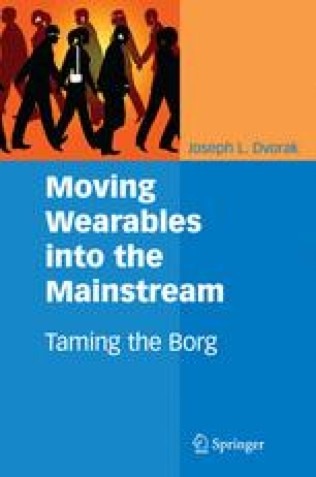
Moving Wearables into the Mainstream : Taming the Borg
Moving Wearables into the Mainstream also introduces concepts such as Operational Inertia that form a mindset conducive to designing wearables suitable for broad adoption by consumers. This book provides insight into legal and cultural issues potentially unfamiliar to research engineers, as well as a broad discussion of technologies underlying wearable devices.Moving Wearables into the Mainstream is designed for a professional audience of practitioners and researchers in industry. This volume is also suitable as a secondary advanced-level text or reference book for students in computer science and electrical engineering.

Mouse Models of Human Blood Cancers : Basic Research and Pre-clinical Applications
Although it remains an open question among some people whether mice and humans are similar in disease development, the laboratory mouse has emerged as the preeminent animal model for human diseases. This is underscored by the recently completed mouse and human genome projects, which have revealed that mice and humans share the vast majority of their genes, and thus get many of the same diseases, and for the same reasons. Emphasizing why mouse models are valuable in vivo systems for understanding disease mechanisms and developing therapeutic strategies for human blood cancers, "Mouse Models of Human Blood Cancers: Basic Research and Pre-clinical Applications," edited by Shaoguang Li, aims on presenting thorough analyses of the pathological features and the molecular bases of several major types of blood cancer and to describe translational research using mouse cancer models.

Mouse controller using electroencephalography (EEG) device
The growing technologies related to neuroscience has to lead many innovative applications, most importantly Electroencephalography, or EEG for short. This field of study has become recently a trend that many companies around the world have started to enter the race of conquering the brain and controlling everything from a mouse controller to the whole human body. This project aims to help disabled people use a computer with ease and simplicity without needing to use their hands, or anything really, which they can achieve by wearing a headset or get someone to put it on them. The headset is designed to read brain activities and send it to a computer program to understand where the user wants to move the mouse cursor on the computer screen using an Artificial Intelligence model. This project helps further researches in this field which pushes the technology even further from where it is now. The device designed for this project can be repurposed pretty easily to serve many different applications other than controlling a mouse.

Motion-Free Super-Resolution
With the explosion of Internet technology and graphics engines, digital images are now everywhere. Image capturing tools are all pervading - in our pockets to inside a satellite. And although imaging applications demand an availability to high resolution images, such images are not picture perfect and may be lacking sufficient details. This requires that these images be super-resolved for improved details. How to achieve this is what constitutes research in the area of image super-resolution. Motion-Free Super-Resolution explores new technology for image super-resolution - applying cues other than the motion cue in super-resolving a scene. This book will serve as an essential reference for both academecians and practicing engineers in the area of image processing and computer vision, as well as providing a basis for ongoing research in this field.

Motion in Games ; 1st International Workshop, MIG 2008, Utrecht, The Netherlands, June 14-17, 2008. Revised Papers
This book constitutes the thoroughly refereed post-workshop proceedings of the First International Workshop on Motion in Games, held in Utrecht, The Netherlands, during June 14-17, 2008, in collaboration with the NLGD Festival of Games.The 24 revised papers presented during the workshop cover topics on crowd simulation; virtual humans; motion synthesis; interfaces; navigation and steering; and facial and behavioral animation.
Morse Theoretic Methods in Nonlinear Analysis and in Symplectic Topology
It covered an ample spectrum of subjects which are re ected in the present volume: Morse theory and related techniques in in nite dim- sional spaces, Floer theory and its recent extensions and generalizations, Morse and Floer theory in relation to string topology, generating functions, structure of the group of Hamiltonian difieomorphisms and related dynamical problems, applications to robotics and many others. We thank all our main speakers for their stimulating lectures and all p- ticipants for creating a friendly atmosphere

Morphological Models of Random Structures
This book covers methods of Mathematical Morphology to model and simulate random sets and functions (scalar and multivariate). The introduced models concern many physical situations in heterogeneous media, where a probabilistic approach is required, like fracture statistics of materials, scaling up of permeability in porous media, electron microscopy images (including multispectral images), rough surfaces, multi-component composites, biological tissues, textures for image coding and synthesis. The common feature of these random structures is their domain of definition in n dimensions, requiring more general models than standard Stochastic Processes.The main topics of the book cover an introduction to the theory of random sets, random space tessellations, Boolean random sets and functions, space-time random sets and functions (Dead Leaves, Sequential Alternate models, Reaction-Diffusion), prediction of effective properties of random media, and probabilistic fracture theories.

Monte Carlo Methods in Fuzzy Optimization
This book is a concise and readable introduction to Monte Carlo methods to find good approximate solutions to fuzzy optimization problems. Various basic applications and illustrative examples are presented in an understandable way. The aim of the book is to convince the reader that Monte Carlo methods can be useful in generating approximate solutions to fuzzy optimization problems.

Monte Carlo and Quasi-Monte Carlo Methods 2006
This book represents the refereed proceedings of the Seventh International Conference on Monte Carlo and Quasi-Monte Carlo Methods in Scientific Computing, held in Ulm (Germany) in August 2006. The proceedings include carefully selected papers on many aspects of Monte Carlo and quasi-Monte Carlo methods and their applications, as well as providing information on current research in these very active areas. Besides covering theory, the book is an excellent resource work for practitioners as well.

Moment Analysis for Subsurface Hydrologic Applications
This book deals with the concept of moments, and how they find application in subsurface hydrologic problems-particularly those dealing with solute transport. This book will be very valuable to researchers who are beginning to learn about moment analysis, and will also be of interest to advanced researchers as well. Both temporal and spatial moments are dealt with in some detail for a wide variety of problems. Several examples using experimental data, both from laboratory columns and field experiments, are provided to give the readers a clear idea about the scope of this method. Apart from conventional uses of moments for solute transport problems, this book contains chapters dealing with use of moments in interval computing, vapour phase transport applications, transfer functions to subsurface tile drains, and construction of breakthrough curves from knowledge of moments.

Molluscs : From Chemo-ecological Study to Biotechnological Application
Marine molluscs are very promising candidates for a wide range of biotechnological applications. For example, they possess analgesic drugs more potent than morphine and very effective anticancer agents. The present book gives an up-to-date overview of the main classes of bioactive compounds from molluscs, moving from ecological observations, to chemical characterization, to biosynthesis, to large-scale synthesis, and to pharmacological applications. A truly outstanding international panel of experts from all continents provides complete coverage of the most stimulating topics related to molluscs. This knowledge of their history and current studies provides an open door to the future.

Molecular Materials with Specific Interactions - Modeling and Design
One of the first requirements to initiate the molecular modeling of molecular materials is an accurate and realistic description of the electronic structure, intermolecular interactions and chemical reactions at microscopic and macroscopic scale. Therefore the first four chapters contain an extensive introduction into the latest theories of intermolecular interactions, functional density techniques, microscopic and mezoscopic modeling techniques as well as first-principle molecular dynamics.In the following chapters, techniques bridging microscopic and mezoscopic modeling scales are presented. The authors then illustrate various successful applications of molecular design of new materials, drugs, biocatalysts, etc. before presenting challenging topics in molecular materials design.

Molecular Imaging II
The aim of this textbook of molecular imaging is to provide an up to date review of this rapidly growing field and to discuss basic methodological aspects necessary for the interpretation of experimental and clinical results. Emphasis is placed on the interplay of imaging technology and probe development, since the physical properties of the imaging approach need to be closely linked with the biologic application of the probe (i.e. nanoparticles and microbubbles). Various chemical strategies are discussed and related to the biologic applications. Reporter-gene imaging is beeing addressed not only in experimental protocols, but also first clinical applications are discussed. Finally, strategies of imaging to characterize apoptosis and angiogenesis are described and discussed in the context of possible clinical translation.
Molecular Imaging I
The aim of this textbook of molecular imaging is to provide an up to date review of this rapidly growing field and to discuss basic methodological aspects necessary for the interpretation of experimental and clinical results. Emphasis is placed on the interplay of imaging technology and probe development, since the physical properties of the imaging approach need to be closely linked with the biologic application of the probe (i.e. nanoparticles and microbubbles). Various chemical strategies are discussed and related to the biologic applications. Reporter-gene imaging is being addressed not only in experimental protocols, but also first clinical applications are discussed. Finally, strategies of imaging to characterize apoptosis and angiogenesis are described and discussed in the context of possible clinical translation.
